
Can a Leaking Hot Water System Be Repaired? A Complete Guide for Australian Homeowners
Todd's Plumbing
Expert Author
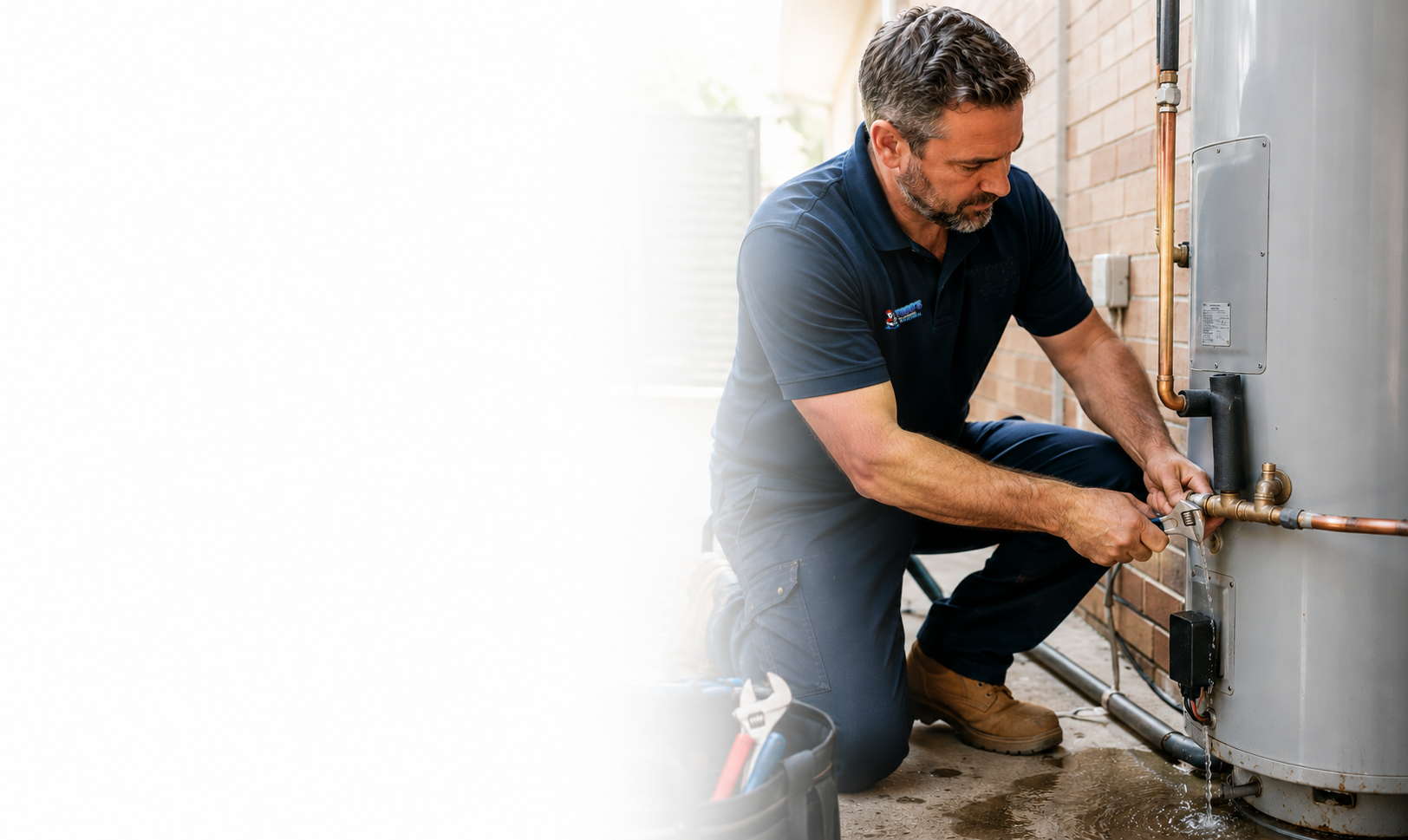
Found water around your hot water system? Learn whether a leaking hot water system can be repaired or needs replacing, the most common leak causes, and when to call a Gold Coast plumber.
Finding water around your hot water system can be worrying. Your first thought might be that the entire unit needs replacing—but that's not always the case.
Some hot water leaks are quick, inexpensive repairs, while others indicate the storage tank has reached the end of its life.
At Todd's Plumbing & Electrical, one of the most common questions we receive is:
"Can my leaking hot water system be repaired, or do I need a new one?"
The answer depends on where the leak is coming from, the age of the system, and the condition of the storage tank.
In this guide, we'll explain the different types of leaks, when a repair is possible, and when replacing the system is the safest and most cost-effective option.
Quick Answer
Yes, many leaking hot water systems can be repaired.
Leaks from valves, pipework, fittings or connections are often straightforward to fix.
However, if the storage tank itself is leaking, replacement is usually required, as the tank cannot generally be repaired safely or permanently.
The key is identifying exactly where the leak is coming from.
Step One – Find the Source of the Leak
Not every drip means the tank has failed.
The most common leak locations include:
- Pressure relief valve
- Tempering valve
- Drain valve
- Pipe connections
- Flexible hoses
- Tank fittings
- Circulation pump (solar systems)
- Heat pump plumbing
- Storage tank
Each has a different solution.
Leak #1 – Pressure Relief Valve
The pressure relief valve is designed to release water when pressure inside the tank becomes too high.
A small amount of dripping while the system is heating is perfectly normal.
However, if the valve:
- Drips continuously
- Flows heavily
- Never stops leaking
it may indicate:
- Worn valve
- Excessive water pressure
- Faulty expansion control
- Internal system problems
In most cases, replacing the valve solves the problem.
Leak #2 – Tempering Valve
Modern hot water systems include a tempering valve to reduce water temperature supplied to household taps.
If this valve begins leaking, it can usually be replaced without replacing the hot water system.
Signs include:
- Water around the valve
- Constant dripping
- Warm water discharge
Leak #3 – Pipe Connections
Over time, pipe fittings can loosen or seals may deteriorate.
Leaks often occur around:
- Copper pipe joints
- Flexible connectors
- Compression fittings
- Threaded connections
These are usually inexpensive repairs.
Leak #4 – Drain Valve
The drain valve allows the tank to be emptied during servicing or replacement.
Occasionally it begins leaking due to:
- Wear
- Mineral deposits
- Damaged seals
Replacing the drain valve is often all that's required.
Leak #5 – Heat Pump Plumbing Connections
Heat pump systems contain additional pipework connecting the refrigeration and water circuits.
Leaks may occur around:
- Water connections
- Condensate drains
- Relief valves
- Pipe fittings
These are commonly repairable.
Leak #6 – Solar Hot Water Components
Solar hot water systems include additional plumbing such as:
- Roof pipework
- Circulation pumps
- Isolation valves
- Solar collectors
- Roof connections
Many leaks involve external plumbing rather than the storage tank itself.
Leak #7 – The Storage Tank
This is the most serious type of leak.
If water is escaping directly through the steel storage cylinder, the tank has usually corroded internally.
Unfortunately:
- Tanks cannot usually be welded safely.
- Internal corrosion continues spreading.
- Temporary sealants rarely last.
- Repairs are generally uneconomical.
In almost every case, a leaking storage tank requires replacement.
Why Do Hot Water Tanks Leak?
Several factors contribute to tank failure.
Internal Corrosion
Steel storage tanks gradually corrode from the inside.
Most tanks rely on a sacrificial anode to protect them.
Once the anode is fully consumed, corrosion attacks the tank itself.
Eventually tiny holes develop, allowing water to escape.
Age
Most storage hot water systems last:
- Electric systems: 10–15 years
- Gas storage systems: 10–15 years
- Heat pumps: 10–15 years
- Solar systems: 12–20 years
As systems age, corrosion becomes increasingly likely.
Water Quality
Areas with aggressive or mineral-rich water may experience:
- Faster corrosion
- More sediment
- Increased scaling
- Reduced anode life
Regular servicing helps minimise these effects.
Can You Patch a Leaking Hot Water Tank?
Many DIY products claim to seal leaking tanks.
Unfortunately, they rarely provide a lasting solution.
The reason is simple.
The leak is usually only the visible symptom.
Behind the leak, the steel tank has already become weakened by internal corrosion.
Even if one hole is temporarily sealed, additional leaks are likely to develop.
Replacing the system is almost always the safer and more economical option.
Signs Your Leak Is an Emergency
Arrange urgent repairs if you notice:
- Water pouring from the tank
- Water entering electrical components
- Gas smell near the system
- Rapid flooding
- Loss of all hot water
- Water damaging walls or flooring
Turning off the water supply to the hot water system may help limit further damage until a licensed plumber arrives.
Should You Repair or Replace?
The answer depends on several factors.
Repair if:
- The tank isn't leaking.
- The fault involves a valve or fitting.
- The system is relatively new.
- Repair costs are reasonable.
- Parts are readily available.
Replace if:
- The storage tank is leaking.
- Internal corrosion is present.
- Multiple components have failed.
- The system is over 10–15 years old.
- Repairs approach the cost of replacement.
Repair vs Replacement Comparison
| Problem | Repair | Replace |
|---|---|---|
| Pressure relief valve | ✅ | |
| Tempering valve | ✅ | |
| Pipe fitting leak | ✅ | |
| Drain valve | ✅ | |
| Flexible hose | ✅ | |
| Solar pipework | ✅ | |
| Heat pump connection | ✅ | |
| Storage tank leaking | ✅ | |
| Severe corrosion | ✅ | |
| Multiple major faults | ✅ |
Can You Upgrade While Replacing?
If replacement is required, many homeowners take the opportunity to upgrade to a more energy-efficient system.
Popular options include:
Heat Pump Hot Water Systems
Benefits include:
- Up to 70% lower running costs
- Government rebates (where available)
- Excellent efficiency in Queensland
- Lower carbon emissions
Solar Hot Water Systems
Ideal for:
- High hot water usage
- Sunny locations
- Long-term energy savings
Continuous Flow Gas Systems
Suitable for:
- Homes with limited space
- Large families
- Unlimited hot water on demand
Our team can recommend the most suitable option based on your household's needs and budget.
Preventing Future Leaks
Regular servicing can significantly extend the life of your hot water system.
Professional maintenance may include:
- Inspecting the sacrificial anode
- Flushing sediment from the tank
- Testing pressure relief valves
- Checking tempering valves
- Inspecting electrical or gas components
- Examining pipework
- Identifying early signs of corrosion
Preventative servicing is often much less expensive than emergency replacement.
Why Choose Todd's Plumbing & Electrical?
For more than 23 years, Todd's Plumbing & Electrical has been repairing, servicing and replacing hot water systems across the Gold Coast.
Our experienced team works with:
- Electric hot water systems
- Gas hot water systems
- Heat pump systems
- Solar hot water systems
- Continuous flow systems
We always inspect the leak carefully before recommending replacement because many leaking systems only require a straightforward repair.
Why homeowners trust Todd's:
- Licensed plumbers, electricians and gas fitters
- Honest repair-first advice
- Upfront pricing
- Same-day service where available
- Emergency hot water repairs
- Temporary hot water systems available (subject to availability and eligibility)
- Workmanship guaranteed
- Hundreds of 5-star customer reviews
Frequently Asked Questions
Can a leaking hot water system be repaired?
Yes, if the leak is coming from valves, fittings, pipework or connections. If the storage tank itself is leaking, replacement is usually required.
How do I know if my hot water tank is leaking?
If water appears to be coming directly through the steel cylinder or from the base of the tank, internal corrosion is likely. A licensed plumber can confirm the source of the leak.
Is it safe to keep using a leaking hot water system?
Minor valve leaks may not be immediately dangerous, but any ongoing leak should be inspected. Large leaks, electrical hazards or gas smells require urgent attention.
How long do hot water systems usually last?
Most storage hot water systems last between 10 and 15 years, although regular servicing and timely anode replacement can extend their lifespan.
Can replacing the sacrificial anode stop leaks?
Replacing the sacrificial anode helps prevent future corrosion, but once the storage tank itself has developed a leak, replacing the anode will not repair the damage.
Need Help with a Leaking Hot Water System?
If you've discovered water around your hot water system, don't assume the worst. Todd's Plumbing & Electrical can quickly identify the source of the leak across the Gold Coast.
Call 0482 080 423 Now