How Long Does a Hot Water System Last? | Gold Coast Guide | Todd's
How Long Does a Hot Water System Last? A Gold Coast Homeowner's Guide
Most Gold Coast homeowners don't give their hot water system a second thought — until the morning it stops working and the entire household grinds to a halt. That's usually when the question surfaces: how old is this thing, and should I have replaced it years ago?
The honest answer is that hot water system lifespan varies more than most people realise — and a few simple habits can either double your system's life or cut it in half. In this guide we cover exactly how long each type of system should last, the local factors that affect longevity on the Gold Coast, and the clearest signals that it's time to replace rather than repair.
Hot Water System Lifespan — The Quick Answer by System Type
Not all hot water systems age at the same rate. The technology, design, and number of components exposed to wear all play a role. Here's a practical lifespan guide for the main system types you'll find on the Gold Coast.
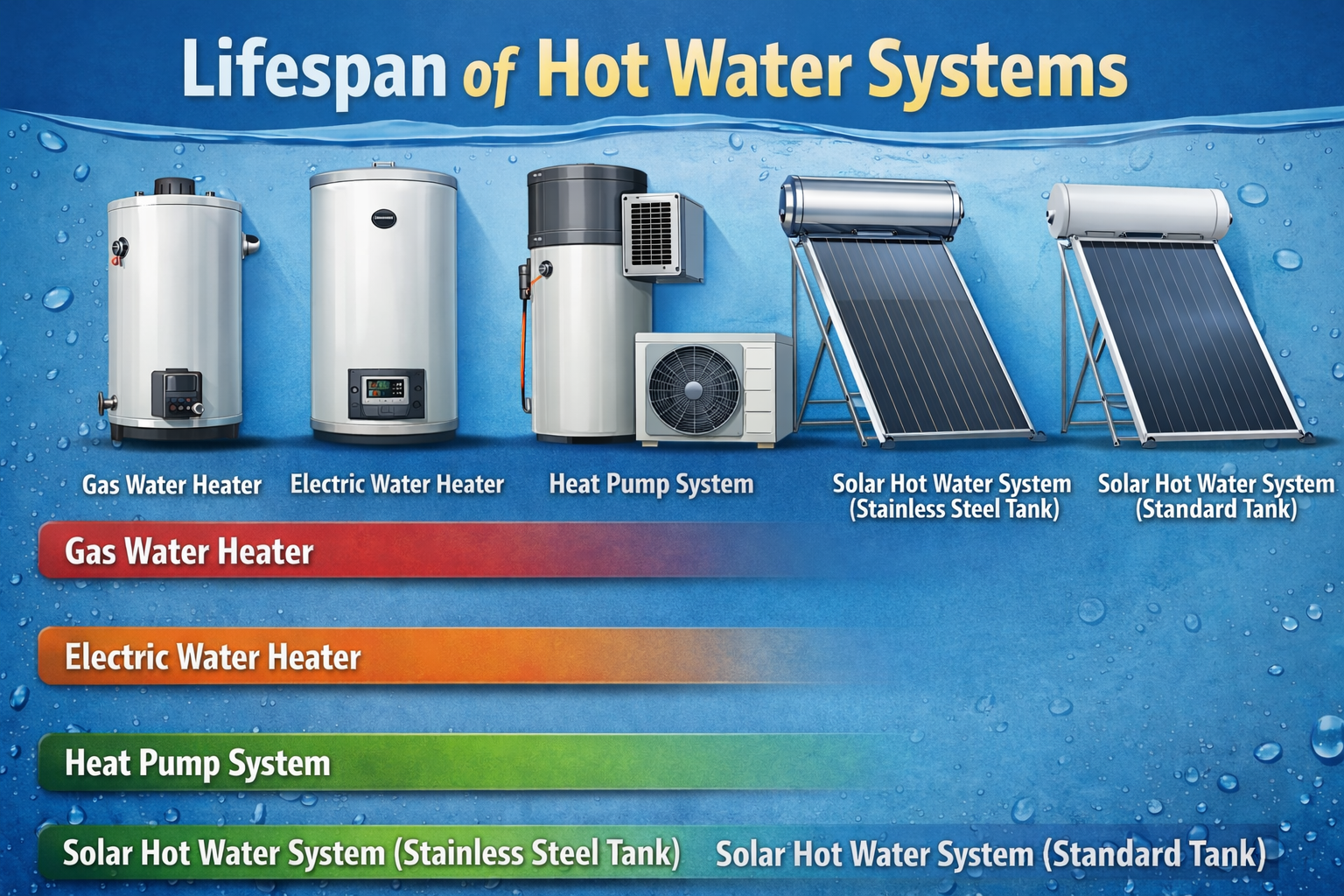
Electric storage systems: 8–12 years The most common type in Queensland homes. Electric storage systems heat water with one or two immersion elements inside a steel tank. The tank lining is the limiting factor — once it starts to corrode internally, the system is finished. Regular anode replacement and annual element checks are the most effective things you can do to push toward the upper end of this range.
Gas storage systems: 8–12 years Similar lifespan to electric storage, with the same vulnerability: a steel tank that corrodes over time. Gas storage systems also have a burner assembly that needs periodic servicing to maintain efficiency. The advantage of gas is that a failing burner is usually repairable; a corroding tank is not.
Gas continuous flow (instantaneous) systems: 15–20 years Because there's no storage tank to corrode, continuous flow systems typically outlast storage units by a significant margin. The main components — heat exchanger, gas valve, and ignition system — are serviceable, and with regular maintenance these systems reliably reach 15 years and often beyond. Some well-maintained units on the Gold Coast have been in service for 20+ years.
Solar hot water systems: 15–20 years (collectors); 10–15 years (tank and components) Solar systems have two lifespans to think about. The collector panels themselves — whether flat plate or evacuated tube — are robust and often last 20 years or more. The storage tank, pump (on split systems), controller, and booster have shorter service lives in line with conventional storage systems. This means a solar system often needs its tank or pump replaced before the panels wear out.
Heat pump systems: 10–15 years Heat pumps extract warmth from the surrounding air to heat water, making them significantly more energy-efficient than electric storage systems. The compressor and refrigerant circuit are the main mechanical components, and while they're more complex than a simple electric element, modern heat pumps from quality manufacturers like Envirosun are built to high standards. Expect 10–15 years with appropriate servicing.
A quick way to check your current system's age: look for a manufacturer's sticker on the side or base of the unit. It usually shows the manufacture date or a serial number that encodes it. If you can't find a date, take a photo of the serial number and call us — we can often identify the age from that alone.
What Affects How Long Your System Lasts?
The figures above are averages. Your actual system's lifespan will be influenced by four main factors — and the Gold Coast has some specific characteristics worth knowing about for three of them.
Water Quality on the Gold Coast
This is the factor most homeowners don't know about, and it matters more than almost anything else for hot water system longevity.
Gold Coast tap water is considered moderately hard — it contains calcium and magnesium minerals that, over time, settle as limescale inside storage tanks and on heating elements. Here's what that means in practice:
Limescale builds up on heating elements, forming an insulating layer that forces the element to work harder and run hotter to achieve the same water temperature. This accelerates wear on the element and increases your electricity bill at the same time. A survey of element condition in systems over eight years old regularly finds significant scale deposits on the heating elements — deposits that didn't need to be there with proper maintenance.
Inside the tank, mineral sediment settles at the base over time. As the heating element heats the water above this layer, steam bubbles force through the sediment — producing the banging and popping sounds that are the classic signal of a system nearing the end of its life.
The practical takeaway: on the Gold Coast, annual flushing of storage tanks and regular element inspection are more important than in softer-water regions. It's inexpensive maintenance that can add several years to your system's life.
There's also a coastal salt air factor specific to the Gold Coast. Properties within a few kilometres of the beach experience accelerated corrosion on external metal components — the tank exterior, pipework, fittings, and the electrical connections on outdoor installations. If your hot water system is installed outdoors (as most are in Queensland), and you're in a beachside suburb, inspect the external condition of your unit regularly. Surface rust on the exterior is cosmetic; pitting or corrosion around valve connections or the tank base warrants a professional inspection.
How Often the System Is Serviced
This is the single biggest controllable factor in how long your hot water system lasts — and it's the one most homeowners neglect.
The minimum recommended service for most hot water systems is every five years. That service should include:
Inspecting and replacing the sacrificial anode rod (the component that protects the tank from internal corrosion)
Testing and, if necessary, replacing the TPR valve
Testing the tempering valve
Flushing sediment from the tank base
Checking element condition (electric systems)
Checking burner and igniter condition (gas systems)
Inspecting collector and pump condition (solar systems)
The sacrificial anode deserves special mention because it's so consistently overlooked. This metal rod sits inside every storage tank and corrodes intentionally — sacrificing itself so the steel tank doesn't. When the anode is fully depleted and nothing is done, the tank begins to rust from the inside. Replacing the anode every five years typically costs a fraction of what a new system costs, and it's the most direct way to extend tank life.
A properly serviced hot water system will reliably outlast a neglected one by several years. We regularly replace systems that are only eight or nine years old because they were never serviced; we also service systems that are 15 years old and still performing well because their owners have kept them maintained.
Household Size and Usage Habits
A hot water system sized correctly for a two-person household will last significantly longer than the same system being relied on by five people. Oversized demand means the system runs more heating cycles per day, the element switches on and off more frequently, and the tank is drawn down and refilled more often — all of which accelerate wear.
If your household size has grown since your system was installed, it's worth reviewing whether you're running your system at its capacity limit. Signs include: running out of hot water before everyone has showered, the system running almost continuously, and higher-than-expected energy bills. These are symptoms of a mismatched system that's being worked too hard — and a correctly sized replacement will both last longer and cost less to run.
Installation Quality
A hot water system that was installed correctly from day one — with the right valves, the right pipework sizing, proper earthing on electric systems, and QBCC-compliant compliance work — will reliably outlast one that was cut-corner installed. This isn't just theory. Industry data suggests a significant proportion of hot water installations in Queensland don't fully meet current standards, which means the system is often working against design from the day it's first used.
When Todd's installs a hot water system, the job includes all mandatory compliance work: correctly rated tempering valve, pressure limiting valve, expansion control, and compliant overflow discharge. No shortcuts, documented for your records. This matters both for longevity and for your home insurance coverage.
How to Find Out How Old Your Hot Water System Is
Before you can make a decision about repair versus replacement, you need to know your system's age. Here's how to find it.
Check the manufacturer's label. Most hot water systems have a sticker on the side or near the base showing manufacture date, serial number, and installation details. The manufacture date is usually the most reliable indicator — installation is typically within a few months of manufacture for residential systems.
Decode the serial number. If the label has no obvious date, the serial number often encodes it. The format varies by brand — Rheem, Rinnai, Dux, and other major brands each have their own convention. Call us with the serial number and we can usually identify the manufacture year within a minute.
Check your paperwork. If you purchased the home, the pre-purchase inspection report often notes the hot water system type and estimated age. Your original home warranty documents may also reference it.
Ask the previous owner or the real estate agent. Not always possible, but sometimes the fastest answer.
If you genuinely can't establish the age and the system is showing any concerning signs, the practical approach is to have a licensed plumber inspect it and give you an honest assessment of its remaining condition and expected life.
Signs Your Hot Water System Is Reaching the End of Its Life
These are the signals that a repair is probably just delaying the inevitable:
The system is over 10 years old and showing multiple symptoms simultaneously. A single fault on an older system isn't necessarily the end, but two or three signs together — noise plus reduced output plus rising bills, for example — suggest the system is deteriorating broadly.
Rusty or brown water from the hot tap. As covered in our earlier articles, this means the sacrificial anode has been fully depleted and the tank has begun corroding internally. This process cannot be reversed and the tank needs replacing.
Water pooling at the base of the tank. A leaking tank body — as opposed to a dripping valve — is a structural failure. It cannot be repaired.
The same fault keeps recurring. If you've replaced the element twice or had the same valve repaired three times in recent years, you're spending money patching a system that's going to keep breaking down.
Energy bills are rising without an obvious cause. A hot water system that's working harder than it should — due to sediment insulating the element, a degraded tank losing heat retention, or a booster running continuously on a solar system — shows up on your electricity bill before anything else.
Is It Worth Repairing an Old Hot Water System?
Our practical guide is the 50% rule: if the cost of the repair exceeds 50% of what a new, comparable system would cost — and your existing system is over eight years old — replacement is almost always the smarter financial decision.
This rule has a few useful corollaries:
On a system under eight years old with a sound tank, most single-component faults (element, thermostat, valve) are worth repairing. The system has years of life left, and the repair cost is low relative to replacement.
On a system over ten years old, even an affordable repair deserves a conversation about replacement timing. You may choose to repair now and plan a replacement in 12–18 months — which gives you time to research options and budget properly, rather than being forced into a rushed replacement at the worst possible time.
If you're replacing a conventional electric or gas storage system, it's worth considering whether now is the right moment to switch to a more efficient technology. Heat pump systems reduce hot water running costs by 60–70% compared to standard electric systems. Over a 10–15 year lifespan, that saving adds up to thousands of dollars — often more than the cost premium of the heat pump itself.
Todd's will always give you honest, upfront pricing on both repair and replacement options and let you make the call. There's no pressure from us either way.
Key Takeaways
Electric and gas storage systems typically last 8–12 years; continuous flow gas systems 15–20 years; solar systems 15–20 years for collectors but 10–15 years for tank and components; heat pumps 10–15 years
Gold Coast water is moderately hard — limescale buildup on elements and sediment in tanks is a real factor that accelerates wear without proper maintenance
The single most effective thing you can do to extend your system's life is annual flushing and a five-yearly service including anode replacement
Coastal salt air in beachside suburbs accelerates corrosion on external components — inspect your unit's exterior condition regularly
Rusty water and tank-base leaks signal that replacement is needed, not repair
The 50% rule: if repair costs exceed half the price of a new system on a unit over eight years old, replacement makes more financial sense
FAQ
Q: My hot water system is 9 years old and just had its element replaced. How much life does it have left? A: It depends on the tank's internal condition more than its age. If the anode has been maintained and there's no rust in the water, a 9-year-old system with a freshly replaced element could have 3–5 years of reliable life ahead. If the anode has never been checked, it's worth having a plumber inspect the tank condition now. We can do this quickly during a service call.
Q: How do I know if my hot water system has ever been serviced? A: Check for any service stickers on the unit — plumbers often attach them after a visit. If there's no sticker and you don't have service records, it's safe to assume it hasn't been. Book a service inspection, and we'll assess the condition of the anode, valves, and element and advise on what needs doing.
Q: Does the Gold Coast climate affect how long a hot water system lasts? A: Yes, in two ways. First, the moderately hard water means limescale buildup is a real factor for elements and tank bases — more so than in softer-water regions. Second, outdoor hot water systems in beachside suburbs are exposed to salt-laden air, which accelerates corrosion on external components. Both factors make regular servicing and inspection more important here than in inland or southern Australian locations.
Q: Is it better to repair or replace a 10-year-old hot water system? A: It depends on the fault and the tank condition. For a minor component fault with a sound tank, repair can be worthwhile. But at 10 years old, we'd always give you replacement pricing alongside the repair quote — so you can make an informed decision. Sometimes replacing now and switching to a heat pump makes more financial sense over the next decade than repairing and replacing like-for-like in two years.
Q: How do I extend the life of my current hot water system? A: Four things make the biggest difference: have the system serviced every five years (including anode inspection and replacement), flush sediment from storage tanks annually, have the TPR valve tested every five years, and fix minor faults — dripping valves, slow leaks — before they become larger ones. Neglecting any of these shortens system life meaningfully.
Q: My solar hot water system is 18 years old but still heating water. Should I replace it? A: At 18 years, the collectors may well have more life in them — solar collectors are robust. But the storage tank and booster are likely approaching or past the end of their reliable life. Have us inspect the tank's anode condition and check for early corrosion. If the tank is sound, a targeted repair may give you a few more years. If it's showing corrosion, a replacement now avoids an unexpected emergency later.
Q: What's the longest a hot water system has ever been in service? A: We've encountered working systems that are 20+ years old — almost always continuous flow gas systems that have been properly serviced throughout their life. Storage tank systems rarely exceed 15 years in good condition, and those that do have almost always had their anode replaced at least once. The correlation between regular servicing and system longevity is very consistent in our experience.
Conclusion
Your hot water system is one of the hardest-working appliances in your home — and like all workhorses, it responds well to attention and poorly to neglect. Understanding its expected lifespan and the factors that influence it puts you in control: you can plan ahead, budget properly, and avoid the cost and stress of an emergency failure.
If you're not sure how old your system is or when it was last serviced, that's the best place to start. Todd's can inspect your system, advise honestly on its remaining condition, and give you clear options — whether that's a simple service, a targeted repair, or a properly planned replacement.
Call 0482 080 423 or request a free quote at toddsplumbing.com.au.
