How to Prevent Blocked Drains Gold Coast | Seasonal Checklist | Todd's
How to Prevent Blocked Drains — A Gold Coast Homeowner's Checklist
A blocked drain callout costs significantly more than the few minutes it takes to prevent one. Most Gold Coast drain blockages don't happen randomly — they happen because of predictable habits, known environmental factors, and overlooked maintenance that accumulates over months until something fails.
The Gold Coast has specific drain risks that homeowners further south don't face: a subtropical storm season that dumps enormous volumes of water in short periods, year-round tree root growth that actively seeks out pipe joints, coastal sand in beachside suburbs that silts up drains faster than organic material does, and warm, humid conditions that accelerate bacterial build-up in drainage systems.
This guide covers prevention for every area of your home — kitchen, bathroom, toilet, outdoor and stormwater — organised as a practical checklist you can actually follow, plus a Gold Coast-specific maintenance calendar tied to the seasons.
Prevention Is Cheaper Than a $350 Emergency Callout
This isn't a figure we made up. The average emergency blocked drain callout on the Gold Coast — after-hours, urgent, with a main sewer line blockage — costs significantly more than routine maintenance. A drain screen for a shower costs a few dollars. A mesh gutter guard for a standard home costs a few hundred. A professional drain flush every couple of years costs a modest service fee.
Compare any of those to the cost of hydro-jetting a seriously blocked main line, emergency callout fees for a Saturday night sewer backup, or — worst case — the remediation cost of sewage inside your home.
Prevention wins every time. The question is just knowing what to prevent, and when.
Kitchen Drain Prevention
The kitchen is where the most preventable blockages start. Cooking grease, fats, and oils are the primary culprit in kitchen drain failures across the Gold Coast — and they're entirely avoidable with one habit change.
Never pour cooking fats, oils, or grease down the sink. When hot, these substances are liquid and flow easily. When they cool inside your pipe, they solidify and adhere to the pipe wall. Every subsequent pour adds another layer. Over months, the pipe's internal diameter narrows progressively until blockage occurs — usually suddenly and completely. The fix is simple: let cooking fat cool in the pan, wipe pans with paper towel before washing, and pour cooled liquid fat into a container (an old jar works perfectly) for disposal in the bin.
Use a sink strainer. A mesh sink strainer catches food scraps, coffee grounds, and small debris before they enter the pipe. Empty it into the bin after every use. This one item, costing a few dollars from any hardware store, prevents a large proportion of kitchen blockages.
Run hot water after dishwashing. After washing dishes — particularly greasy ones — run the hot tap for 30 seconds to flush any residual grease through the pipe while it's still warm and liquid, rather than leaving it to cool and solidify at the nearest bend.
Don't rely on your sink to dispose of food waste. Even with a garbage disposal unit, food scraps — particularly starchy foods like pasta and rice that swell with water — accumulate in pipes over time. Scrape plates into the bin before washing.
What to avoid putting down the kitchen sink: cooking oils and fats, coffee grounds, pasta and rice, vegetable peelings, eggshells, flour, paint, cleaning product concentrates.
Bathroom Drain Prevention
Hair and soap scum are the dominant cause of bathroom drain blockages, and both are almost entirely preventable.
Fit a drain screen in every shower and bath. A drain screen — a simple mesh or silicone insert that sits over the drain opening — catches hair before it enters the pipe. Clean it after every shower. This takes literally five seconds and eliminates the most common cause of bathroom drain blockages entirely. If you don't currently have one, buy one today. They cost under $10 and last for years.
Flush bathroom drains regularly. Once a week, run the shower on hot for a few minutes to flush soap scum build-up down the pipe while it's still dispersed rather than accumulated. This is particularly useful in Gold Coast's warm, humid climate, where soap residue accumulates faster than in cooler regions.
Keep an eye on slow drainage. A shower that takes slightly longer to drain than it used to is telling you something is building up. Catch it early — clean the screen, check the drain trap — before it progresses to a complete blockage. Slow drains that persist after cleaning the grate need a plumber's attention before they fail entirely.
For beachside suburb homeowners — rinse off before showering. This is specific to the Gold Coast and rarely mentioned in generic prevention guides. If you're showering after a beach visit, a quick outdoor rinse before stepping into your indoor shower reduces the volume of sand entering your bathroom drainage system. Sand accumulates in drain traps and pipes faster than organic material and is harder to shift without professional equipment. It's a small habit that makes a genuine difference over time.
Don't pour chemical drain cleaners into slow drains. This is worth repeating in a prevention context: chemical drain cleaners are largely ineffective against anything other than very soft, shallow organic blockages. For bathroom drains specifically, most blockages are caused by hair bound with soap scum — a mat that chemical cleaners don't effectively dissolve. They can also corrode certain pipe materials and create a chemical hazard if a plumber subsequently needs to attend. Save your money and use a drain screen instead.
Toilet — What Should and Shouldn't Be Flushed
The toilet is one of the most common entry points for foreign-object blockages, and the rules are genuinely simple.
The only things that should go down a toilet are human waste and toilet paper. Nothing else. Not "flushable" wipes (they don't break down — Australian water utilities deal with the consequences of this every day), not cotton buds, not dental floss, not sanitary products, not nappy liners, not paper towels, not children's toys.
"Flushable" wipes deserve special attention. The "flushable" label on wet wipes is one of the most misleading claims in consumer products. Unlike toilet paper, which begins breaking down within seconds of contact with water, wet wipes retain their structural integrity through the entire drain system. They collect in the pipe, bind with grease and other material, and form blockages that can completely seal a main sewer line. If you use wet wipes, dispose of them in the bin.
Keep a bin in every bathroom. The most effective behavioural change for toilet-related blockage prevention is simply having a clearly accessible bin in every bathroom. When disposal is easy, people use it. When the only option visible is the toilet, things end up in the toilet.
Teach children what toilets are for. Small objects — toys, rocks, excessive amounts of toilet paper — flushed by curious children are a consistent source of drain blockages. Brief, age-appropriate guidance and keeping bathroom doors closed when not in use prevents a surprising proportion of these incidents.
Outdoor and Stormwater Drains — The Gold Coast Storm Season Checklist
This is where Gold Coast-specific prevention is most important — and where most homeowners focus the least attention until something goes wrong.
The Gold Coast experiences its main storm season from roughly November through to April. The region receives an average of 1,750mm of rainfall annually, much of it concentrated in intense subtropical downpours that can dump substantial volumes of water in very short periods. A stormwater system that's been quietly accumulating debris through the dry winter months faces this sudden volume demand with no preparation — and fails.
Before storm season (September–October):
Clear all stormwater grates and drain pits of accumulated leaf litter, mulch, and debris. On a Gold Coast property with established trees — jacarandas, figs, paperbarks, palm trees — this debris accumulates rapidly through the dry season and can effectively dam a stormwater pit.
Clean your gutters and check downpipe connections. Blocked gutters overflow and direct water against your home's eaves, walls, and foundations rather than into the stormwater system. Check that downpipes connect securely to the stormwater system and that there are no cracks or separations at the joints.
Flush your outdoor drains with a garden hose. Run water through each drain point and watch how quickly it clears. If water pools or drains slowly, there's a partial obstruction that needs clearing before the first major storm.
Check your overflow relief gully. Locate the ORG (usually near the laundry or on the side of the house) and confirm the cover is in place and the area around it is clear. A blocked ORG is unable to perform its function — protecting your home from internal sewage backup if the main sewer line becomes overwhelmed.
Trim any branches overhanging roof gutters. Overhanging branches are the primary source of gutter-clogging leaf litter. Trimming before storm season reduces ongoing accumulation.
During storm season (November–April):
Check grates after major storm events. A single intense Gold Coast storm can wash enough leaf litter, mulch, and debris into stormwater grates to cause a substantial blockage. A quick check after each major downpour — clearing any surface accumulation on grates — takes a few minutes and prevents the next storm from producing a flooded yard.
Watch for water pooling anywhere on your property that didn't pool before. New pooling can indicate that a stormwater line has developed an obstruction or that soil movement has changed drainage patterns. Address it promptly rather than monitoring it through the full storm season.
If you have a beachside property in suburbs like Palm Beach, Currumbin, Miami, or Surfers Paradise, be aware that coastal sand washing into outdoor drains after storms accumulates quickly and creates dense, compacted blockages in stormwater grates and pit sumps. A post-storm clear of outdoor grates is particularly important for these properties.
After storm season (April–May):
Carry out a post-storm-season clean of gutters and stormwater pits. This removes accumulated material before the dry winter allows it to compact and solidify. It also gives you a clear view of any damage — cracked gutters, separated downpipe joints, damaged stormwater lids — that the season may have caused.
Tree and Garden Maintenance Near Drains
On the Gold Coast, trees and drainage infrastructure don't coexist without some active management.
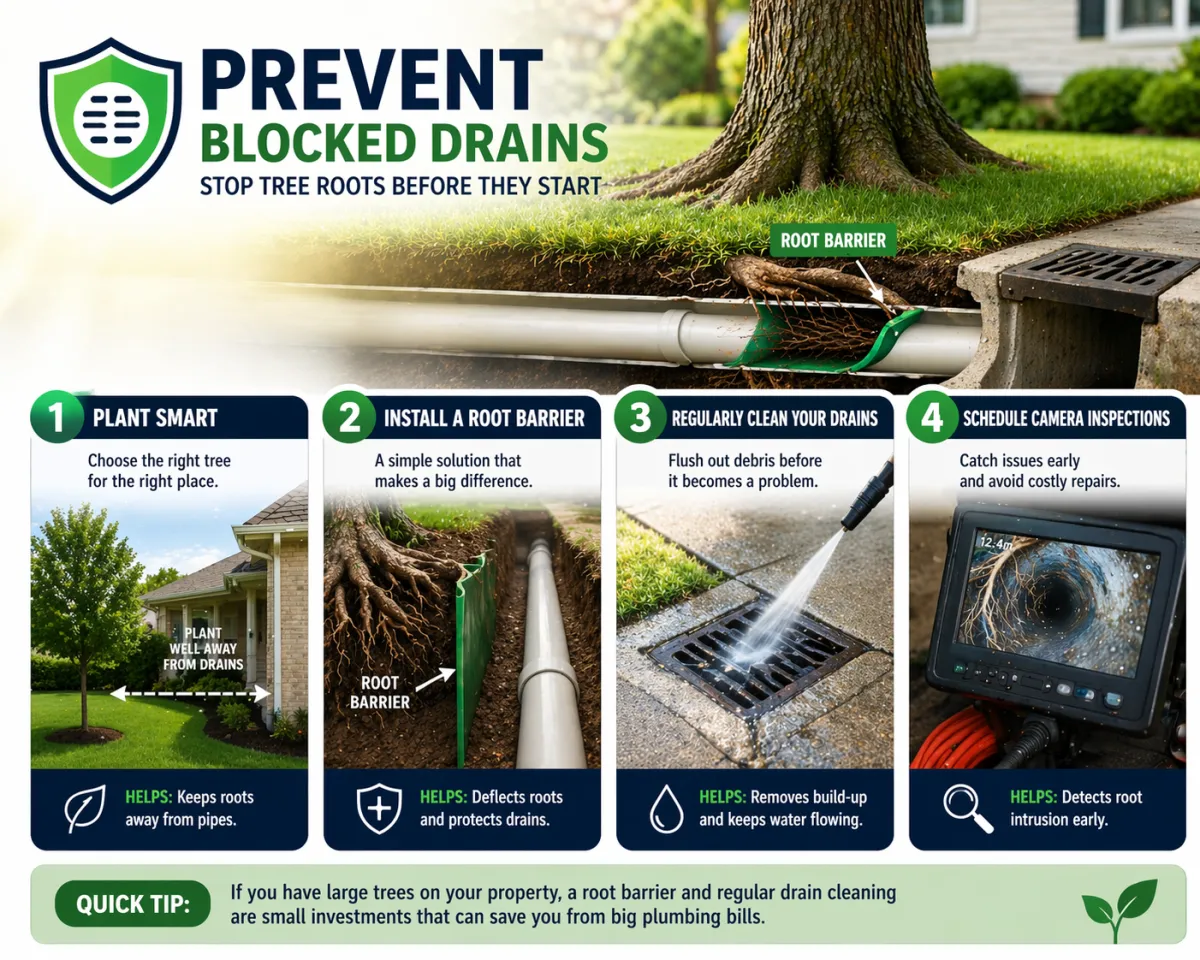
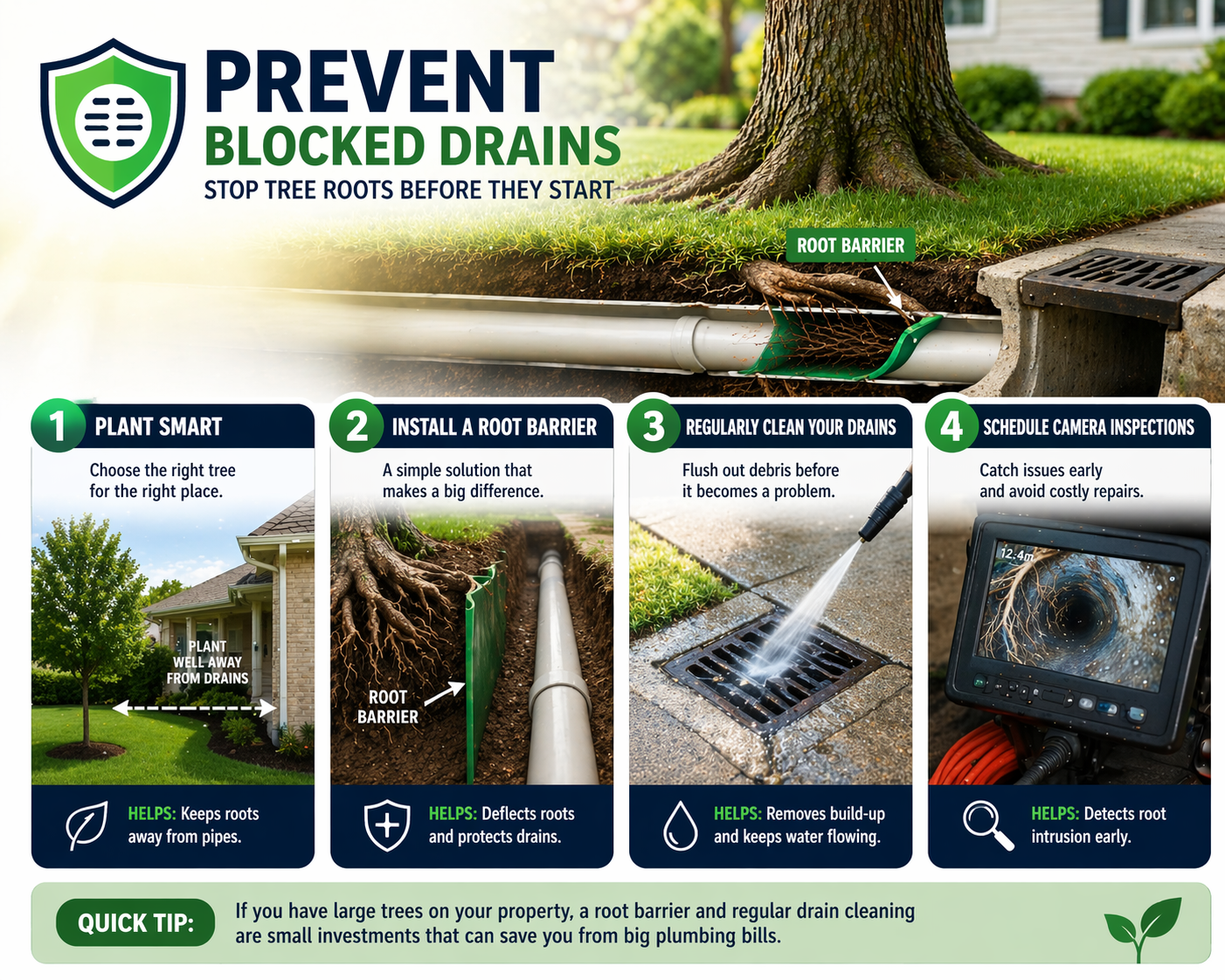
Know where your sewer line runs. If you have the original drainage plan for your property (usually supplied with purchase documentation or available from Council), identify where the sewer line runs through your yard before planning any landscaping. Planting high-risk species near the sewer line — Moreton Bay Figs, Poincianas, Camphor Laurels, Bamboo — creates a root intrusion problem that becomes progressively more expensive to manage.
Maintain a safe planting distance. The general guidance is to keep high-risk species at least 10–15 metres from your sewer line, with moderate-risk species (Jacaranda, Mango, Bottlebrush) at least 5 metres away. Low-risk species — native plants with non-invasive root systems like Lemon Myrtle, Native Gardenia, or Lomandra grass — can be planted more freely.
Remove bamboo growing near drainage lines. Bamboo rhizomes spread rapidly underground and are one of the most aggressive root threats to drainage infrastructure on the Gold Coast. If bamboo is growing within 5–10 metres of a sewer or stormwater line, consider removal and replacement with a less invasive species.
After significant pruning near drain lines, inspect for root activity. Cutting large roots above ground can cause the tree to redirect energy into underground root growth, sometimes accelerating root penetration into nearby pipe joints. If you've had significant tree work done near your drainage lines, it's worth having the pipes inspected the following year.
Your Gold Coast Drain Maintenance Calendar
PeriodPriority ActionsSeptember–October (Pre-storm prep)Clear all stormwater grates and pits; clean gutters; flush outdoor drains with hose; check downpipe connections; trim overhanging branches; inspect overflow relief gullyNovember–April (Storm season)Check grates after major storm events; watch for new water pooling; keep bathroom drain screens clean; post-storm grate clear for beachside propertiesApril–May (Post-storm clear)Post-season gutter and pit clean; inspect for storm damage; check downpipe joints and gutter fixingsJune–August (Dry season)Tree root growth is most active in dry conditions — monitor for slow drain symptoms; schedule CCTV inspection if drains were slow during storm seasonYear-roundNever pour grease down kitchen sink; empty bathroom drain screens after every shower; only flush toilet paper; keep bathroom bins stockedEvery 3–5 years (Professional maintenance)CCTV drain inspection for older properties or those with large trees; professional drain flush for grease-heavy households; anode check on hot water system
When Prevention Isn't Enough — Time to Call a Plumber
Even with good habits and consistent maintenance, some blocked drain situations are inevitable — particularly for older properties with clay pipe infrastructure and mature trees. Knowing when to shift from prevention to professional action is part of good drain management.
Call Todd's when:
A single drain is draining slowly and doesn't improve after cleaning the screen or grate
You hear cross-fixture gurgling — toilet flush causes nearby shower or floor waste to gurgle
There's a persistent foul smell from any drain that returns after cleaning
Any drain has blocked completely
Your overflow relief gully is running or overflowing
You've needed a drain cleared more than once in the past 12 months — this suggests an underlying structural issue
For older properties (pre-1985) with known large trees nearby, a CCTV inspection every 3–5 years is genuinely worthwhile preventive maintenance. Early-stage root intrusion costs a fraction of emergency clearing of a fully-blocked main sewer line. The inspection pays for itself the first time it catches a developing problem early.
Key Takeaways
Kitchen grease, bathroom hair, and flushed wipes cause the majority of preventable Gold Coast drain blockages — all entirely avoidable with simple habits
Beachside Gold Coast homeowners face an additional prevention challenge from coastal sand entering shower and outdoor drains — a quick post-beach rinse and regular grate clearing makes a meaningful difference
Pre-storm-season maintenance (September–October) is the single most important outdoor drainage task for Gold Coast homeowners — clearing grates and gutters before the wet season starts prevents flooding
Check outdoor stormwater grates after major storm events — a single intense Gold Coast downpour can fill a stormwater pit with debris in minutes
Older properties (pre-1985) with large trees benefit from CCTV drain inspections every 3–5 years — catching root intrusion early is far cheaper than emergency clearing
Todd's is available for same-day blocked drain clearing when prevention doesn't hold the line — call 0482 080 423
FAQ
Q: How often should I clean my shower drain screen? A: After every shower, ideally. It takes five seconds — lift the screen, wipe the hair into the bin, replace. Letting it accumulate for weeks means the hair compacts and some always ends up pushed into the drain. Make it part of your shower routine and you'll never have a bathroom drain blockage from hair.
Q: Is it safe to use baking soda and vinegar to prevent drain blockages? A: Yes — a monthly pour of boiling water followed by a baking soda and white vinegar flush is a safe, effective way to reduce organic build-up in bathroom and kitchen drains. It won't prevent root intrusion or sand accumulation, but it helps keep the immediate pipework clear of soap scum and minor grease deposits. It's not a substitute for drain screens or good disposal habits, but it's a useful addition.
Q: When should I clean my gutters on the Gold Coast? A: At minimum, once before storm season (September–October) and once after (April–May). If you have large deciduous or prolific-dropping trees — jacarandas, figs, palms, paperbarks — add a third clean in the middle of the dry season (July) and after any major wind event. Blocked gutters are one of the most common causes of water damage to Gold Coast homes during storm season.
Q: I live a few streets from the beach. Do I need to do anything different? A: Yes — a few things. Rinse off before indoor showers to reduce sand entering bathroom drains. Clear outdoor stormwater grates more frequently, particularly after storms that drive sand inland. Be aware that sand-based blockages in pipes require professional hydro-jetting to clear — plunging and chemical cleaners have no effect on compacted sand.
Q: I've never had a blocked drain. Do I still need to do anything? A: If your home is under 20 years old and you don't have large trees, your risk is lower than average. Still worth maintaining good habits — drain screens, no grease down the sink, no wipes down the toilet. If your home is older or you have mature trees within 15 metres of your drainage lines, the absence of symptoms doesn't mean the problem isn't developing. A CCTV inspection every few years gives you certainty rather than assumption.
Q: What's the best way to unclog a drain myself? A: For a surface blockage — hair sitting on or just below the grate — remove it manually with a drain wand or hook. For a blocked toilet or basin, a plunger is the appropriate first step. For anything that doesn't respond to these methods within a few attempts, call us. Forcing a blocked drain with chemicals or aggressive plunging can make the blockage harder to clear professionally and risks damaging older pipes.
Conclusion
Preventing blocked drains on the Gold Coast doesn't require much effort — just consistent habits and awareness of the seasonal risks that are specific to our climate and environment. The kitchen grease rule, a drain screen in every shower, a bin in every bathroom, and gutters cleared before storm season will prevent the majority of blockages that Gold Coast homeowners experience.
For the ones that still happen — root intrusion in older pipes, storm debris overwhelming a stormwater system, a foreign object making its way somewhere it shouldn't — Todd's is here with same-day service across the Gold Coast and SEQ, licensed plumbers, CCTV cameras, and the equipment to diagnose and fix the problem properly the first time.
Call 0482 080 423 or request a free quote at toddsplumbing.com.au.
