
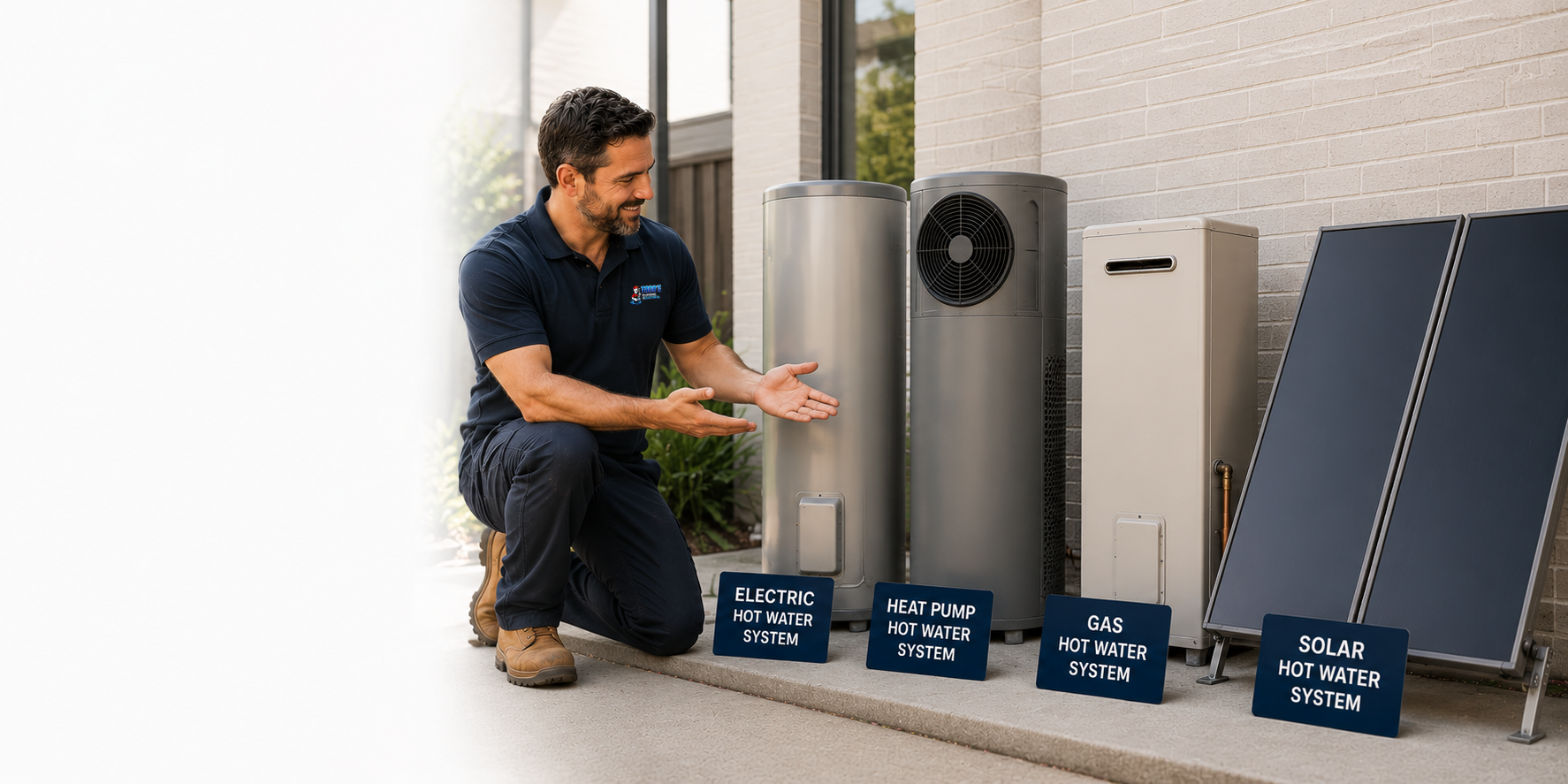
What Is The Cheapest Hot Water System To Run?
Compare electric, gas, heat pump and solar hot water systems to discover which option offers the lowest running costs for your home.
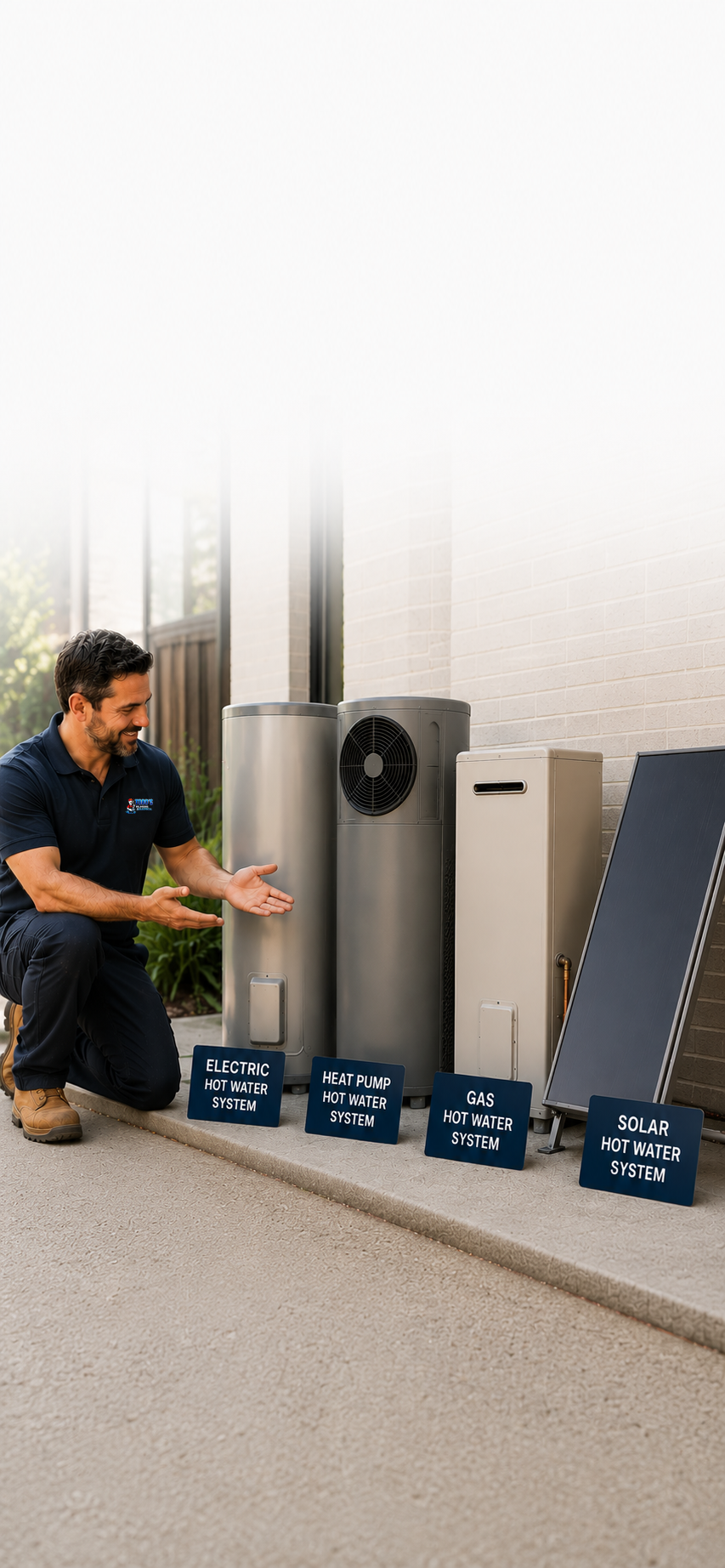
What Is The Cheapest Hot Water System To Run?
Compare electric, gas, heat pump and solar hot water systems to discover which option offers the lowest running costs for your home.
What Is The Cheapest Hot Water System To Run?
For many Gold Coast households, solar hot water systems and heat pumps offer the lowest long-term running costs. However, the cheapest option depends on your household size, energy tariffs, roof suitability, solar power availability and hot water usage patterns.
Quick Answer: System Running Costs
| System Type | Relative Running Cost | Typical Efficiency | Best Suited For |
|---|---|---|---|
| Solar Hot Water | Very Low | Up to 90% free energy | Sunny roofs, long-term savings |
| Heat Pump | Very Low | 300% - 400% efficient | Most homes, solar PV owners |
| Continuous Flow Gas | Medium | Heats only when needed | Limited space, existing gas |
| Gas Storage | Medium to High | Heat loss from storage | High volume demand |
| Electric Storage | High | 100% efficient (but expensive) | Low upfront budget, 1-2 people |
Every household is different. The cheapest system for a retired couple in an apartment will be completely different from the cheapest system for a family of five with solar panels.
What Makes A Hot Water System Cheap To Run?
Understanding running costs means looking beyond the sticker price. Several factors determine how much you'll actually pay over the life of the system:
- Energy Efficiency: How much heat is produced for every unit of energy consumed.
- Household Demand: The volume of hot water your family uses daily.
- Tariffs: Whether you have access to off-peak electricity rates or cheap gas.
- Climate: Warmer climates like the Gold Coast make heat pumps and solar systems far more effective.
- System Design: Correct sizing prevents wasted energy from overheating unused water.
- Maintenance: Well-maintained systems retain their efficiency longer.
Electric Hot Water Running Costs
Standard electric storage systems are essentially giant kettles. They use a direct electrical element to heat water, meaning 1kW of electricity produces 1kW of heat.
While they are the cheapest to buy and install, they are generally the most expensive to run. To mitigate these costs, many are connected to off-peak tariffs, meaning they only heat water overnight when electricity is cheaper. However, as electricity prices rise, even off-peak electric heating has become costly.
Gas Hot Water Running Costs
Gas systems come in two main types: storage and continuous flow. Continuous flow (or instantaneous) systems are more efficient because they only burn gas when a tap is turned on, eliminating the "standby heat loss" associated with storage tanks.
Historically, gas was considered a cheap alternative to electricity. However, with rising gas prices and daily connection fees, gas is no longer the undisputed budget option it once was, though it remains a solid choice for homes with existing connections or high simultaneous demand.
Heat Pump Running Costs
Heat pumps are among the cheapest systems to operate. Instead of generating heat directly, they use a small amount of electricity to power a compressor and fan, absorbing ambient heat from the air and transferring it to the water.
This air-source technology means a heat pump can produce 3kW to 4kW of heat for every 1kW of electricity used. This incredible efficiency (known as the Coefficient of Performance, or COP) translates to electricity savings of up to 70% compared to standard electric systems. The Gold Coast's warm climate makes heat pumps particularly effective year-round.
Solar Hot Water Running Costs
A well-designed solar hot water system can provide up to 90% of your hot water needs using free energy from the sun. The only running costs come from the "booster" (electric or gas), which kicks in during extended periods of cloudy weather or high usage.
Because the primary energy source is free, solar hot water systems often achieve the lowest absolute running costs of any technology on the market.
Which System Is Cheapest To Run Over 10 Years?
To find the true cheapest system, you must look at total ownership costs over a typical 10-year lifespan. This includes:
- Installation: Electric is cheapest; Solar is most expensive.
- Maintenance: Electric is lowest; Solar and Heat Pumps require occasional servicing.
- Energy Consumption: Solar and Heat Pumps are lowest; Electric is highest.
For most Gold Coast families, the energy savings from a heat pump or solar system will comfortably eclipse their higher upfront costs within the first 3 to 5 years, making them the cheapest options over a 10-year period.
Heat Pump vs Solar Hot Water
Both are incredibly cheap to run, but they suit different situations:
- Running Costs: Solar is slightly cheaper if you have ideal roof conditions. Heat pumps are consistently cheap regardless of roof space.
- Installation: Heat pumps are much easier and cheaper to install, especially when replacing an old electric system.
- Maintenance: Heat pumps have compressors and fans; solar systems have pumps and roof collectors. Both need occasional checks.
- Suitability: Heat pumps are perfect for homes with solar PV panels or shaded roofs. Solar hot water is ideal for large families with unshaded, north-facing roofs.
Heat Pump vs Electric Hot Water
If you currently have an electric system, upgrading to a heat pump is one of the easiest ways to reduce your energy bills. While the heat pump costs more upfront, the 70% reduction in running costs means it usually pays for itself quickly. The installation is also straightforward because the existing electrical wiring can often be reused.
Which Hot Water System Is Cheapest For Homes With Solar Power?
If you have rooftop solar panels (Solar PV), a Heat Pump is often the cheapest option to run. By setting the heat pump's built-in timer to run during the middle of the day, it will heat your water using the free electricity generated by your panels. This essentially gives you free hot water while maximizing your solar self-consumption.
Most Common Mistakes When Comparing Running Costs
- Looking only at installation cost: Buying a cheap electric system will cost you thousands more in electricity bills over its lifespan.
- Ignoring tariffs: Moving from off-peak to a continuous tariff can drastically change running costs.
- Ignoring household demand: A highly efficient system that is too small will rely heavily on expensive boosting.
Cheapest Hot Water Systems For Gold Coast Homes
The Gold Coast enjoys abundant sunshine and warm ambient temperatures year-round. This climate plays perfectly to the strengths of both Solar Hot Water and Heat Pumps. Unlike colder southern states where heat pumps have to work harder, Gold Coast heat pumps operate at peak efficiency almost every day of the year.
How Todd's Helps Homeowners Reduce Hot Water Costs
We don't just sell boxes; we provide tailored solutions. Our process includes:
- Household Assessment: Understanding your daily water usage.
- Energy Review: Looking at your current tariffs and solar setup.
- Cost Comparison: Showing you the long-term running costs of different options.
- Honest Recommendations: Advising you on the system that will genuinely save you the most money over its lifespan.
Why Gold Coast Homeowners Choose Todd's
As a family-owned local business with over 23 years of experience, Todd's Plumbing & Electrical is trusted across the Gold Coast. Our licensed plumbers, electricians, and solar accredited technicians have the expertise to install, repair, and optimise any hot water system. Whether you're in Southport, Robina, Coomera, or Burleigh, we provide honest advice and upfront pricing to help you slash your running costs.
Frequently Asked Questions
Frequently Asked Questions
Common questions about our Gold Coast electrical services.
Get A Free Quote
Find out which hot water system is the cheapest to run for your Gold Coast home.
Get Your Fast Quote
Need a plumber or electrician fast? Fill out the form below with your details and what you need help with. We normally respond within minutes.
Urgent? Call or Text Us Directly
0482 080 423- No obligation quote
- Friendly local experts
- Upfront pricing guarantee