
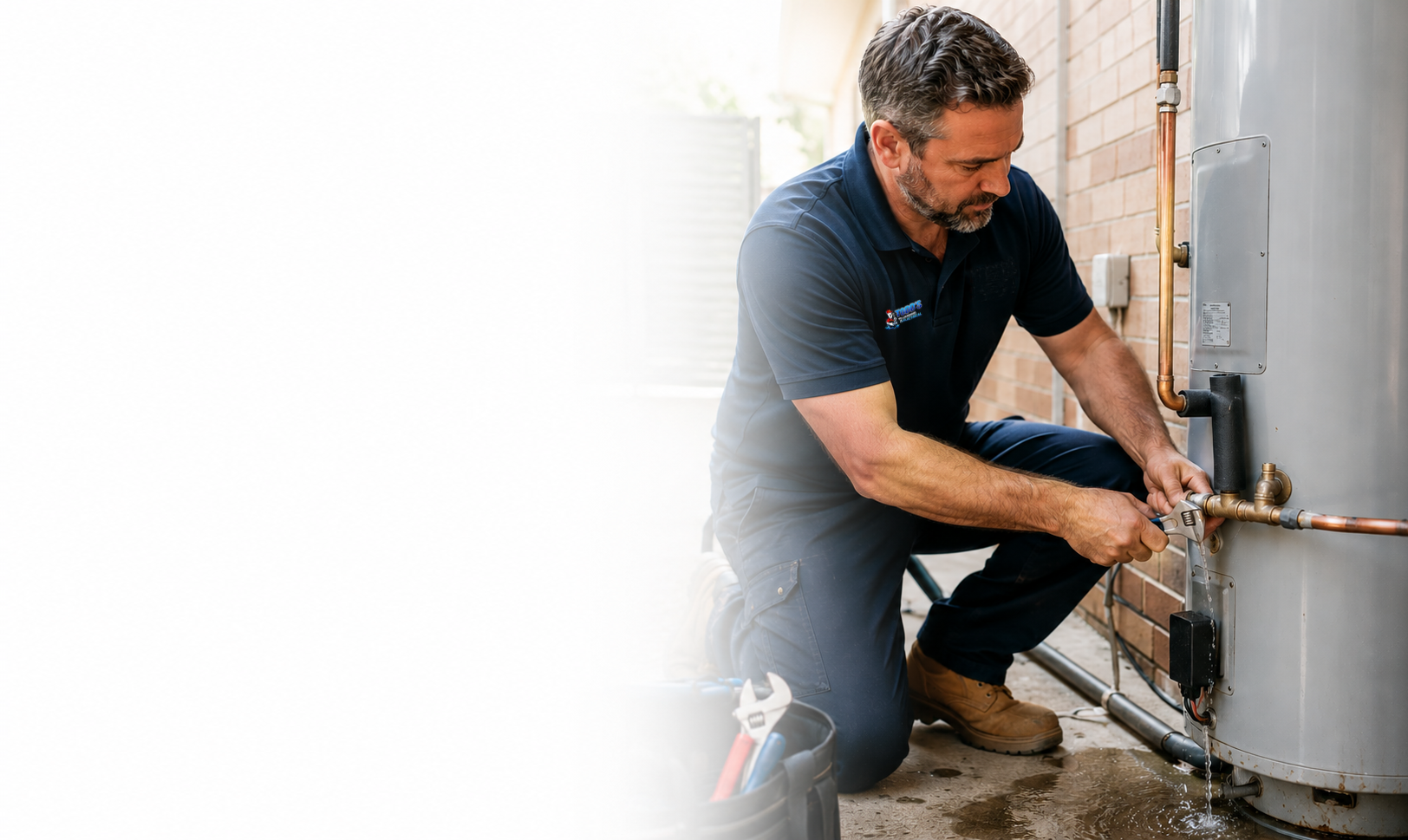
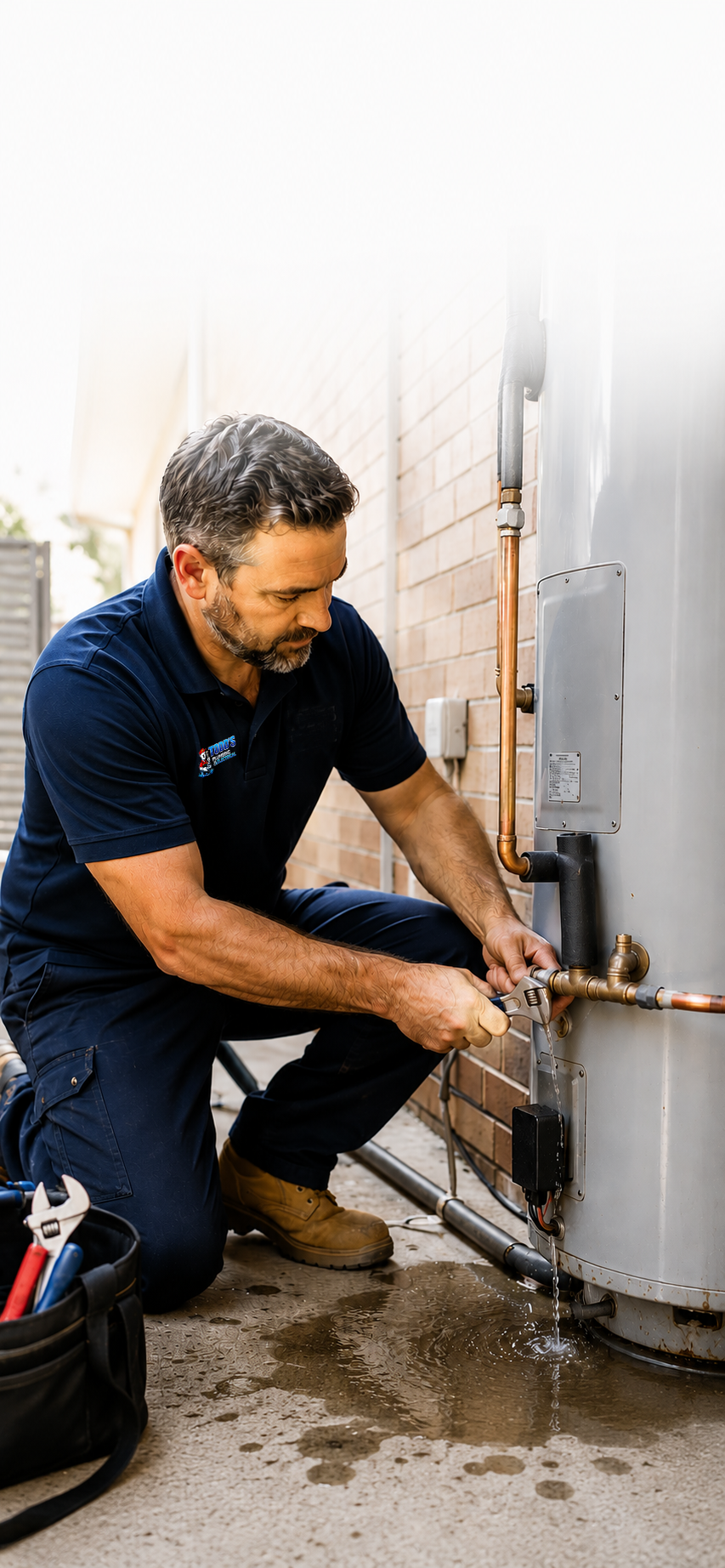
Tempering Valve Problems?Gold Coast Diagnosis & Replacement
If your hot water is too hot, too cold, inconsistent or suffering from poor pressure, a faulty tempering valve may be the cause. Todd's licensed plumbers can diagnose and replace tempering valves across the Gold Coast — often the same day.
What Is A Tempering Valve?
A tempering valve (also called a mixing valve or thermostatic mixing valve) mixes hot and cold water together to reduce the temperature of water delivered to your taps and showers. Its primary purpose is to prevent scalding while maintaining a consistent and safe water temperature throughout your home.
Under Australian standards, hot water systems must store water at 60°C or higher to kill harmful bacteria such as legionella. However, delivering water at 60°C directly to taps creates a serious scalding risk — particularly for children, elderly residents and people with reduced sensitivity. The tempering valve solves this by blending the stored hot water with cold water, typically delivering a mixed temperature of around 50°C to household fixtures.
Tempering valves are generally located near the hot water system itself — either mounted directly on the unit or installed in the pipework nearby. They are a mandatory requirement under Australian plumbing standards for most residential hot water installations.
Despite being small and relatively straightforward devices, tempering valves are precision components that can develop faults over time. When they do, the effects can range from mildly inconvenient — like inconsistent shower temperatures — to genuinely dangerous, such as water that is far too hot at the tap.
Signs Of A Faulty Tempering Valve
Tempering valve faults produce some very recognisable symptoms. If you are experiencing any of the following, your tempering valve deserves closer attention:
Hot Water Is Too Hot
Water arriving at your taps or shower is significantly hotter than it should be — or even scalding.
Hot Water Is Too Cold
Your water runs lukewarm or cold even though the hot water system itself is functioning normally.
Temperature Fluctuations
The water temperature keeps changing during use — alternating between hot and cold without any apparent reason.
Reduced Water Pressure
Hot water flow has noticeably dropped, even though cold water pressure remains normal.
Hot Water Takes Longer To Arrive
The time it takes for hot water to reach your taps has increased recently.
Inconsistent Shower Temperatures
Showers that were previously comfortable now run unpredictably hot or cold.
These symptoms can also be caused by other hot water system faults — which is exactly why accurate diagnosis matters. Our technicians assess the tempering valve first before investigating other components, saving you time and unnecessary expense.
Why Is My Hot Water Suddenly Too Cold?
When a tempering valve fails in the open position — allowing too much cold water into the mix — the result is water that feels lukewarm or cold even though the hot water system is producing heat normally.
This is one of the most common tempering valve failure modes. The internal components of the valve — typically a thermostatic cartridge — wear out over time. When the cartridge fails, it can no longer accurately regulate the mixing ratio, and the balance tips toward cold.
Other contributing factors include:
- Mineral build-up: Scale deposits from hard water can restrict movement within the valve, affecting its ability to blend accurately.
- Debris blockages: Sediment from ageing pipes can lodge inside the valve and disrupt normal operation.
- Valve age: Most tempering valves have a service life of around 5 to 8 years. Beyond this, performance can deteriorate significantly.
- Incorrect installation: A valve installed at the wrong temperature setting will deliver consistently cold water regardless of its condition.
Before assuming the hot water system itself is at fault, it is always worth checking the tempering valve. In many cases we attend homes in Southport, Robina and Helensvale where the system is in perfect working order — the tempering valve simply needs replacing.
Related: If your hot water system genuinely isn't heating, visit our Hot Water Not Heating Gold Coast page for further guidance.
Why Is My Hot Water Too Hot?
When a tempering valve fails in the closed position — blocking the cold water inlet — water is delivered at near-storage temperature, which can be dangerously hot.
This is the more dangerous failure mode and should be treated as a priority. Water at 60°C can cause serious scalding within seconds, and the risk is significantly higher for young children and elderly household members.
If your hot water is suddenly much hotter than normal, we recommend:
- Warning household members, particularly children, not to use hot water until the valve is inspected
- Calling Todd's for a same-day inspection
- Not attempting to adjust the valve yourself — incorrect adjustment can worsen the problem
Our plumbers service homes from Coomera and Pimpama through to Palm Beach and Burleigh. If your hot water is dangerously hot, call us on 0482 080 423 and we will prioritise your attendance.
Why Does My Shower Temperature Keep Changing?
Fluctuating shower temperatures are one of the most frustrating hot water problems — and a failing tempering valve is one of the most common causes.
As the thermostatic cartridge inside a tempering valve deteriorates, it loses the ability to maintain a stable mixing ratio. The result is water temperature that swings between hot and cold unpredictably, particularly noticeable during showers.
However, fluctuating temperatures can also result from:
- Pressure fluctuations: Changes in water pressure — from another tap being used simultaneously, for example — can affect the mixing ratio in a worn valve.
- Gas hot water issues: Continuous flow gas systems can struggle to maintain consistent temperatures if there are ignition or flow sensor faults. Visit our Gas Hot Water Repairs Gold Coast page for more information.
- Solar hot water booster faults: When a solar booster isn't operating correctly, water temperature can become inconsistent during low-solar periods.
- Thermostat faults: In electric systems, a failing thermostat can cause temperature instability that presents similarly to a tempering valve fault.
Our technicians are experienced at differentiating between these causes. Accurate diagnosis prevents unnecessary parts replacement and ensures the correct fault is addressed first time.
Can A Tempering Valve Reduce Water Pressure?
Yes — a faulty or partially blocked tempering valve can significantly reduce hot water pressure and flow rate, even when cold water pressure throughout the home remains normal.
This is a high-value diagnostic finding that many homeowners miss. Because the pressure issue is isolated to hot water only, the tempering valve is often the culprit rather than the hot water system itself or the home's main supply.
Common causes of pressure restriction through a tempering valve include:
- Internal debris accumulation: Sediment from ageing pipes can lodge inside the valve body and restrict flow.
- Scale build-up: In areas with harder water, mineral scale deposits can accumulate within the valve, narrowing the internal passages.
- Valve wear: As the internal cartridge deteriorates, it may not open fully, restricting the volume of water that can pass through.
- Incorrect valve sizing: Occasionally, a valve that is undersized for the property's flow requirements will produce chronically low pressure.
If you have good cold water pressure but consistently poor hot water pressure, your tempering valve should be one of the first things investigated. For a broader discussion of pressure problems, see our Hot Water Pressure Problems Gold Coast page.
Tempering Valve Problems By System Type
Electric Hot Water Systems
Electric storage hot water systems store water at 60°C or above. The tempering valve is essential for safe delivery. When it fails on an electric system, the symptoms are usually immediate — either scalding hot water or lukewarm water — because electric systems maintain a consistent storage temperature.
Element and thermostat faults on electric systems can sometimes mimic tempering valve symptoms. Our technicians will diagnose both before recommending a course of action. Learn more on our Electric Hot Water Repairs Gold Coast page.
Gas Hot Water Systems
Gas continuous flow systems are particularly sensitive to tempering valve problems because flow rate and temperature are closely linked. A restricted tempering valve can reduce flow below the minimum required to trigger the burner, resulting in no hot water at all rather than simply cold water.
On gas storage systems, a failing tempering valve produces similar symptoms to electric systems. Gas-specific faults — including ignition issues and burner problems — can present in similar ways. Visit our Gas Hot Water Repairs Gold Coast page for more detail.
Solar Hot Water Systems
Solar systems store water at very high temperatures — sometimes exceeding 80°C on sunny days. This makes a functioning tempering valve especially important for solar systems. A failed valve on a solar system in the height of a Gold Coast summer can deliver dangerously hot water.
Solar systems also place greater thermal stress on tempering valves due to the wider temperature ranges they experience. This can accelerate cartridge wear compared to conventional electric or gas systems. Our solar-accredited technicians are well-versed in these issues. More information is available on our Solar Hot Water Repairs Gold Coast page.
Heat Pump Hot Water Systems
Heat pumps typically store water at lower temperatures than electric or solar systems — usually around 60°C. While they are inherently more temperature-controlled, tempering valves are still required by Australian standards and can develop faults.
A partially blocked tempering valve on a heat pump can cause flow restrictions that reduce overall system performance. Heat pump-specific faults — such as sensor or controller issues — are sometimes blamed before the tempering valve is checked. Our technicians assess both. See our Heat Pump Repairs Gold Coast page for more information.
How Long Do Tempering Valves Last?
Most tempering valves have a serviceable lifespan of approximately 5 to 8 years, though this varies depending on water quality, usage patterns and the brand of valve installed.
Homes in areas with harder water — which affects parts of the Gold Coast hinterland including Mudgeeraba and Nerang — may find valves deteriorate more quickly due to mineral scale accumulation. High-usage households with multiple bathrooms also tend to experience shorter valve lifespans.
Australian standards recommend that tempering valves are inspected and serviced regularly. In practice, many homeowners are unaware their valve even exists until a fault develops.
Can Tempering Valves Be Repaired?
In most cases, the answer is no — not economically. Tempering valves are precision assemblies, and the internal cartridge that controls the mixing is generally not serviceable in the field.
Some valves allow cartridge replacement without replacing the entire valve body. However, given the relatively low cost of a complete valve replacement versus the labour involved in partial repairs — and the fact that a partially repaired valve may not maintain accurate calibration — full replacement is almost always the recommended approach.
Replacement is typically straightforward and can usually be completed in under an hour by a licensed plumber.
Tempering Valve Replacement
Tempering valve replacement is a licensed plumbing job and must be carried out by a qualified professional. In Queensland, plumbing work involving hot water systems requires a licensed plumber.
The replacement process involves:
- Isolating the hot water supply
- Removing the faulty tempering valve from the pipework
- Installing a correctly sized replacement valve
- Testing and calibrating the valve to the correct output temperature
- Verifying water temperature at the nearest outlet
At Todd's, we carry a range of replacement valves suited to different system types and flow rates. In most cases we are able to complete the replacement on the same day as our initial inspection, restoring safe, comfortable hot water without delay.
We service all Gold Coast suburbs including Southport, Labrador, Hope Island, Broadbeach, Mermaid Waters, Ashmore, Benowa, Pacific Pines and surrounding areas.
Call 0482 080 423How We Diagnose Tempering Valve Problems
Temperature Testing
We measure the water temperature at the nearest outlet to the hot water system and compare it to the expected delivery temperature.
Flow Testing
We assess hot water flow rate and compare it to cold water flow to identify whether a restriction is present within the valve.
Valve Inspection
We visually inspect the tempering valve for signs of corrosion, damage, scale build-up or incorrect installation.
Hot Water System Assessment
We verify that the hot water system is producing heat correctly, ruling out thermostat, element, gas or heat pump faults before attributing the problem to the valve.
Diagnosis & Recommendations
We provide a clear explanation of our findings and a recommendation — whether that is valve replacement, system repairs or further investigation.
Upfront Pricing
We provide transparent pricing before any work begins. No surprise costs.
Common Problems Often Mistaken For Tempering Valve Faults
Accurate diagnosis matters. Many of the symptoms associated with faulty tempering valves — inconsistent temperatures, low pressure, water that is too cold — can also be caused by faults elsewhere in the hot water system. Our technicians are trained to identify the actual cause before recommending repairs.
Thermostat Faults
A failing thermostat on an electric system can cause temperature inconsistency that closely resembles a tempering valve problem.
Heating Element Failures
Partial element failure results in lukewarm water that can be incorrectly blamed on the tempering valve.
Solar Controller Issues
When a solar controller malfunctions, booster operation becomes unpredictable, producing temperature variations throughout the day.
Heat Pump Component Faults
Sensor or compressor faults on heat pumps can reduce delivery temperature in ways that mimic a faulty tempering valve.
Gas Hot Water Faults
Ignition issues, gas supply problems or flow sensor faults on continuous flow systems produce temperature fluctuations similar to tempering valve symptoms.
Pipe Blockages
Debris or scale accumulation in pipework — independent of the valve — can produce localised pressure drops affecting specific fixtures.
Understanding the root cause saves money and prevents the frustration of replacing a valve that wasn't the actual problem. If the fault turns out to be elsewhere in your system, visit our Hot Water Repairs Gold Coast page for a full overview of what we repair.
Why Gold Coast Homeowners Choose Todd's
23+ Years Experience
Over two decades diagnosing and repairing hot water systems across the Gold Coast.
Licensed Plumbers
All work carried out by licensed, insured plumbers in compliance with Queensland standards.
Solar Accredited
Licensed and accredited for solar hot water systems — critical when tempering valves are involved.
Same Day Service
We prioritise hot water faults because we know how disruptive they are for your household.
Upfront Pricing
Clear, transparent pricing before any work begins. No surprise costs or hidden fees.
Honest Advice
We recommend replacement only when genuinely necessary. Family-owned, reputation-driven service.
We service Southport, Labrador, Helensvale, Hope Island, Coomera and Pimpama in the north through to Robina, Nerang, Burleigh, Palm Beach, Broadbeach, Mermaid Waters, Benowa, Ashmore, Pacific Pines and Mudgeeraba in the south — and everywhere in between.
Tempering Valve Problem? We Can Help Today
Call Todd's Plumbing & Electrical for fast, same-day diagnosis and replacement of faulty tempering valves across the Gold Coast.
Frequently Asked Questions
What does a tempering valve do?
A tempering valve mixes hot and cold water together to reduce the temperature of water delivered to household taps and showers. It prevents scalding by ensuring water arrives at a safe temperature — typically around 50°C — even though the hot water system stores water at 60°C or above.
Can a tempering valve cause low water pressure?
Yes. A faulty, blocked or scale-affected tempering valve can significantly reduce hot water pressure and flow, even when cold water pressure remains normal. Debris build-up, internal wear or scale deposits are the most common causes of flow restriction through a tempering valve.
Can a tempering valve make water too cold?
Yes. When the internal cartridge of a tempering valve fails in the open position, it allows too much cold water into the mix, resulting in water that feels lukewarm or cold even though the hot water system is working correctly.
Can a tempering valve make water too hot?
Yes — and this is the more dangerous failure mode. When the valve fails in the closed position, blocking the cold water inlet, water is delivered at near-storage temperature. On solar systems this can exceed 70°C, which poses a serious scalding risk. If your hot water is suddenly much hotter than usual, call us immediately.
How long do tempering valves last?
Most tempering valves have a serviceable lifespan of approximately 5 to 8 years, depending on water quality, usage and the brand of valve. Australian standards recommend periodic inspection and servicing of tempering valves.
Can tempering valves be repaired?
In most cases, full replacement is the recommended approach rather than repair. The internal cartridge that controls mixing is generally not serviceable in the field, and replacement is typically straightforward and cost-effective.
How much does tempering valve replacement cost?
Tempering valve replacement costs vary depending on the valve type, access and whether any associated pipework needs attention. We provide upfront pricing before any work begins so there are no surprises. Call 0482 080 423 for a fast, transparent quote.
Do all hot water systems have tempering valves?
Under Australian plumbing standards, most residential hot water systems are required to have tempering valves installed. This includes electric storage, solar, heat pump and gas storage systems. Some continuous flow gas systems have internal temperature controls that may reduce the requirement, but a licensed plumber can confirm what your system requires.
How quickly can Todd's replace a tempering valve?
In most cases we can attend and complete tempering valve replacement on the same day. We carry a range of replacement valves to suit different system types, so there is rarely a need to wait for parts.
Do you service all Gold Coast suburbs?
Yes. We service all Gold Coast suburbs from Coomera and Hope Island in the north through to Coolangatta in the south, including Southport, Labrador, Helensvale, Robina, Nerang, Burleigh, Palm Beach, Broadbeach, Mermaid Waters and all surrounding areas.
Get Your Fast Quote
Need a plumber or electrician fast? Fill out the form below with your details and what you need help with. We normally respond within minutes.
Urgent? Call or Text Us Directly
0482 080 423- No obligation quote
- Friendly local experts
- Upfront pricing guarantee