
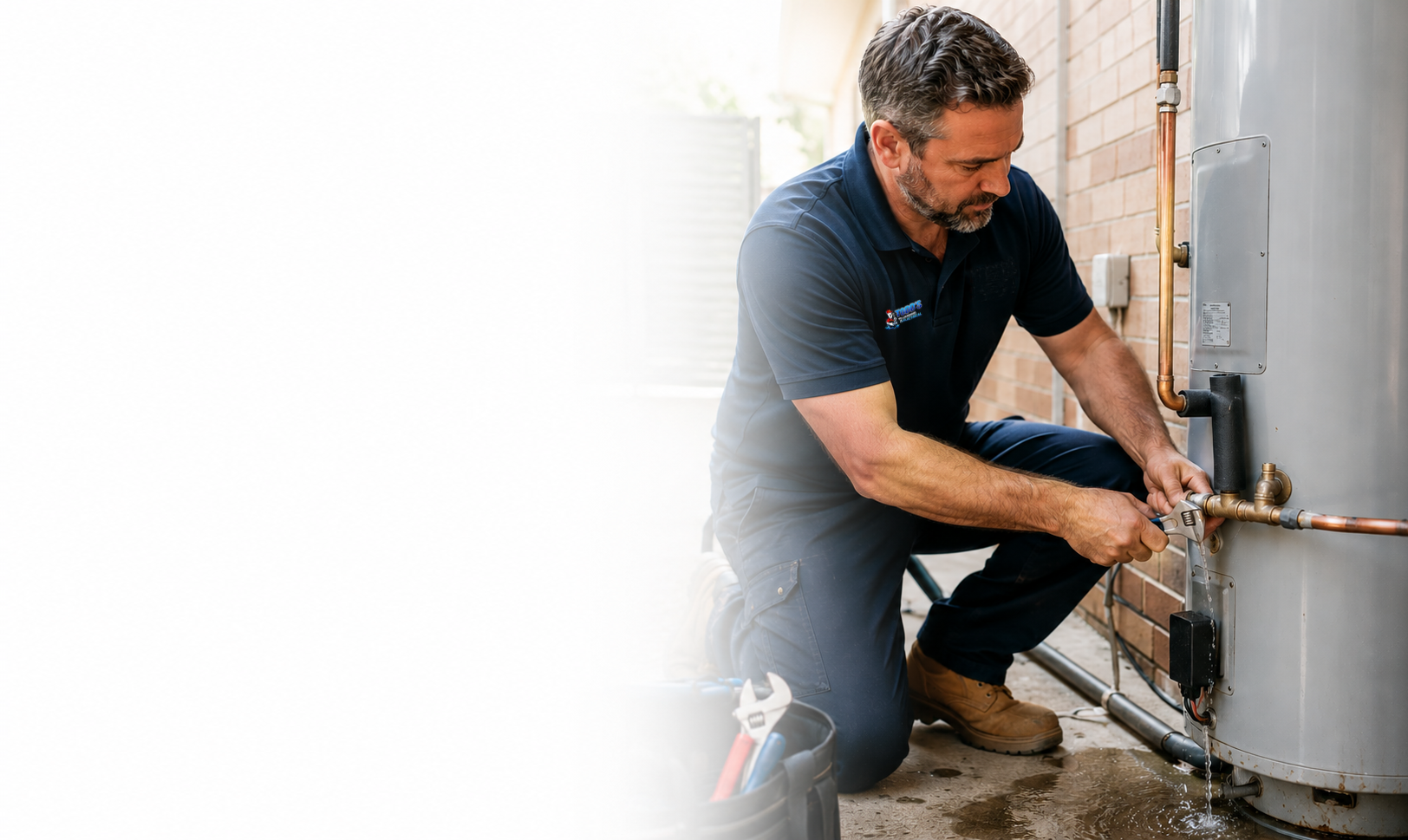
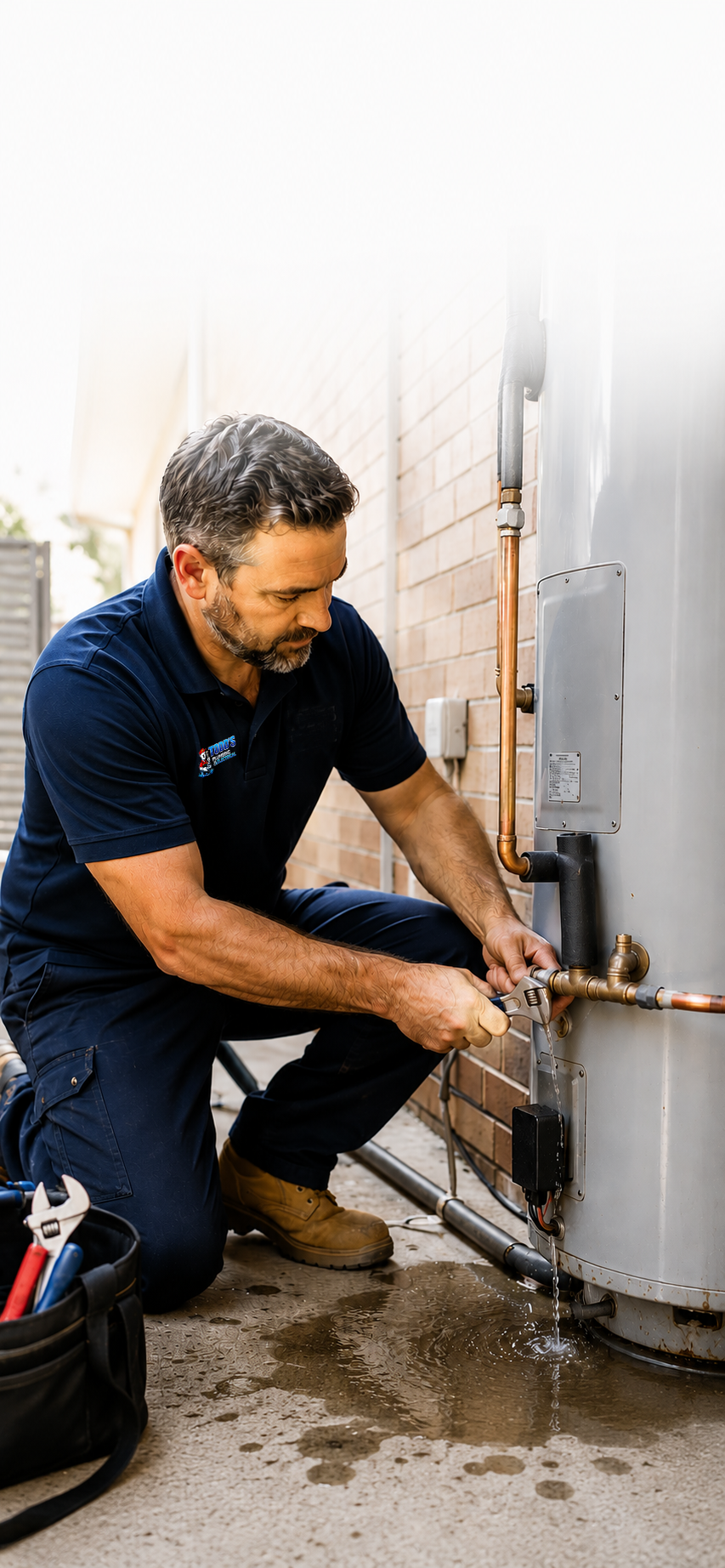
PTR Valve Leaking?Gold Coast Diagnosis & Replacement
If your hot water system's PTR valve is dripping or constantly discharging water, Todd's can identify the cause and provide the right repair solution.
What Is A PTR Valve?
A PTR valve — short for Pressure and Temperature Relief valve — is a critical safety device fitted to every hot water storage system in Australia.
Its sole purpose is to protect your hot water system and your home from dangerous over-pressurisation or overheating. If the pressure or temperature inside your hot water tank rises beyond safe operating limits, the PTR valve automatically opens and releases water to reduce the risk of a catastrophic failure.
PTR valves are fitted to electric storage systems, gas storage systems, solar hot water systems and heat pump systems. They are typically located on the side or top of the storage tank and connected to an overflow pipe that directs discharged water safely away from the unit — usually to a drain or garden area.
Why PTR Valves Matter
Without a functioning PTR valve, a hot water system can build up dangerous levels of pressure or heat. Australian standards require PTR valves on all storage hot water systems and recommend replacement every five years as part of routine maintenance.
Because PTR valves are safety-critical components, any fault — including persistent leaking — should be assessed by a licensed plumber. Todd's has been diagnosing and replacing PTR valves across the Gold Coast for over 23 years and can quickly determine whether your valve needs replacing or whether there is an underlying issue driving the discharge.
Is It Normal For A PTR Valve To Drip?
A small amount of intermittent discharge from a PTR valve during heating cycles can be completely normal — this is the valve doing exactly what it is designed to do.
As water heats inside a storage tank, it expands. This creates a temporary increase in pressure. The PTR valve may release a small quantity of water to manage this expansion, particularly on electric systems that heat during off-peak overnight periods. You might notice a brief drip from the overflow pipe in the morning — this is generally not a cause for concern.
However, the following are not normal and should prompt a call to a licensed plumber:
- Constant or heavy dripping that does not stop after heating
- A steady stream of water from the overflow pipe
- Discharge of hot or scalding water
- Water pooling around the base of the hot water system
- The valve has been dripping for several days without stopping
- Discharge has worsened over time
If you live in an area like Pimpama, Coomera or Helensvale where mains water pressure can be higher than average, your PTR valve may discharge more frequently. In these cases, a pressure check is always worthwhile to determine whether a pressure limiting valve is needed.
Why Is My PTR Valve Constantly Leaking?
Constant PTR valve discharge is one of the most common hot water complaints we receive across the Gold Coast. The good news is that in most cases, the cause is identifiable and repairable.
Valve Wear
PTR valves have a finite service life. Over time, the internal components wear and the valve seat may no longer seal properly, resulting in a constant drip. Replacement is straightforward and relatively affordable.
Debris In The Valve
Mineral deposits, sediment or pipe debris can lodge in the valve seat, preventing it from closing fully. This is especially common in areas with harder water or older plumbing.
Excessive Mains Pressure
If your mains water pressure exceeds the valve's rated pressure threshold, it will discharge continuously. A pressure limiting valve upstream of the hot water system is the solution in these cases.
Faulty Thermostat
A thermostat that has failed and is allowing water to overheat will cause the temperature relief function to activate repeatedly. The root cause here is the thermostat, not the PTR valve.
Failed Expansion Control Valve
If your expansion control valve has failed, pressure build-up that would otherwise be managed by the ECV will instead be directed to the PTR valve, causing it to discharge more than normal.
Overheating System
Heat pump systems, solar systems or electric systems with faulty heating controls can allow tank temperatures to rise excessively, repeatedly triggering the PTR valve's temperature function.
What Causes A PTR Valve To Fail?
PTR valves fail for several reasons, most of which are related to age, water quality or operating conditions.
Australian standards recommend PTR valves be replaced every five years as a matter of routine maintenance — not just when they start leaking. Like any mechanical component exposed to hot water, pressure fluctuations and mineral content, PTR valves deteriorate over time.
- Age: Most PTR valves have a practical service life of five to eight years. Beyond this, the risk of failure increases significantly.
- Water Quality: Gold Coast water can contain minerals that build up on internal valve components over time, affecting their ability to seal correctly.
- Sediment: Fine particles from older pipes or the tank itself can accumulate in the valve seat and prevent full closure.
- Pressure Fluctuations: Repeated pressure surges from mains supply can stress valve components over time, accelerating wear.
- Lack Of Maintenance: PTR valves that are never manually tested or replaced tend to fail more abruptly. Regular maintenance extends system reliability.
If your PTR valve is more than five years old and has started dripping, replacement is almost always the most practical recommendation. Our technicians serving areas such as Southport, Robina, Burleigh and Palm Beach carry replacement valves suited to all common hot water systems.
Can High Water Pressure Cause PTR Valve Leaks?
Yes — excessive mains water pressure is one of the most frequently overlooked causes of PTR valve discharge on the Gold Coast.
Australian standards recommend mains water pressure be maintained between 200 and 500 kilopascals at the point of connection. Many Gold Coast properties — particularly in newer growth corridors like Coomera, Pimpama and Hope Island — can experience pressures above this range, especially during periods of low demand overnight.
When mains pressure exceeds the PTR valve's rated pressure threshold, the valve will discharge as designed. While this confirms the valve is functioning correctly, constant pressure-induced discharge is stressful on the valve and indicates a broader pressure management issue that should be resolved.
Common solutions include:
- Installation of a pressure limiting valve (PLV) upstream of the hot water system
- Installation or inspection of an expansion control valve
- PTR valve replacement if the existing valve has been damaged by repeated high-pressure discharge
Our technicians will perform a pressure test as part of every PTR valve diagnosis to ensure any underlying pressure issues are identified and addressed.
Can A Faulty Thermostat Cause A PTR Valve To Leak?
Yes. A failed thermostat is a common underlying cause of PTR valve discharge that is frequently misdiagnosed as a simple valve fault.
The PTR valve has two distinct functions — pressure relief and temperature relief. If a thermostat fails and allows water inside the tank to overheat, the temperature relief function activates and the valve discharges hot water to prevent a dangerous situation.
Signs that overheating may be driving your PTR valve discharge include:
- The overflow pipe is discharging very hot or scalding water
- Hot water from your taps is excessively hot
- The hot water system itself feels very hot to the touch
- Discharge is more frequent after heating cycles
- The system is an older electric storage unit
In these cases, replacing only the PTR valve will not resolve the underlying issue. Our technicians always assess the full system — including thermostat function — before recommending repairs. This approach saves our customers from unnecessary repeat call-outs and ensures the root cause is properly addressed.
Expansion Control Valve Problems And PTR Valve Leaks
An expansion control valve (ECV) works in conjunction with your PTR valve to manage pressure inside the hot water system. When an ECV fails, it can place additional load on the PTR valve.
In a correctly functioning system, the ECV absorbs the pressure increase caused by thermal expansion during heating. If the ECV fails — either by becoming blocked or failing in the closed position — that pressure has nowhere to go except through the PTR valve, causing it to discharge more frequently than normal.
Signs that an expansion control valve issue may be contributing to your PTR valve discharge include:
- PTR valve discharges after every heating cycle rather than occasionally
- Discharge volume seems excessive for normal thermal expansion
- Mains pressure is within normal range but the PTR valve still leaks
During our diagnosis, we assess both the PTR valve and the expansion control valve to ensure the full pressure management system is functioning correctly. Replacing a PTR valve without addressing a failed ECV will typically result in the new valve leaking in the same way.
PTR Valve Leaks By System Type
Electric Hot Water PTR Valve Leaks
Electric storage systems are the most common source of PTR valve calls we receive across the Gold Coast. The most frequent causes are thermostat failure causing overheating, ageing PTR valves that have exceeded their service life and excessive mains pressure.
Electric systems on off-peak tariffs heat overnight when demand is low and pressure can be higher. If your system heats overnight and you notice discharge in the morning, a pressure test is recommended to rule out mains pressure as the cause. If you suspect your electric system has a broader issue, our Electric Hot Water Repairs Gold Coast page covers the full range of common electric system faults.
Gas Hot Water PTR Valve Leaks
Gas storage systems can experience PTR valve discharge due to thermostat failure, temperature regulation faults or excessive mains pressure. Continuous flow gas systems do not typically have PTR valves in the same way as storage units, but storage gas systems do.
If your gas hot water storage system is running the PTR valve frequently, a full system assessment including gas and temperature testing is warranted. Learn more on our Gas Hot Water Repairs Gold Coast page.
Solar Hot Water PTR Valve Leaks
Solar hot water systems can be particularly prone to PTR valve discharge during periods of intense sunshine. Solar collectors can heat water to very high temperatures — sometimes well above the normal operating range — which the PTR valve must manage as a safety function.
This is not always a fault — it can simply be the system managing exceptionally high solar input. However, if your solar system is discharging from the PTR valve on a daily basis or in excessive volumes, a controller, sensor or circulation fault may be contributing. Our team of solar-accredited plumbers and electricians can assess the full system. See our Solar Hot Water Repairs Gold Coast page for more information.
Heat Pump PTR Valve Leaks
Heat pump systems can experience PTR valve discharge for similar reasons to electric systems — pressure issues, thermostat faults or valve wear. A common point of confusion is condensate water, which drips from the heat pump evaporator during normal operation and is often mistaken for a PTR valve leak.
Our technicians can quickly distinguish between normal condensate discharge and a genuine PTR valve fault. If your heat pump has broader performance issues, visit our Heat Pump Repairs Gold Coast page.
Does A Leaking PTR Valve Mean My Hot Water System Needs Replacing?
Not necessarily. In many cases, a leaking PTR valve can be replaced without replacing the entire hot water system — and the system can then continue operating reliably for many more years.
However, a PTR valve leak can sometimes be a symptom of a broader issue that warrants a full system assessment:
- • Worn PTR valve on a relatively modern system
- • Valve discharge caused by mains pressure (PLV needed)
- • Failed expansion control valve
- • Faulty thermostat causing overheating
- • Debris in valve seat on a system in good condition
- • Tank is leaking or corroded
- • System is over 15 years old with multiple faults
- • Repeated PTR valve failures in a short period
- • Tank condition is poor and repair costs are high
- • Obsolete system with limited parts availability
Our approach is always to give honest advice. If a PTR valve replacement will restore your system to reliable operation, we'll say so. If the underlying system condition suggests replacement is the smarter long-term investment, we'll explain why — with no pressure to decide on the spot.
PTR Valve Replacement On The Gold Coast
PTR valve replacement is one of the most common hot water repairs we carry out across the Gold Coast — from Southport and Labrador in the north to Palm Beach and Mudgeeraba in the south.
The replacement process involves isolating the hot water system, removing the faulty valve, fitting a new compliant PTR valve and testing the system under normal operating conditions. Our technicians carry replacement valves suited to all common hot water brands — including Rheem, Rinnai, Dux, Thermann, Aquamax, Vulcan, Bosch and others.
All PTR valve replacements are carried out to Australian standards by licensed plumbers. We also check your expansion control valve and system pressure as part of the replacement to ensure no underlying issues remain that would cause the new valve to fail prematurely.
Same-Day Service Available
We understand that a leaking PTR valve is not just an inconvenience — it is wasting water and money every hour it continues. Todd's offers same-day service across all Gold Coast suburbs. Call us on 0482 080 423 to arrange a fast response.
How We Diagnose PTR Valve Problems
Our approach to PTR valve diagnosis goes beyond simply replacing the valve. We identify the root cause to ensure the fix is permanent.
Visual Inspection
We inspect the PTR valve, overflow pipe, expansion control valve and surrounding pipework for signs of wear, damage or blockage.
Pressure Testing
We test the mains water pressure to determine whether excessive pressure is contributing to the discharge.
Temperature Assessment
We check the system's operating temperature to identify whether the temperature relief function is being triggered by overheating.
Valve Assessment
We assess the condition and age of the PTR valve and expansion control valve to determine whether replacement is required.
Full System Inspection
We inspect the thermostat, heating components and tank condition to ensure no underlying fault is driving the discharge.
Upfront Pricing
We provide clear recommendations and upfront pricing before any work begins — no surprises.
Why Gold Coast Homeowners Choose Todd's
Todd's Plumbing & Electrical has been the trusted name for hot water repairs across the Gold Coast for over 23 years. We're a family-owned and operated business — not a large franchise — which means every job matters to us.
Local Family Business
Proudly Gold Coast owned and operated for over 23 years. We live and work in the same communities we service.
Licensed Plumbers
All PTR valve replacements are carried out by licensed plumbers in full compliance with Australian standards.
Same Day Service
We offer same-day attendance across all Gold Coast suburbs — from Helensvale and Hope Island to Robina and Mudgeeraba.
Honest Advice
We'll always give you a straight answer. If a PTR valve replacement is all that's needed, that's what we'll recommend.
Solar Accredited
Our solar-accredited technicians can service PTR valves on solar hot water systems as well as standard storage units.
Upfront Pricing
No hidden costs. We provide clear pricing before any work begins so you know exactly what you're paying.
Whether you're in Broadbeach, Benowa, Pacific Pines or anywhere else on the Gold Coast, our team is ready to respond quickly. For a leaking PTR valve, same-day service is available. Call us on 0482 080 423 or use the form below to request a quote.
Frequently Asked Questions
PTR valve leaks on the Gold Coast — answered by experienced plumbers
Get Your Fast Quote
Need a plumber or electrician fast? Fill out the form below with your details and what you need help with. We normally respond within minutes.
Urgent? Call or Text Us Directly
0482 080 423- No obligation quote
- Friendly local experts
- Upfront pricing guarantee