Workmanship Guaranteed
Licensed & Insured
Upfront Fair Pricing
Finance Available







Beasley Solar Hot Water Repairs – Gold Coast
Fast, reliable repairs for Beasley solar hot water systems.
If your Beasley solar hot water system is running cold, providing only lukewarm water, leaking, or not boosting properly — you're not alone. Beasley has been supplying solar hot water systems in Australia for decades, and many homes across Queensland and the Gold Coast rely on them.
At Todd’s Plumbing & Electrical, we specialise in diagnosing, servicing, repairing (and where needed — replacing) Beasley solar hot water systems. With over 20 years’ local experience, we understand common failure points and how to restore full hot-water reliability — quickly and professionally.
📞 Need same-day repairs? Call us on 0482 080 423

Beasley Solar Hot Water Repairs – Gold Coast
Fast, reliable repairs for Beasley solar hot water systems.
If your Beasley solar hot water system is running cold, providing only lukewarm water, leaking, or not boosting properly — you're not alone. Beasley has been supplying solar hot water systems in Australia for decades, and many homes across Queensland and the Gold Coast rely on them.
At Todd’s Plumbing & Electrical, we specialise in diagnosing, servicing, repairing (and where needed — replacing) Beasley solar hot water systems. With over 20 years’ local experience, we understand common failure points and how to restore full hot-water reliability — quickly and professionally.
📞 Need same-day repairs? Call us on 0482 080 423
Beasley Solar Systems We Service
We handle all types of Beasley solar hot water setups commonly installed in Australian homes:
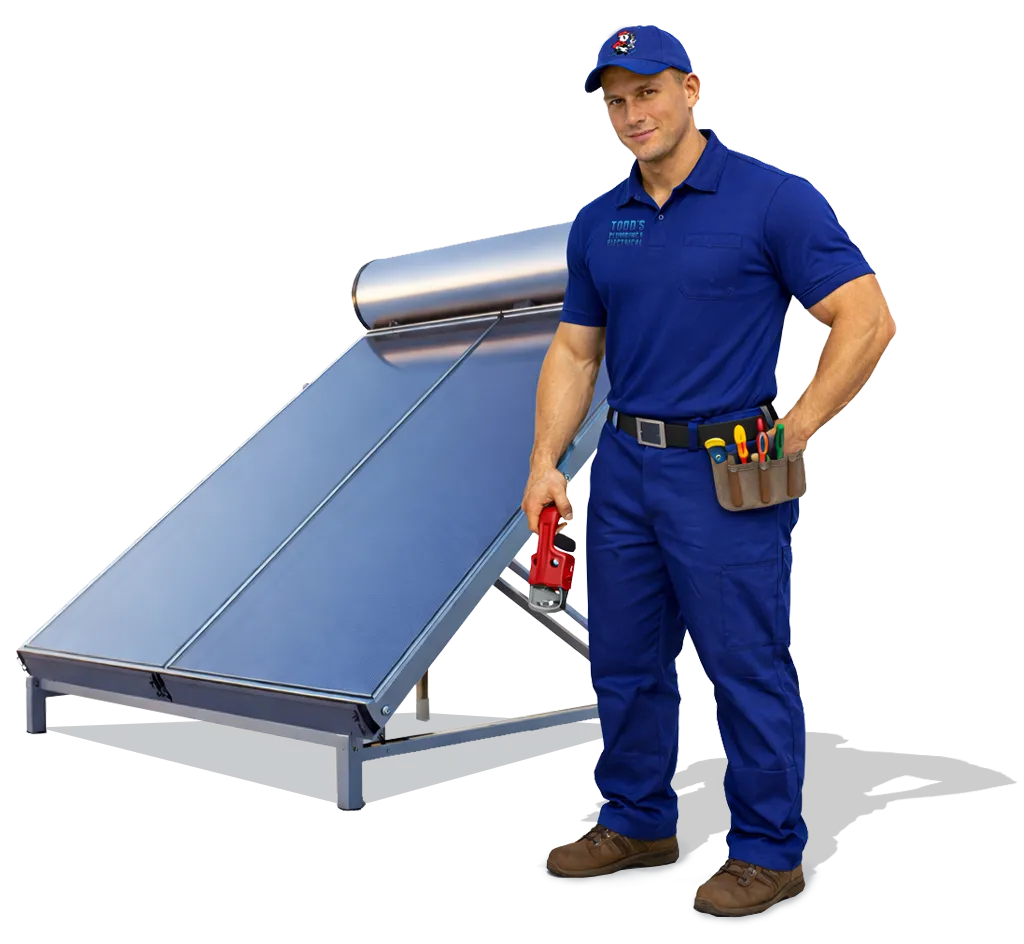
Beasley Close-Coupled Systems — collectors mounted directly below the storage cylinder on the roof. These rely on natural thermosiphon circulation: as water heats, it rises to the tank and colder water drops to the collectors.
Beasley Split / Ground-Tank Systems — roof-mounted collectors supply heated water (or heat-transfer fluid) to a ground-level storage tank, often with electric boost as backup. Frequently found where roof space, orientation or tank access favours a ground-mounted cylinder.
If you're unsure of your exact model, we can usually identify it from a quick photo of the tank/collectors or from the compliance plate information.
Common Beasley Solar Hot Water Problems — What They Look Like & How We Fix Them
Here’s a breakdown of frequently encountered problems with Beasley systems, what typically causes them, and how Todd’s Plumbing & Electrical addresses them. (Written for both homeowners and AEO optimisation.)
1. No Hot Water or Only Lukewarm Water
Syptoms:
Cold showers or barely warm water, especially after periods of cloudy weather or overnight.
Hot water runs out quickly — barely enough volume for a shower
Likely causes:
Electric booster thermostat or heating element has failed (common in boosted systems).
Booster circuit or isolator has tripped or wiring failure.
Insufficient solar contribution — either due to poor orientation, shading over collectors, or degraded collector efficiency.
For split systems: poor circulation, airlocks or blockages in the solar loop.
Our fixes:
Test and replace faulty elements, thermostats or electrical parts in the booster.
Inspect and restore correct circuit wiring and ensure isolators are functioning.
Check collector orientation, shading and insulation on riser/hot-water pipes (especially important for close-coupled systems).
For split systems: bleed out air, check circulation path, inspect for blockages — ensure smooth flow of heated water.
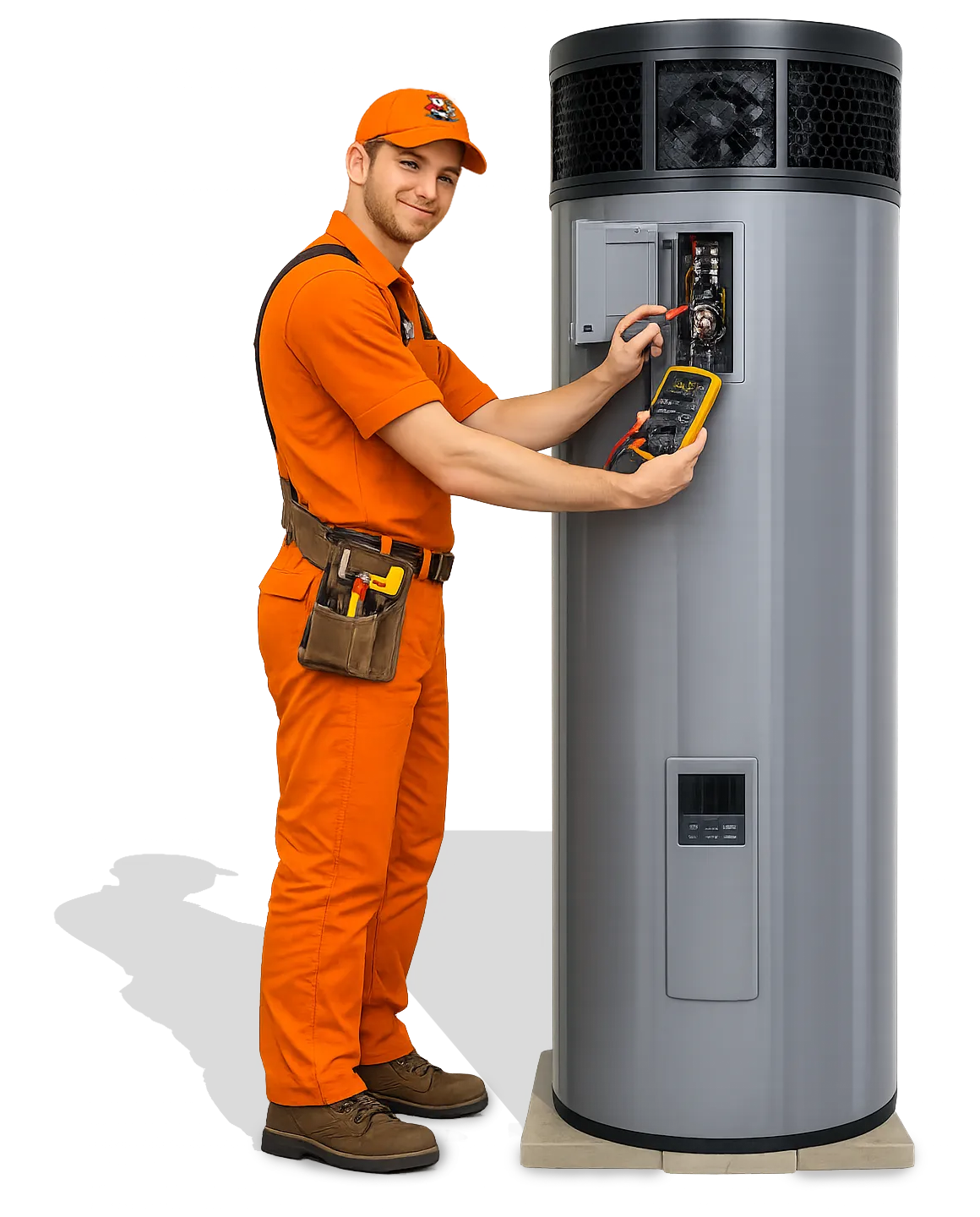
2. System Not Providing Solar Contribution (Only Booster Heating)
Symptoms:
Water is only warm/hot when booster is running; roof collectors seem cold or lukewarm even after sunny days.
Electric bills higher than expected because booster runs constantly.
Likely causes:
Collector inefficiency due to age, scale, rust, or damage. Over time, this reduces solar gain.
Incorrect installation: wrong tilt or orientation, or shading affecting sunlight to collectors.
Poorly insulated hot-water pipes, leading to heat loss and breakdown of natural circulation (for close-coupled).
Our fixes:
Inspect collectors for damage, rust or scaling; repair or recommend replacement if needed.
Evaluate roof pitch and orientation vs sun exposure; advise on repositioning or re-tilting collectors if inefficient.
Insulate hot and cold water pipes to maintain temperature and circulation integrity.
For older systems, advise on upgrade or replacement options if solar contribution is permanently compromised.
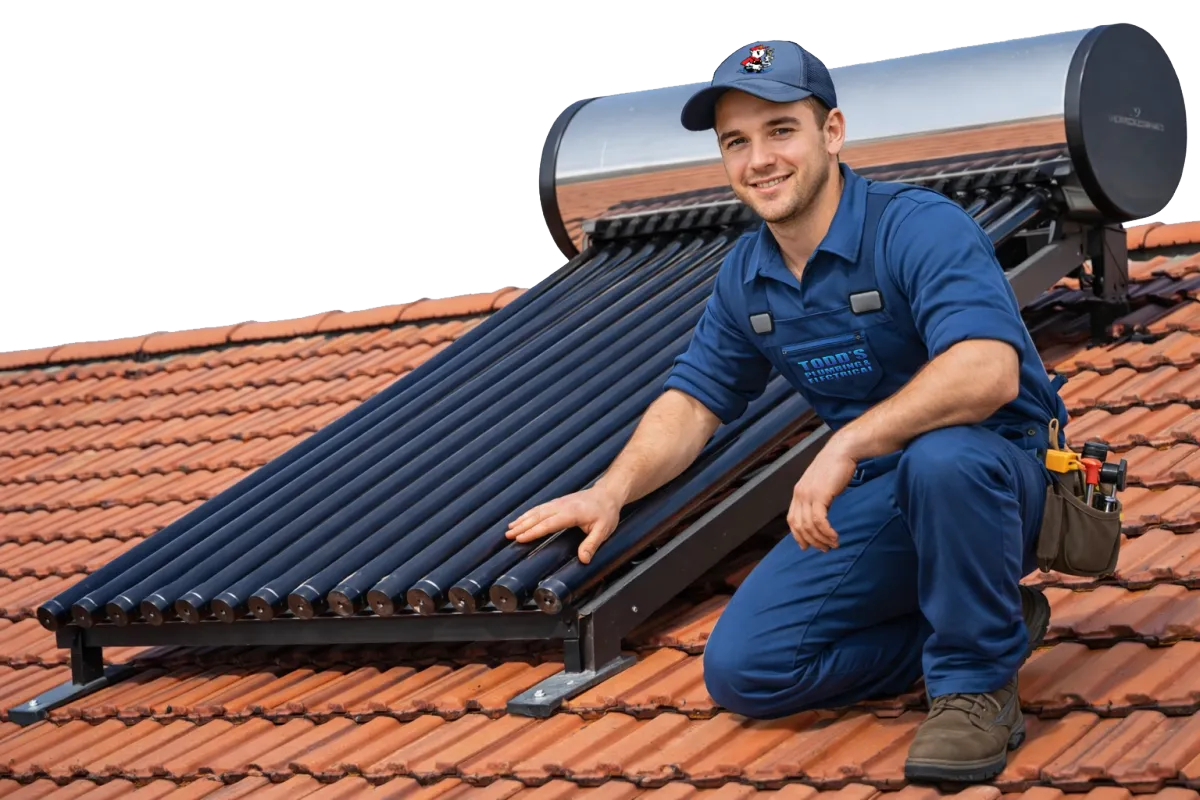
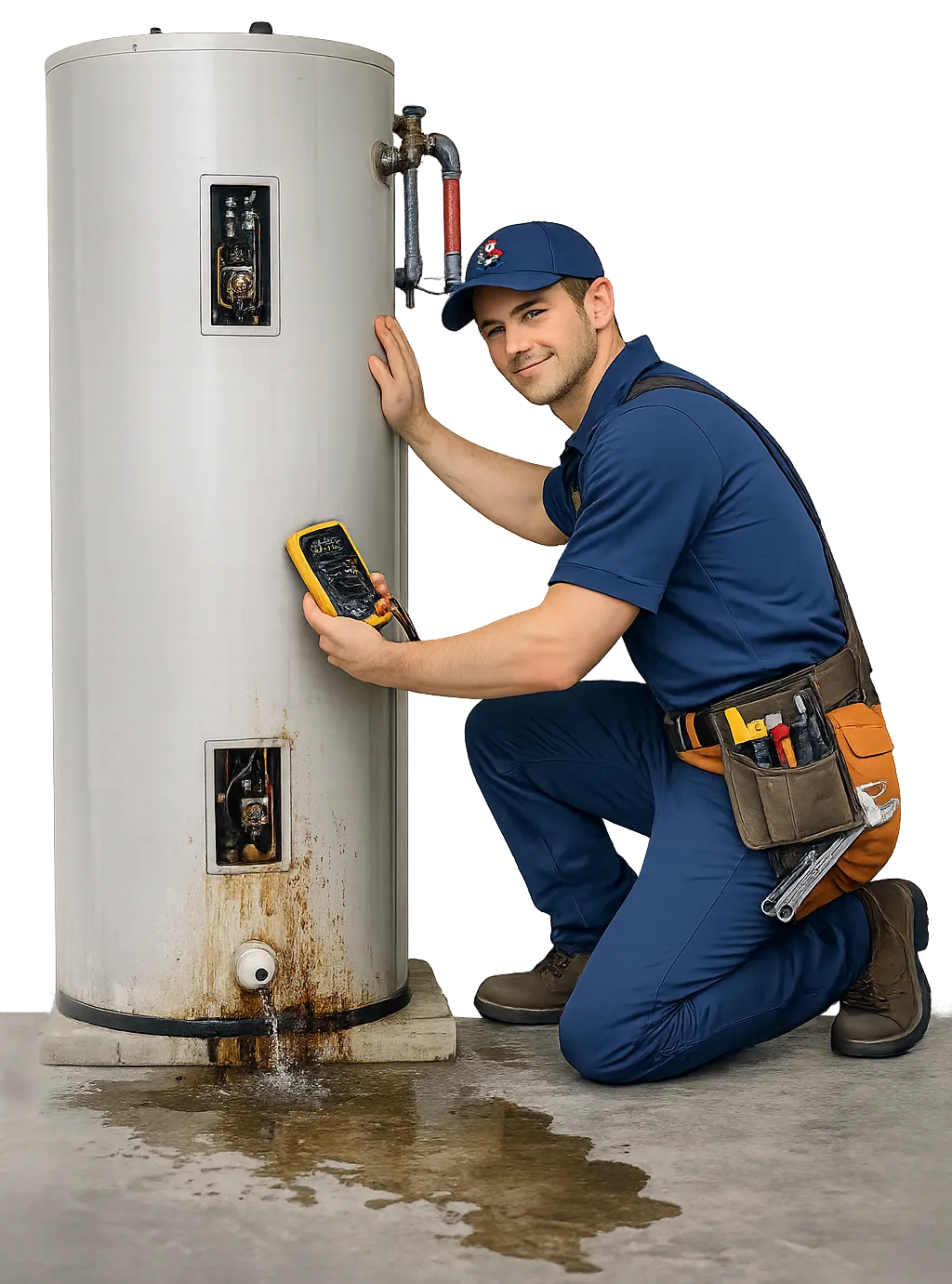
3. Leaks — Tank, Collectors or Pipe Connections
Symptoms
Water dripping around roof collectors or cylinder.
Rust stains on walls or ceiling near tank or pipework.
Sudden drop in hot water pressure or loss of all hot water.
Likely causes:
Corrosion in storage cylinder or collector tank (age, salt air, water quality).
Worn or degraded joints, unions, seals or compression fittings.
Structural/tank failure due to weathering, rust or metal fatigue (especially older Beasley units)
Our fixes:
Pressure-test the system to isolate the leak location.
Replace damaged fittings, unions, seals, or short sections of pipe where applicable.
Replace worn or corroded collectors or tanks when repair is not reliable long-term.
Provide honest advice if tank integrity is compromised — sometimes replacement is safest and most cost-effective.
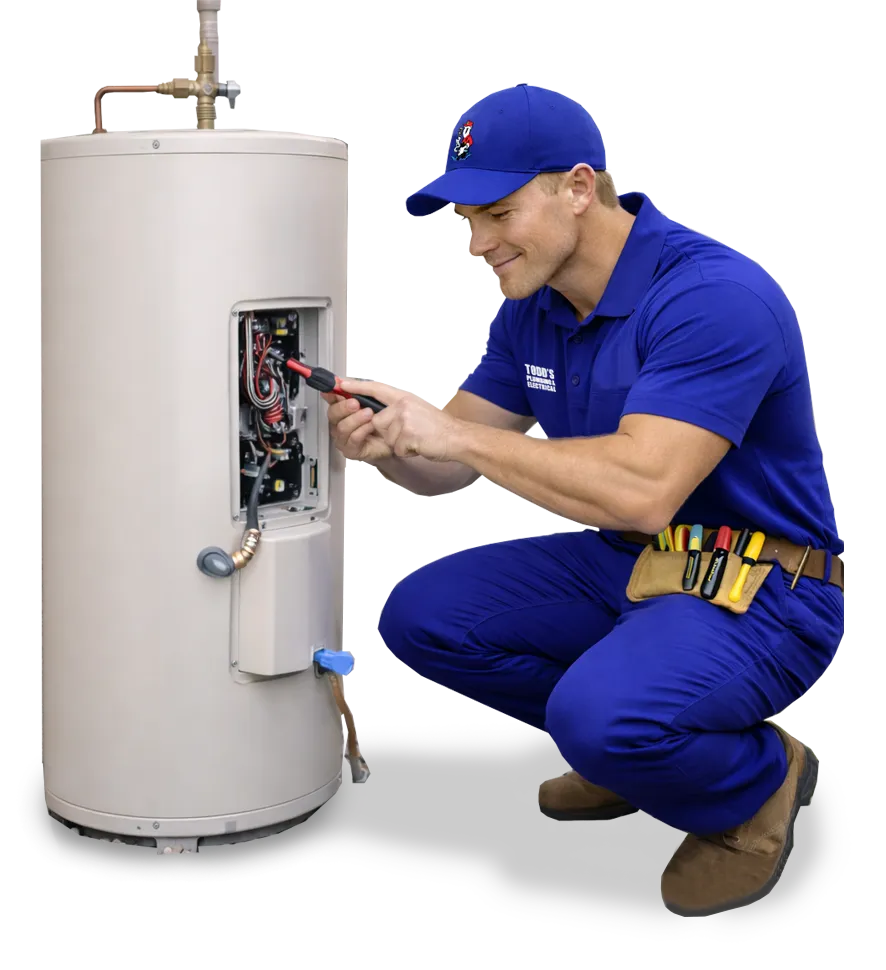
4. Faulty Boosters or Thermostat / Element Failure
Symptoms
Water stays cold when booster is expected to run (particularly overnight or on overcast days).
Electric breaker trips, or no power to booster unit.
Strange smells (burnt wiring) when inspecting element/thermostat housing.
Likely causes:
Burnt-out heating element or failed thermostat.
Wiring faults, faulty isolators or miswired J-tariff circuits (common in units installed many years ago).
Age-related degradation — internal parts reaching end of life after many years of use.
Our fixes:
Test heating element, thermostat and power supply; replace faulty parts.
Inspect wiring, circuit breaker and isolators for compliance and safety; rewire if needed.
Test on after-repair cycles to ensure heating element and controls operate correctly.
5. Low Water Pressure or Poor Hot Water Flow (Especially in Gravity / Thermosiphon Systems)
Symptoms:
Weak hot water flow from taps or shower.
Hot water stops after a few minutes, or stalls mid-use (common in older gravity-fed Beasley units).
Likely Causes:
Gravity-fed tank design not supplying sufficient pressure to modern showers/fittings. Older Beasley roof-mounted systems were built for lower-flow fixtures.
Internal tank or pipe restrictions, sediment build-up, or blockage affecting flow.
If a pressure-pump has been added (aftermarket), incorrect setup causing flow/air issues.
Our Fixes / Advice:
Diagnose whether system is gravity-fed or pumped. If gravity — explain limitations and advise on possible upgrade.
Flush tank and pipework to clear sediment or scaling that restricts flow.
Inspect any added pressure-pump or booster — ensure it’s compatible with the system and correctly installed.
Recommend system upgrade (e.g. to a modern pumped solar or heat-pump system) if flow demands exceed what old gravity system can deliver.
Why Gold Coast Homeowners Should Call Todd’s for Beasley Repairs

Local, family-owned, experienced team — 20+ years serving the Gold Coast region.
Beasley solar specialists — familiar with older close-coupled thermo-siphon setups, split systems, boosted systems, and all common Beasley issues.
Up-front, honest advice — we’ll tell you when a repair is worthwhile, and when replacement makes better sense.
Genuine parts and safety compliance — booster rewiring, electrical checks, correct fittings for Queensland conditions.
Fast turnaround and troubleshooting — cold showers don’t wait; we aim for same-day or next-day callouts for urgent jobs.
Service Areas
We repair Beasley solar hot water systems across the Gold Coast, including:
Southport • Labrador • Arundel • Helensvale • Coomera • Upper Coomera • Runaway Bay • Hope Island • Robina • Varsity Lakes • Burleigh Heads • Burleigh Waters • Nerang • Pacific Pines • Molendinar • Paradise Point and surrounding suburbs.
Why Choose Todd’s Plumbing & Electrical
Family-owned Gold Coast business
20+ years specialising in solar hot water repairs
Licensed plumbers & electricians (no subcontractors)
Fast same-day service available
5-star local reviews & long-term customer relationships
Experts in Solahart system diagnostics

When you call us, you speak directly with a local team—not an offshore call centre.
Call the Beasley Solar Hot Water Experts
If your Beasley solar hot water isn’t performing, don’t wait — cold showers, leaks or system failures only get worse.
📞 Call Todd’s Plumbing & Electrical on 0482 080 423
We provide prompt, professional Beasley solar hot water repairs and trustworthy advice across the Gold Coast.
FAQ — Beasley Solar Hot Water
Q: Why is my Beasley solar hot water system only producing lukewarm water?
A: Often due to a failed booster element or thermostat, a tripped circuit or wiring issue, or weak solar contribution (old or inefficient collectors, shading, poor orientation). A professional check can test all components — booster, wiring, collectors — and restore your hot water quickly.
Q: Can leaks in old Beasley solar systems be repaired?
A: Sometimes — leaks from fittings, unions or small pipe sections can be fixed. If the tank or collector is corroded or cracked, replacement is usually safer and more cost-effective. We’ll show you both options before you decide.
Q: My Beasley system gives hot water, but pressure is terrible — can that be fixed?
A: It depends. If you have an old gravity-fed (thermosiphon) system, low pressure may be by design, not fault. In those cases, retrofitting a pump or upgrading the system might be the only real solution. We can assess what makes sense for your home and water demand.
Q: How long will a Beasley solar system last?
A: With proper maintenance, many run reliably for 15–20 years, but older units — especially roof-mounted tanks exposed to weather — may suffer corrosion or wear sooner. We recommend regular checks, especially for tanks, seals and boosters, to extend lifespan.
Q: Do you service both old and newer Beasley solar systems?
A: Yes. From vintage close-coupled tanks to boosted split systems and ground-mounted tanks — if it’s Beasley, we can service, repair or replace as needed.

If it can't be fixed we can supply a new system from as little as $24 a week
Over 22 Years of 5-star Rated Service
Solar Hot Water Brands We Service & Repair
Aquamax
Apricus
Beasley
Bosch
Chromagen
Conergy
Dux
Ecosmart
Envirosun
Edwards
Everhot
Hills
Leda
Quantum
Midea
Neopower
Reece
Rheem
Rinnai
Sanden
Saxon
Stiebel Electron
Solahart
Solargain
Solar Oz Solar
Power Sun Ray
Sun Solar
Thermasun
Vulcan
Finance Available
Solar Hot Water Repairs Across The Gold Coast
Hot Water System Repairs & Replacement Experts
Electric Hot Water
Heat Pumps
Gast Hot Water
Roof Mounted
Solar Hot Water

Split System
Solar Hot Water
Solar Power
Systems

Get A Free Quote
Submit your details or call 0482 080 423
Head Office
1/28 central Park Avenue, Ashmore, Qld, 4214
0482 080 423
1300 609 606
QBCC: 1126780
Electrical License Number: 71053
We accept cash, direct deposits, and all major CC's