Workmanship Guaranteed
Licensed & Insured
Upfront Fair Pricing
Finance Available




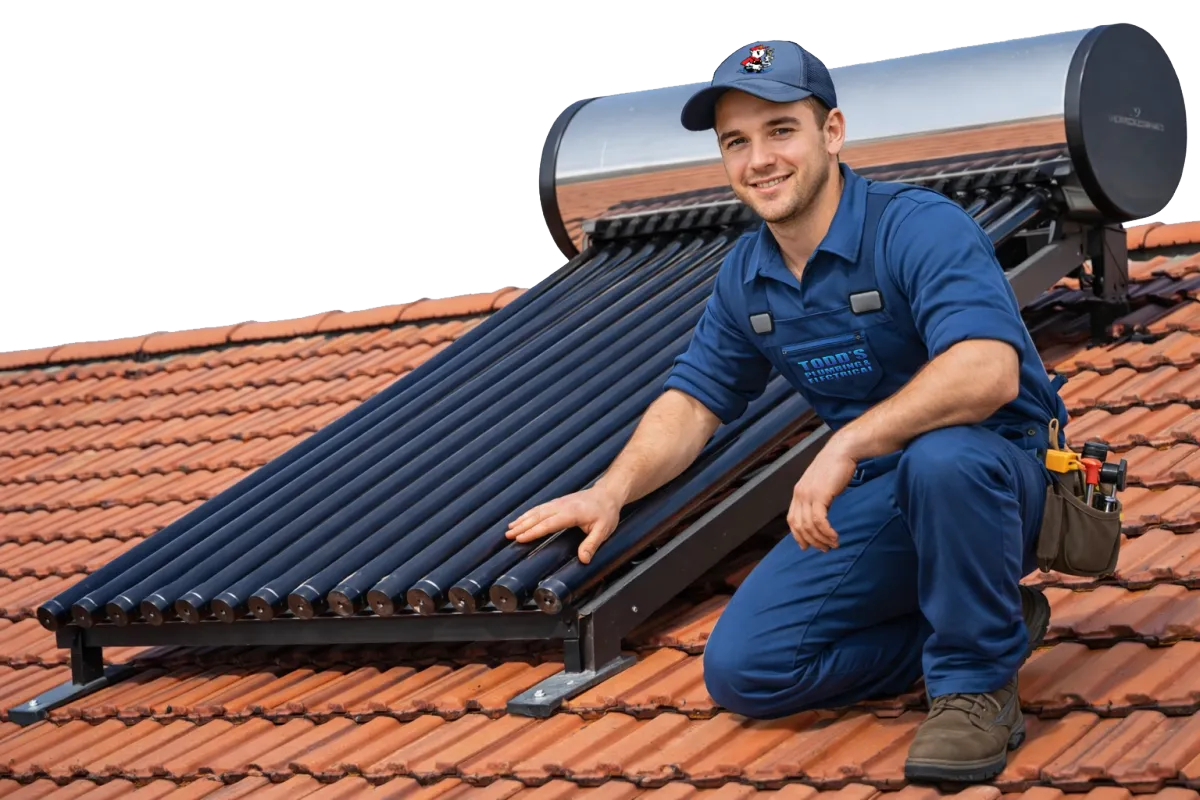
Expert Conergy Solar Hot Water System Repairs
Fast, reliable repairs for Conergy solar hot water systems.
Conergy May Be Gone, But We're Still Here! Specializing in Heat Exchanger Leaks, Pump Failures, Controller Replacements & More.
Conergy Solar Water Repair Specialist
Same-day service at no extra costs
We drive fully stocked vehicles
Upfront, clear pricing
Solar accredited plumbers & electricians
Quality guaranteed
📞 Same-day Dux Eco Smart solar water repairs: 0482 080 423
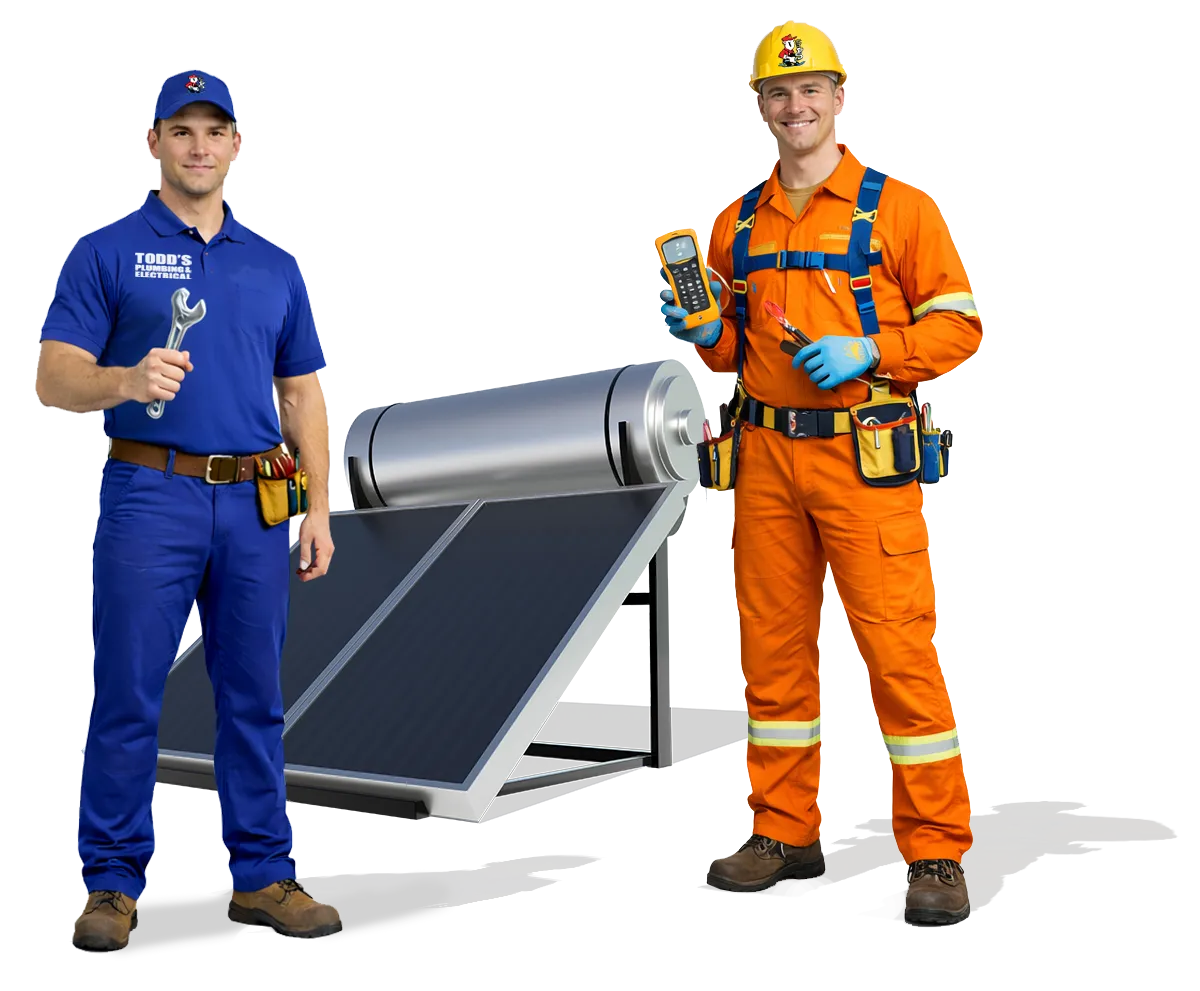
Expert Conergy Solar Hot Water System Repairs
Fast, reliable repairs for Conergy solar hot water systems.
Conergy May Be Gone, But We're Still Here! Specializing in Heat Exchanger Leaks, Pump Failures, Controller Replacements & More.
Conergy Solar Water Repair Specialist
Same-day service at no extra costs
We drive fully stocked vehicles
Upfront, clear pricing
Solar accredited plumbers & electricians
Quality guaranteed
📞 Same-day Dux Eco Smart solar water repairs: 0482 080 423
Common Conergy Problems We Fix
Conergy systems have a reputation for reliability issues. These are the most frequent problems we see daily across Brisbane - and we know how to fix them all!
Heat Exchanger Leaking
Circulation Pump Failure
Resol Controller Failure
Temperature Sensor Failures
Non-Return Valve Failures
Glycol System Issues
Sealant & Debris Blockages
Tank Leaking
Pressure Relief Valve Issues
Element Failures
Tempering Valve Blockage
Solar Panel Problems

Issues Conergy Solar Hot Water Are infamous For
Resol Controller Failure
Conergy systems use Resol DeltaSol BS/4, BS/2, or similar controllers. These fail from moisture ingress, power surges, or component degradation. Controller failure means no automatic operation - pump won't activate even with hot collectors.
Signs You Need This Fixed:
Display blank or showing errors
Controller not responding to inputs
Pump not activating despite hot panels
Indicator lights not functioning
Sensor readings incorrect or absent
Settings resetting constantly
Controller overheating or smoking
Water damage inside controller housing
Circulation Pump Failure
Conergy systems use Grundfos pumps that typically fail after 2-4 years. Common issues include impeller stuck from sealant flakes, calcium buildup, worn bearings, or complete motor failure. When the pump fails, you have no solar heating.
Signs You Need This Fixed:
Pump makes noise but no water circulation
Impeller stuck - needs "banging" to start
No pump humming sound when sunny
Pump running but panels hot, tank cold
Sealant flakes blocking impeller
Pump leaking from seals
Electric bills increased dramatically
System only working on electric boost
Temperature Sensor Failures
Collector and tank sensors fail from UV damage, moisture, cable deterioration, or thermistor breakdown. False readings cause the controller to malfunction - pump may run at night cooling your water, or not run at all during the day.
Signs You Need This Fixed:
Controller showing sensor errors
Pump running at night (false temp readings)
Pump never activating during day
Temperature readings obviously wrong
Sensor cable damaged/deteriorated
Collector sensor reading shows freezing/boiling
Tank sensor giving false high/low readings
System behavior erratic or unpredictable
Non-Return Valve Stuck or Failed
The non-return (check) valve prevents reverse flow at night. When it calcifies or sticks open, cold water backfeeds from roof panels into your tank overnight, leaving you with cold water in the morning despite yesterday's heating.
Signs You Need This Fixed:
Hot water in evening, cold in morning
Tank temperature dropping overnight
Valve calcified and stuck open
Reverse flow allowing thermosiphoning
System working during day, failing at night
Water flowing backward through pump
Cold water circulating from roof at night
Valve makes strange noises
Pressure Relief Valve Discharge
PTR valves on Conergy systems discharge excessively due to overheating, high mains pressure (Brisbane issue), or valve failure. Some systems discharge 5+ minutes daily, wasting significant water and indicating problems.
Signs You Need This Fixed:
Valve discharging 20+ litres daily
Strong water flow for 5+ minutes
Water discharge even at 60°C
Mains pressure too high (>550kPa)
Valve stuck open or failing
System overheating regularly
No expansion valve fitted
Water pooling around tank constantly
Sealant & Debris Blockages
A notorious Conergy problem: sealant flakes from factory joints break loose and block the coolant flow through the pump impeller and pipes. This requires extensive flushing with water (not glycol) to clear. Many technicians don't know how to properly fix this.
Signs You Need This Fixed:
Pump running but no circulation
Flow blocked by sealant pieces
Reduced circulation after years of operation
White/clear debris in pipes
Impeller jammed with material
System worked fine, then suddenly stopped
Poor heat transfer to tank
Requires reverse flushing to clear
Dux Eco Smart Models We Service
We repair all Dux Eco Smart solar hot water models throughout Gold Coast & Brisbane
TS Series - Roof Mount (Close Coupled)
Thermosiphon systems with tank and collectors mounted together on roof. No pump - relies on convection. Most common Conergy type in Brisbane.
180 Litre Models:
TS180/2/O - 180L Open Circuit, 2 Collectors
TS180/3/O - 180L Open Circuit, 3 Collectors
TS180/2/C - 180L Closed Circuit (Glycol)
TS180/3/C - 180L Closed Circuit, 3 Collectors
TS 1802 Series - Various collector options
300 Litre Models:
• TS300/4/O - 300L Open Circuit, 4 Collectors
• TS300/4/C - 300L Closed Circuit, 4 Collectors
• TS 3004 Series - Various configurations
• TS 300 Plus - Premium stainless steel tank
Collector Variants: E20SB (Standard), E20BC (Black Chrome - high efficiency), E25BC (2.5m² Black Chrome), F20LC (Solar Lacquer)
AS Series - Split System (Ground Mount)
Active systems with tank on ground, collectors on roof. Uses electric pump and controller. Most problematic Conergy systems!
Open Circuit Models:
• AS 250L Open - 250L with 2 collectors
• AS 315L Open - 315L with 2-3 collectors
• AS 400L Open - 400L with 2-4 collectors
• AS 415L Open - 415L split system
⚠️ Closed Circuit Models (Glycol):
• AS 250L Closed - With heat exchanger
• AS 315L Closed - With heat exchanger
• AS 400L Closed - With heat exchanger
• AS 415L Closed - With heat exchanger
⚠️ WARNING: Closed circuit heat exchangers fail frequently! 2-3 replacements common.
Boost Options: Electric (most common), Gas (26L/min continuous flow), LPG
CSE Series - Electric Boosted Split Systems
Common model numbering seen in Brisbane. CSE = Conergy Solar Electric (boost). Popular in Queensland government rebate program.
• CSE315ST38 - 315L Stainless Tank
• CSE315SM36 - 315L Standard Model
• CSE325SM36 - 325L Standard Model
• CSE400 Series - 400L Various models
• CSE415 Series - 415L split systems
Note: ST = Stainless Tank, SM = Standard Model. Numbers after CSE indicate litres (315L, 325L, 400L, 415L).
Solar Collector Panel Issues
Roof-mounted Conergy panels develop problems including cracked panels from wrong installation (wrong panels for climate), leaking connections, damaged glass, and reduced efficiency. Panel issues prevent proper solar collection.
Signs you need this fixed:
Water spraying from panel connections
Cracked panel (wrong type installed)
Glass damaged or broken
Panels not getting hot in sun
Visible leaks on roof
Absorber plate corroded
Collector casing deteriorated
Factory joints leaking
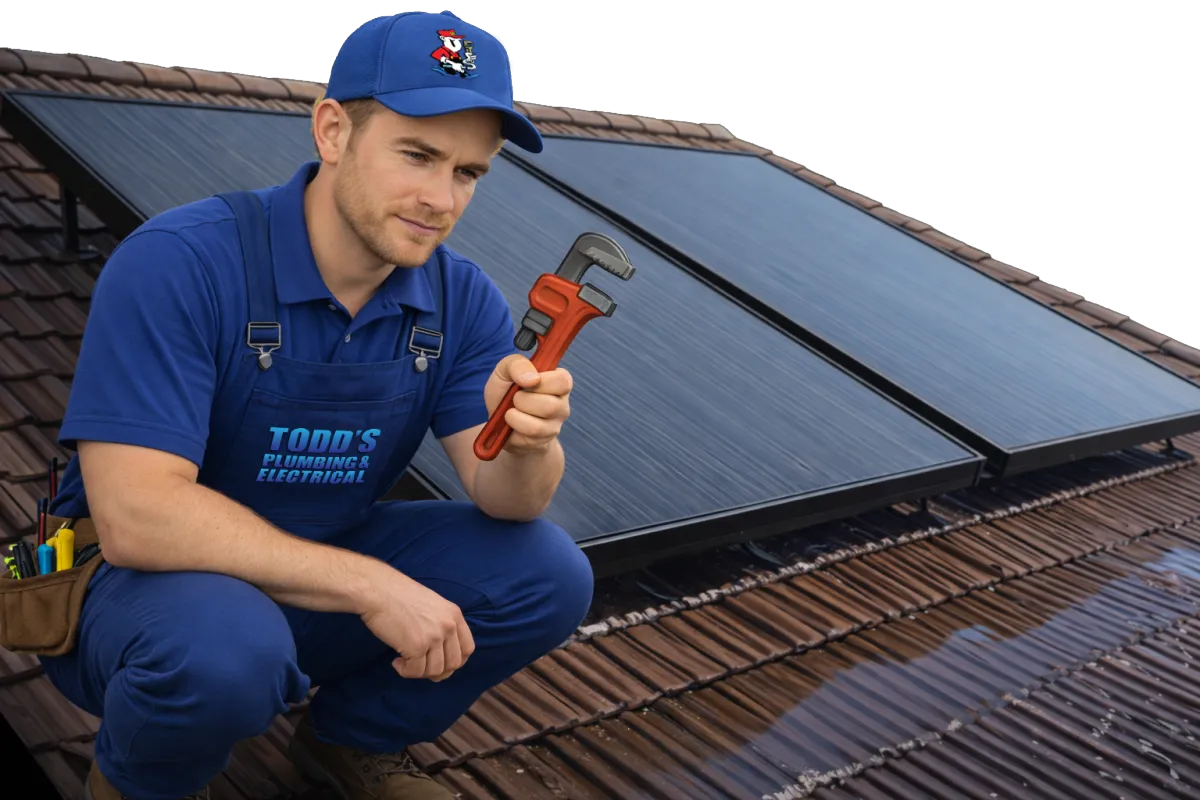
Tank Leaking & Corrosion
Conergy tanks (both vitreous enamel and stainless steel versions) can develop leaks from corrosion, failed anodes, or manufacturing defects. Some stainless steel tanks leaked after only 4-5 years. Tank leaks usually mean complete replacement since Conergy is gone.
Signs you need this fixed:
Water pooling around/under tank
Tank swollen or bulging (serious!)
Stainless tank split or corroded
Enamel tank rusted through
Sacrificial anode completely depleted
Brown/rusty hot water
Leaking from tank seams or welds
Plastic end caps split on older models
Element hole corroded and leaking
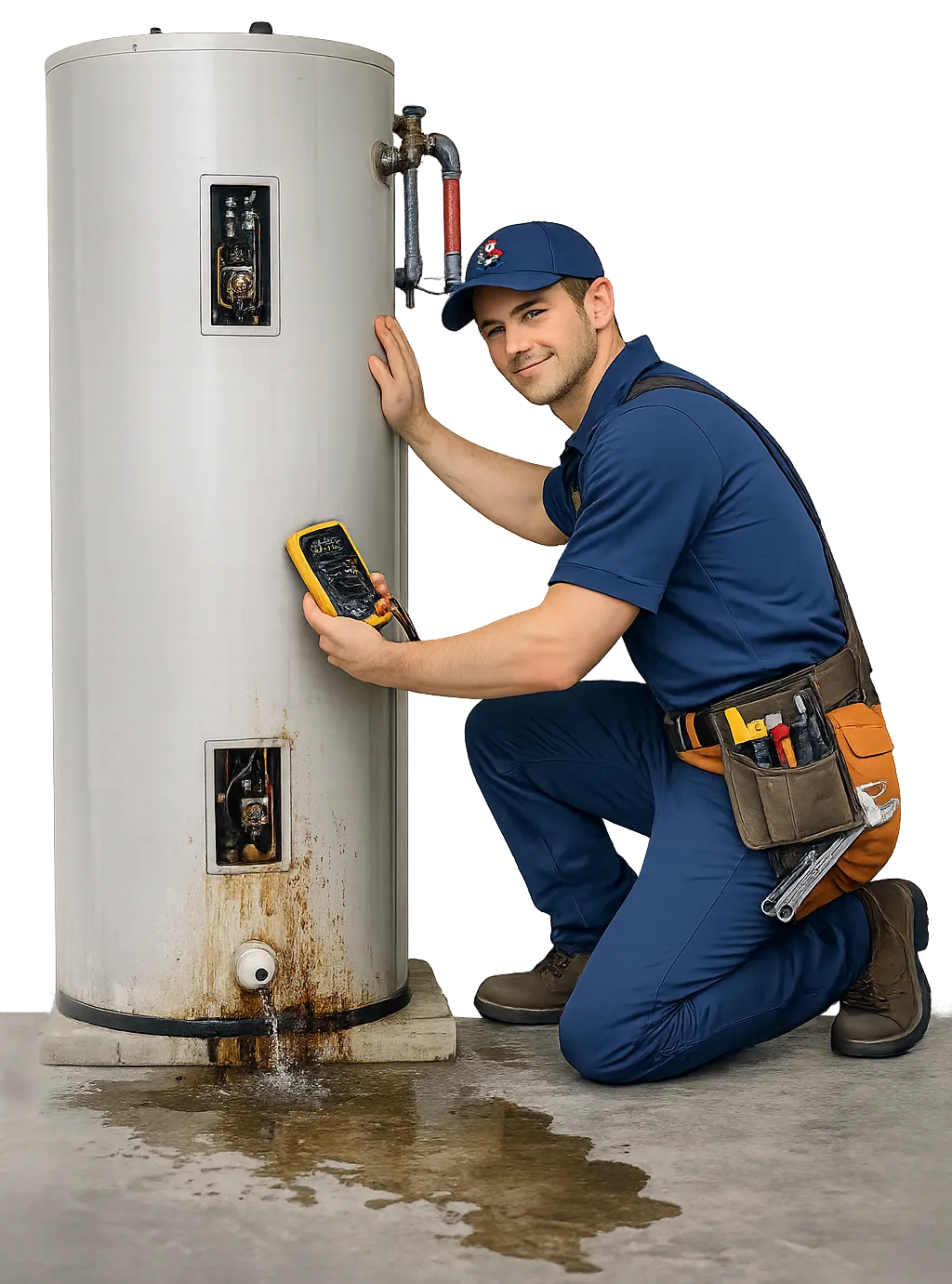
Electric Element & Thermostat Failures
Electric boost elements in Conergy systems fail frequently - some within 4 months of installation! Elements corrode rapidly (half missing in extreme cases), thermostats stick, or connections fail. Without boost, you have no hot water on cloudy days.
Signs you need this fixed:
Element failed within first year
No hot water with boost switched on
Element heavily corroded
Circuit breaker tripping
Thermostat not maintaining temperature
Boost switch doesn't work
Water lukewarm with boost on full
Element testing shows no continuity
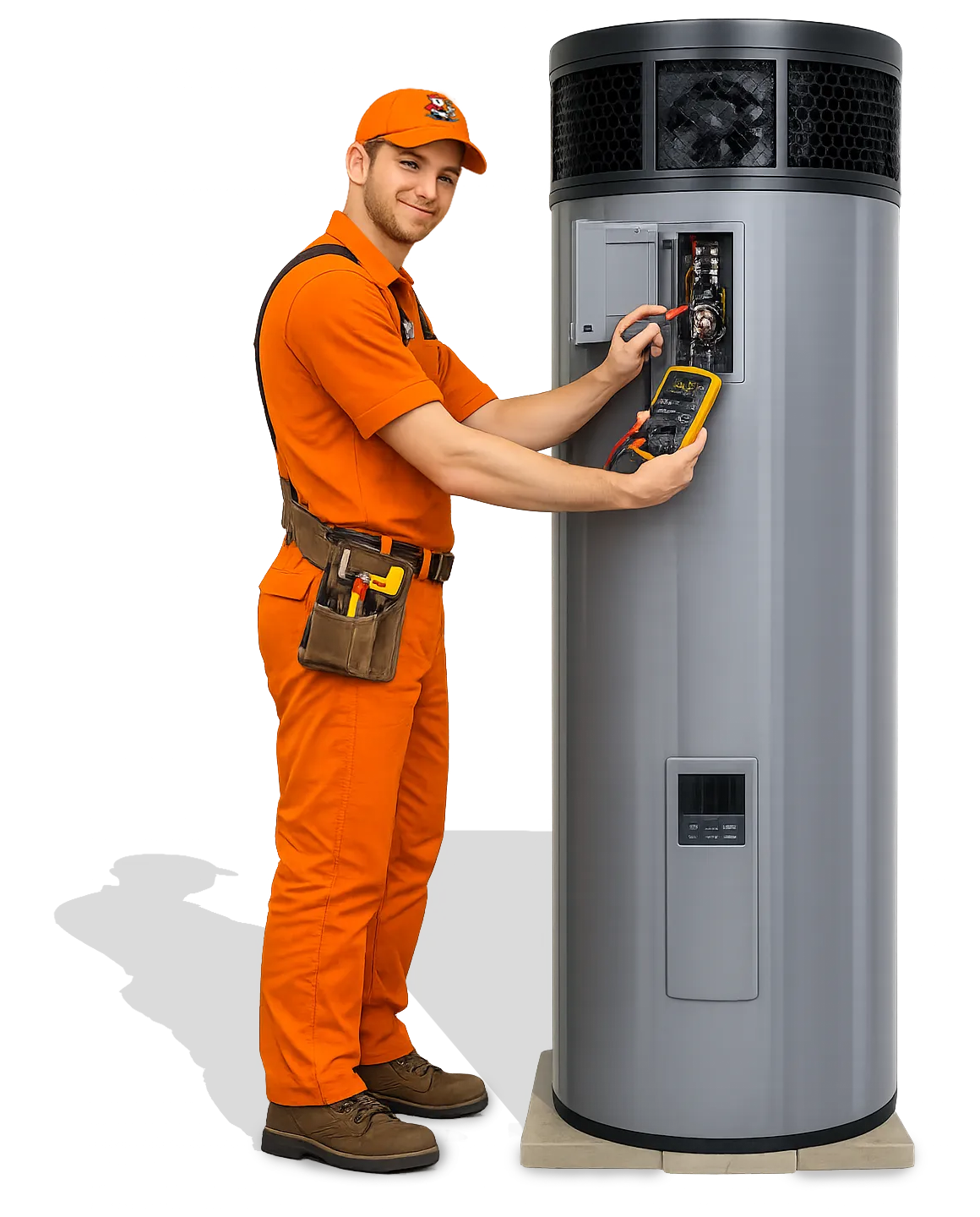
Glycol System Issues (Closed Circuit)
Closed circuit Conergy systems use glycol (ST-5 heat transfer fluid) for freeze protection. Over time, glycol degrades, becomes contaminated, or leaks out. Wrong concentration causes freezing or poor heat transfer. Glycol maintenance is often neglected.
Signs you need this fixed:
System losing glycol pressure
Glycol discolored (brown/murky)
Sweet smell indicating glycol leak
Poor heat transfer efficiency
Glycol concentration too low
Water contamination in glycol circuit
Pipes freezing in cold weather
Glycol never been tested/replaced
Corrosion from degraded glycol
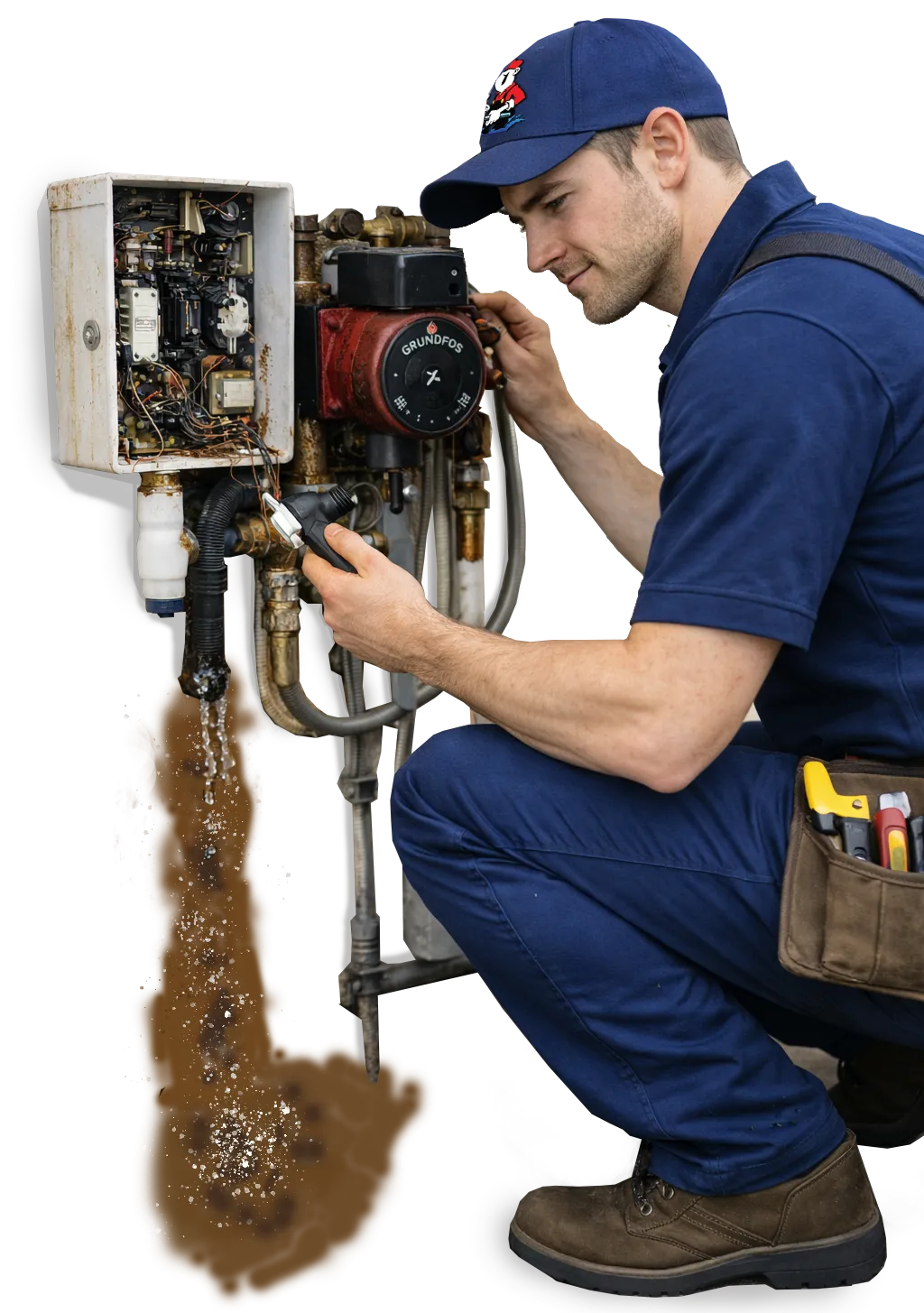
Circulation Pump Failure
Conergy systems use Grundfos pumps that typically fail after 2-4 years. Common issues include impeller stuck from sealant flakes, calcium buildup, worn bearings, or complete motor failure. When the pump fails, you have no solar heating.
Signs you need this fixed:
Pump makes noise but no water circulation
Impeller stuck - needs "banging" to start
No pump humming sound when sunny
Pump running but panels hot, tank cold
Sealant flakes blocking impeller
Pump leaking from seals
Electric bills increased dramatically
System only working on electric boost
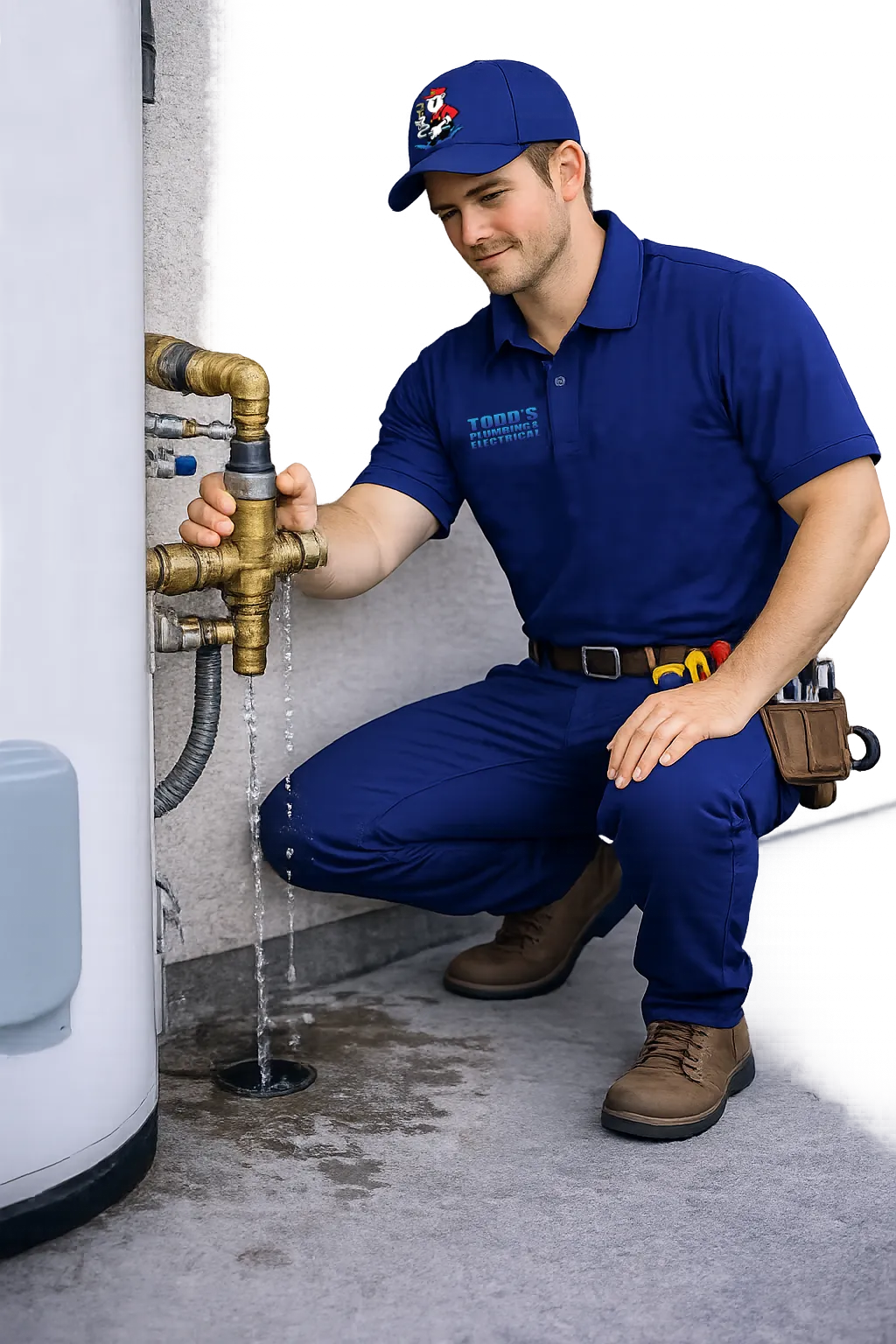
Non-Return Valve Stuck or Failed
The non-return (check) valve prevents reverse flow at night. When it calcifies or sticks open, cold water backfeeds from roof panels into your tank overnight, leaving you with cold water in the morning despite yesterday's heating.
Signs you need this fixed:
Hot water in evening, cold in morning
Tank temperature dropping overnight
Valve calcified and stuck open
Reverse flow allowing thermosiphoning
System working during day, failing at night
Water flowing backward through pump
Cold water circulating from roof at night
Valve makes strange noises
Why Gold Coast Locals Choose Todd’s for Conergy Solar Hot Water Repairs
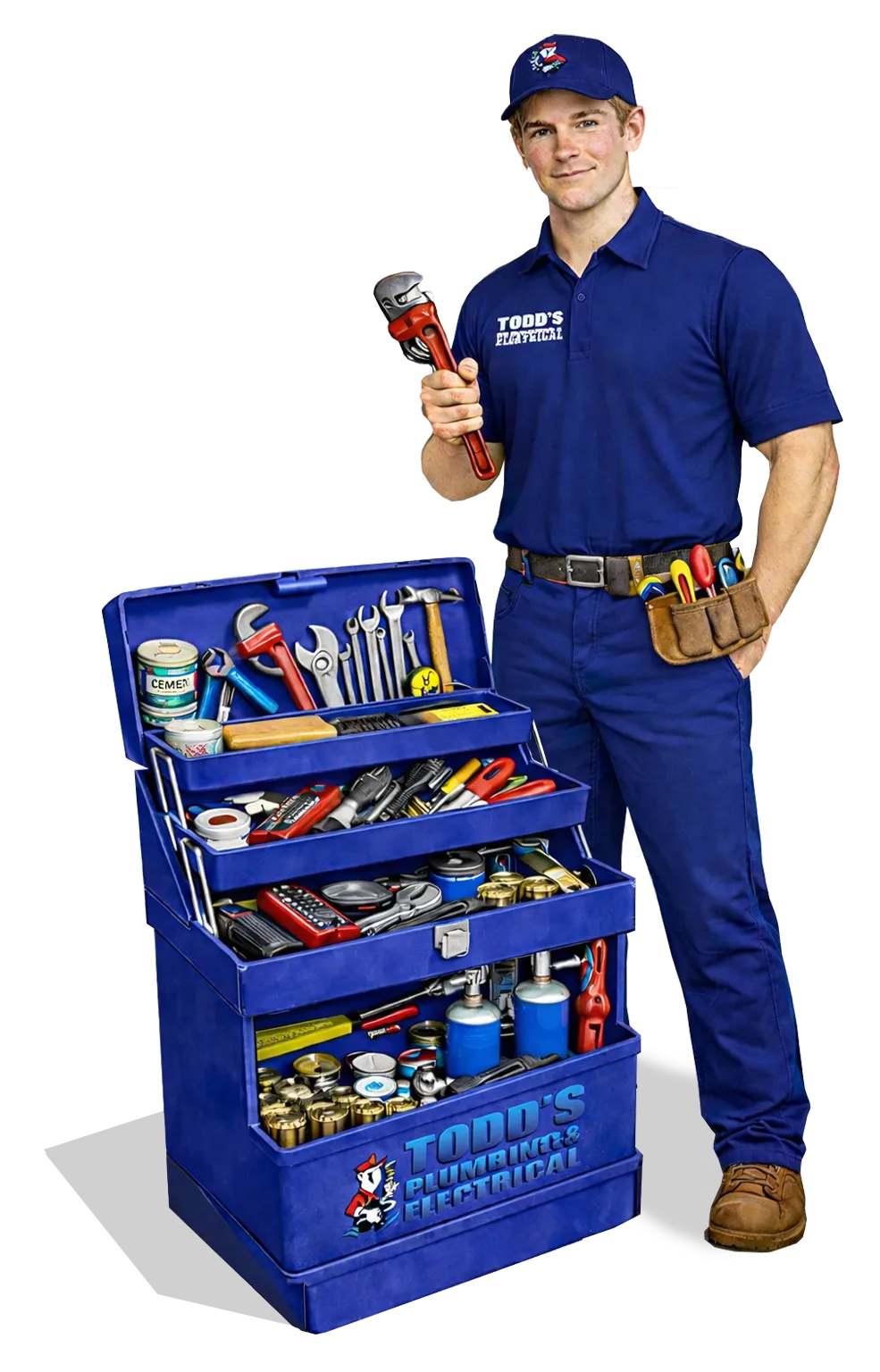
Local & family-owned – over 20 years working with solar, electric, gas and heat-pump systems on the Gold Coast
Conergy specialists – familiar all roof-mount and split systems
Fast, same-day hot water service – we prioritise no-hot-water jobs
Up-front quotes and clear explanations – no surprises
Repair or replace advice – we’ll always tell you honestly when a repair is worthwhile and when replacement will save you money and headaches long-term
Service Areas
We repair Conergy solar hot water systems across the Gold Coast, including:
Southport • Labrador • Arundel • Helensvale • Coomera • Upper Coomera • Runaway Bay • Hope Island • Robina • Varsity Lakes • Burleigh Heads • Burleigh Waters • Nerang • Pacific Pines • Molendinar • Paradise Point and surrounding suburbs.
Why Choose Todd’s Plumbing & Electrical
Family-owned Gold Coast business
20+ years specialising in solar hot water repairs
Licensed plumbers & electricians (no subcontractors)
Fast same-day service available
5-star local reviews & long-term customer relationships
Experts in Conergy system diagnostics
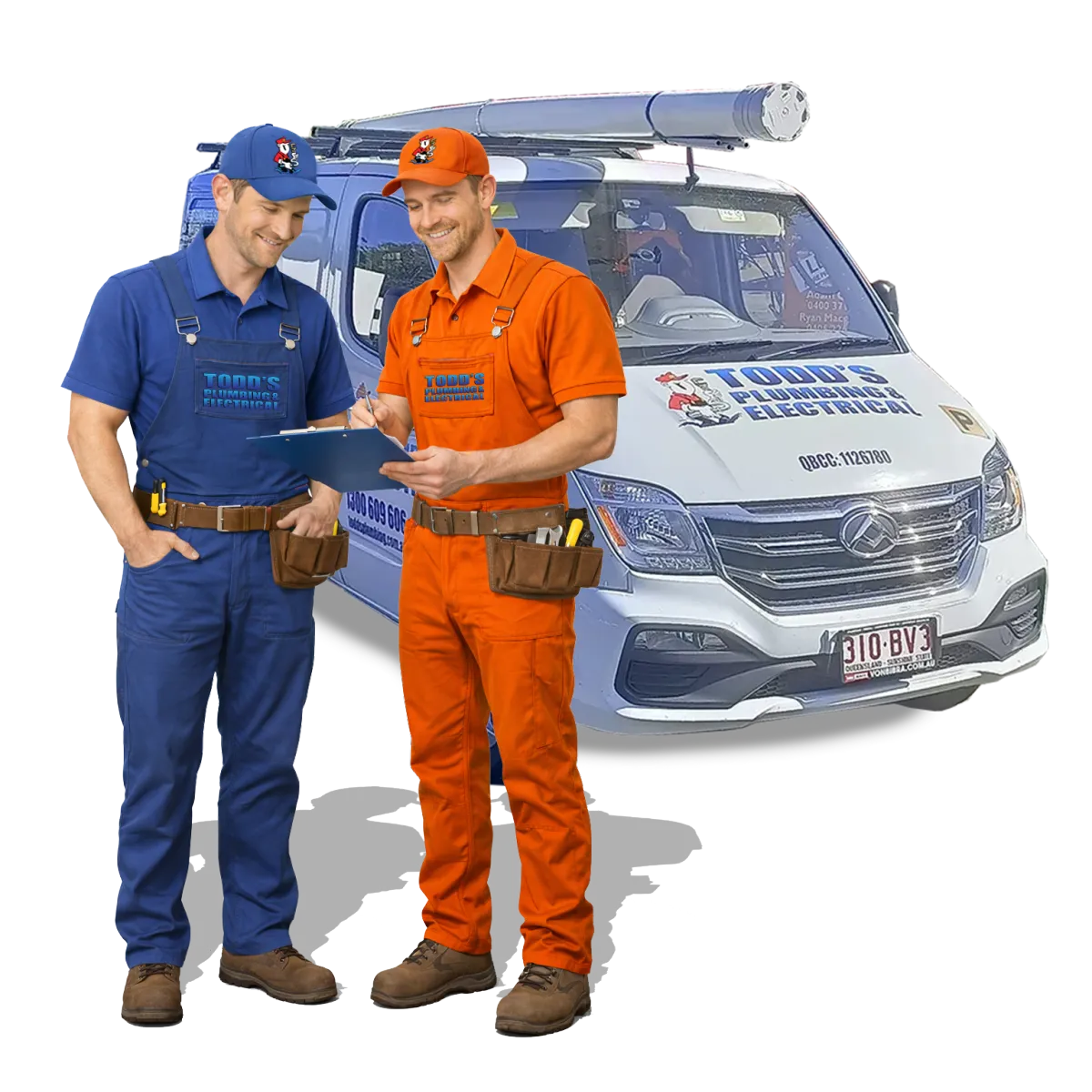
When you call us, you speak directly with a local team—not an offshore call centre.
Call the Conergy Solar Hot Water Expert
If your Conergy solar hot water system isn’t performing, don’t wait for a total failure.
📞 Call Todd’s Plumbing & Electrical on 0482 080 423
We provide prompt, professional Conergy solar hot water repairs and honest advice across the Gold Coast and Brisbane.
Frequently Asked Questions About Conergy Repairs
Get answers about repairing these problematic systems now that the manufacturer is gone
What are the most common problems with Conergy solar hot water systems?
The most common issues include heat exchanger leaks (the #1 catastrophic failure in closed circuit glycol systems, often failing 2-3 times), circulation pump failures after 2-4 years with impellers stuck from sealant flakes or calcium buildup, Resol controller malfunctions from moisture or component failure, temperature sensor errors causing pump to run at night or not at all, non-return valve failures allowing reverse thermosiphoning, sealant blockages requiring extensive system flushing, tank leaks (especially stainless steel models failing after 4-5 years), excessive pressure relief valve discharge, electric element corrosion (some failing within 4 months), tempering valve screen blockages, glycol degradation in closed systems, and solar panel cracks from wrong installation. Conergy has a poor reputation for reliability - these systems were cheaply made and problematic from day one. Many owners report the system only lasting 7 years before requiring complete replacement.
Is Conergy still in business in Australia? Can I get warranty support?
No, Conergy is NOT in business. The original German company filed for insolvency in Hamburg in 2013. The Australian solar hot water division was sold and became Envirosun, but they don't honor Conergy warranties or provide support. Conergy Pty Ltd went into liquidation and there is NO manufacturer warranty coverage, NO official service support, and NO spare parts from Conergy. This leaves thousands of Brisbane homeowners with orphaned systems and no recourse when things break. The warranties are worthless because there's no company to enforce them against. This is why many Conergy owners feel "CONned" - they paid for a premium German product with warranty, but got a problematic system with zero support when it inevitably fails. Todd's Plumbing is one of the few companies that still knows how to repair these systems using compatible aftermarket parts.
Can Conergy systems still be repaired even though the company is gone?
Yes! Todd's Plumbing can repair most Conergy systems using compatible replacement parts. We stock Resol DeltaSol controllers (the current SLL model replaces the BS/4 and BS/2), Grundfos circulation pumps, PT1000 and NTC temperature sensors, non-return valves, heat exchangers, electric elements, thermostats, and pressure relief valves that work with Conergy systems. As long as your tank isn't leaking, the system can usually be repaired. However, heat exchangers for closed circuit glycol systems are becoming harder to source - we may need to convert your system to open circuit or recommend replacement if we can't source the part. Tank leaks generally mean complete system replacement since Conergy-specific tanks aren't available. We'll always be honest about whether repair makes economic sense versus replacing with a modern, reliable system. Some Conergy systems have had so many failures that continuing to repair them is throwing good money after bad.
What's the deal with Conergy heat exchanger failures?
Heat exchanger failure is THE most catastrophic problem with Conergy closed circuit (glycol) systems. Many owners report replacing the heat exchanger 2-3 times within 5-7 years, sometimes even under warranty which shows it's a design/quality issue. When the heat exchanger fails, glycol leaks into your water supply (sweet taste/smell), or the unit completely stops transferring heat. Signs include pink or yellow discolored water from glycol contamination, system losing pressure constantly, no hot water despite pump running, visible glycol leaking, corroded or split heat exchanger, and poor heat transfer. The closed circuit systems used in cold climates like Tasmania were particularly problematic - from day one with factory joints leaking, then multiple pump failures, then multiple heat exchanger failures. Eventually installers gave up in exasperation and offered to convert away from Conergy entirely. Heat exchanger replacement costs $600-$1,200 IF you can find the part, but many people end up replacing the entire system because heat exchangers aren't available or it's not economically viable to keep repairing a fundamentally flawed system.
Why does my Conergy pump need "banging" to work?
If your installer told you to "bang the pipe" when the pump stops working, you have the classic Conergy impeller-stuck problem. This happens because sealant flakes from factory joints break loose over time and jam the pump impeller, or calcium buildup from hard Brisbane water locks it up. The pump motor runs (you hear humming) but the impeller can't spin, so no water circulates. Banging temporarily dislodges the blockage, but it's not a solution - it's a Band-Aid. The proper fix requires removing the pump, cleaning out all sealant debris and calcium, reverse flushing the entire system with water (not glycol) to clear blockages, potentially replacing the pump if the impeller is damaged, and installing inline filters to catch debris. This costs $300-$600 but actually fixes the problem instead of requiring you to climb up and bang pipes every week. Some Conergy pumps also have worn bearings or damaged seals causing similar symptoms. If you're banging your system regularly, it needs proper repair - not another bandage.
How much does it cost to repair vs. replace a Conergy system?
Single component repairs: Pump $350-$600, controller $400-$700, sensors $180-$320 each, non-return valve $180-$350, electric element $280-$450, thermostat $180-$300, PTR valve $200-$350, heat exchanger $600-$1,200 (if available). Multiple component failures: $600-$1,500+ for comprehensive repairs. Complete system replacement: $3,500-$6,000 for a modern, reliable heat pump or quality solar system. The decision depends on your system's age and history. If your Conergy is under 5 years old with a single failure, repair makes sense. But if you're experiencing multiple recurring failures (especially heat exchangers or pumps failing repeatedly), or if the system is over 7-10 years old, replacement is smarter. Many Conergy owners have spent $2,000-$3,000 over 5-7 years on repeated repairs - they should have replaced at $1,500 spent. We'll assess your system honestly and tell you if you're throwing good money after bad. Some Conergy systems are money pits that will never be reliable no matter how much you repair them.
What's the difference between Conergy open circuit and closed circuit systems?
Open circuit (direct) systems pump your actual drinking water from the tank through the roof panels and back. Simpler design, fewer failure points, but risk of freezing in cold climates and scale buildup in panels from hard water. Most Brisbane Conergy systems are open circuit. Closed circuit (indirect/glycol) systems have a separate loop of glycol fluid that circulates through panels, then transfers heat to your water via a heat exchanger. More complex, has a heat exchanger that frequently fails, requires glycol maintenance, but protects against freezing - designed for cold climates like Tasmania. Closed circuit Conergy systems are notorious problem children with multiple heat exchanger failures being the norm. The glycol (ST-5 heat transfer fluid) degrades over time, can leak, get contaminated with water, or have wrong concentration. If you have a closed circuit system and the heat exchanger has failed multiple times, seriously consider converting to open circuit (if in Brisbane) or replacing the entire system. The heat exchanger will likely fail again.
Why is my Conergy system pumping water at night and cooling it down?
This is a faulty collector sensor (roof sensor) giving false temperature readings. The Resol controller activates the pump when it detects the collector is at least 6-8°C hotter than the tank. If the collector sensor has a partial short circuit or damaged thermistor, it falsely reports the roof panels are hot even at night, so the pump runs and circulates cold water from the roof back into your warm tank, cooling it down. By morning your water is cold despite heating perfectly yesterday. Other causes include sensor cable damage from UV exposure or weather, moisture in the sensor giving incorrect resistance readings, or wrong sensor type installed (PT1000 vs NTC). You can test this by checking if the pump/green light activates at night when panels are obviously cold. The fix is replacing the faulty collector sensor and cable ($180-$320) and ensuring it's properly sealed against moisture. Some controllers can be tested by unplugging sensors to see if readings change. This problem is particularly frustrating because the system works backwards - heating during the day then undoing all that work at night.
Are there any reliable Conergy models, or are they all problematic?
Honest answer: All Conergy models have reliability issues, but closed circuit glycol systems are THE WORST. Open circuit systems (AS series split systems - 315L, 400L models) are more reliable than closed circuit models, but still problematic. Common issues across ALL models: pump failures every 2-4 years, controller failures, sensor problems, element corrosion. The roof mount TS series were slightly better than split systems. Gas boosted models add diverter valve failures to the mix. The fundamental problem was Conergy chose cheap components, poor quality control, and cut corners to win government rebate contracts. Even when working, Conergy systems were "waste of money" according to many owners. The reviews are brutal: "CONergy", "rubbish", "garbage", "lemon from day one". Compared to brands like Solahart (old school but reliable), Rheem, or modern heat pumps, Conergy systems are objectively poor quality. If your Conergy is still working reasonably well, maintain it carefully, but don't expect it to last 15-20 years like quality systems do. Budget for replacement in 7-10 years total lifespan.
What should I do if my Conergy tank is leaking?
Tank leaks are serious and usually terminal for Conergy systems. First, determine if it's actually the tank or just the PTR valve: Check where water is coming from - if it's from the PTR valve drain line, that might be repairable ($200-$350). If water is weeping from tank body, seams, welds, element hole, or sensor ports, the tank is failing. Vitreous enamel tanks rust through when the enamel cracks and the anode depletes. Stainless steel tanks (which Conergy marketed as "should last") often leaked after only 4-5 years - complete manufacturing quality failure. Some tanks swelled and nearly split the outer casing in half (extreme danger!). Tank replacement options: You CANNOT get Conergy replacement tanks - the company is gone. Your choices are: 1) Complete system replacement with quality brand ($3,500-$6,000), 2) Retrofit a compatible tank from another brand if possible ($2,000-$3,500), 3) For roof mount systems, replace with modern system. We recommend option 1 - don't spend $2,500 retrofitting a tank onto a problematic Conergy system. Get a reliable Rheem, Dux, or heat pump and be done with Conergy forever.
How long should I expect my Conergy system to last?
Realistic lifespan: 7-10 years total, with multiple repairs needed along the way. This is FAR SHORT of quality solar systems that last 15-25 years. Based on thousands of owner reports: Years 1-2: Often problem-free (honeymoon period), though some had issues from day one. Years 2-4: First pump failure, possible controller issues. Years 4-7: Multiple component failures - pumps again, heat exchangers (closed circuit), elements, sensors. Systems requiring constant repairs. Years 7-10: Major failures, tank leaks, multiple simultaneous issues. Most owners replace at this point. One technician stated "this unit would be lucky to last another 12 months" after servicing a 2-year-old system. Another owner's plumber said "7 years is about the life of this Conergy brand." These are government rebate systems that were designed to be cheap, not to last. They were installed en masse in 2009-2012 under Queensland Labor's program, and most have now failed or been replaced. If your Conergy is approaching 10 years old, budget for replacement soon - it's living on borrowed time.
Can anyone service Conergy systems or do I need a specialist?
You need a specialist who knows Conergy systems specifically. Many plumbers refuse to work on them because: 1) No manufacturer support or documentation available, 2) Proprietary components that are hard to source, 3) Complex troubleshooting without diagnostic equipment, 4) Poor reputation - plumbers don't want liability, 5) Closed circuit glycol systems require specialized knowledge. Generic solar hot water techs often misdiagnose Conergy problems (for example, replacing a pump when the actual issue is sealant blockage, or not understanding how to clear debris properly). You need someone who: Knows how to properly flush sealant blockages using water reverse flow technique, can source compatible Resol controllers (SLL replacing BS/4), understands glycol system maintenance and testing, has experience with the specific failure modes, knows when to recommend replacement vs. repair. Todd's Plumbing has repaired thousands of Conergy systems - we know the quirks, common problems, proper repair techniques, and importantly, we'll tell you honestly when the system isn't worth repairing anymore. Don't waste money on generic techs learning on your dollar.

If it can't be fixed we can supply a new system from as little as $24 a week
Over 22 Years of 5-star Rated Service
Solar Hot Water Brands We Service & Repair
Aquamax
Apricus
Beasley
Bosch
Chromagen
Conergy
Dux
Ecosmart
Envirosun
Edwards
Everhot
Hills
Leda
Quantum
Midea
Neopower
Reece
Rheem
Rinnai
Sanden
Saxon
Stiebel Electron
Solahart
Solargain
Solar Oz Solar
Power Sun Ray
Sun Solar
Thermasun
Vulcan
Finance Available
Solar Hot Water Repairs Across The Gold Coast
Hot Water System Repairs & Replacement Experts
Electric Hot Water
Heat Pumps
Gast Hot Water
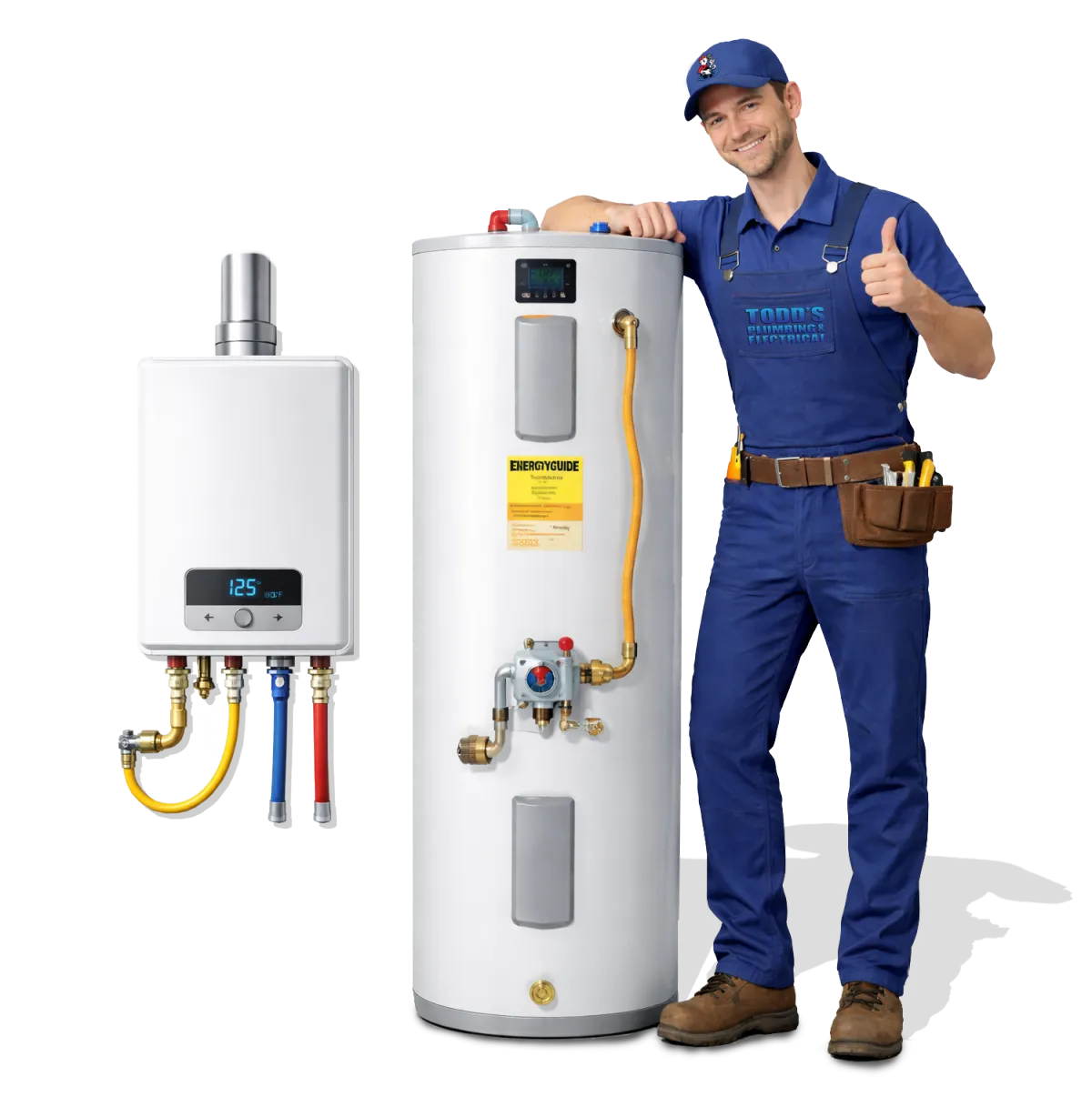
Roof Mounted
Solar Hot Water
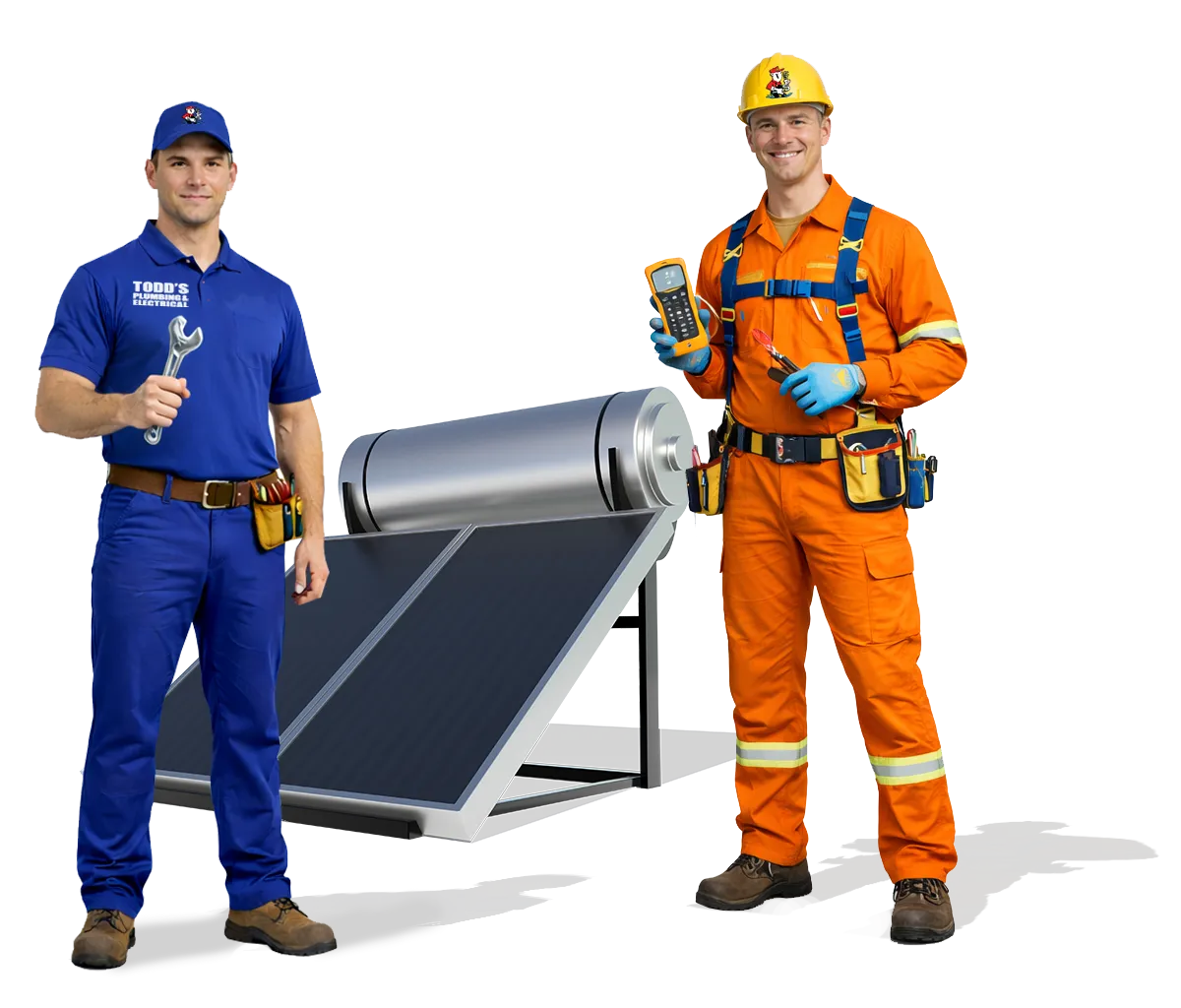
Split System
Solar Hot Water
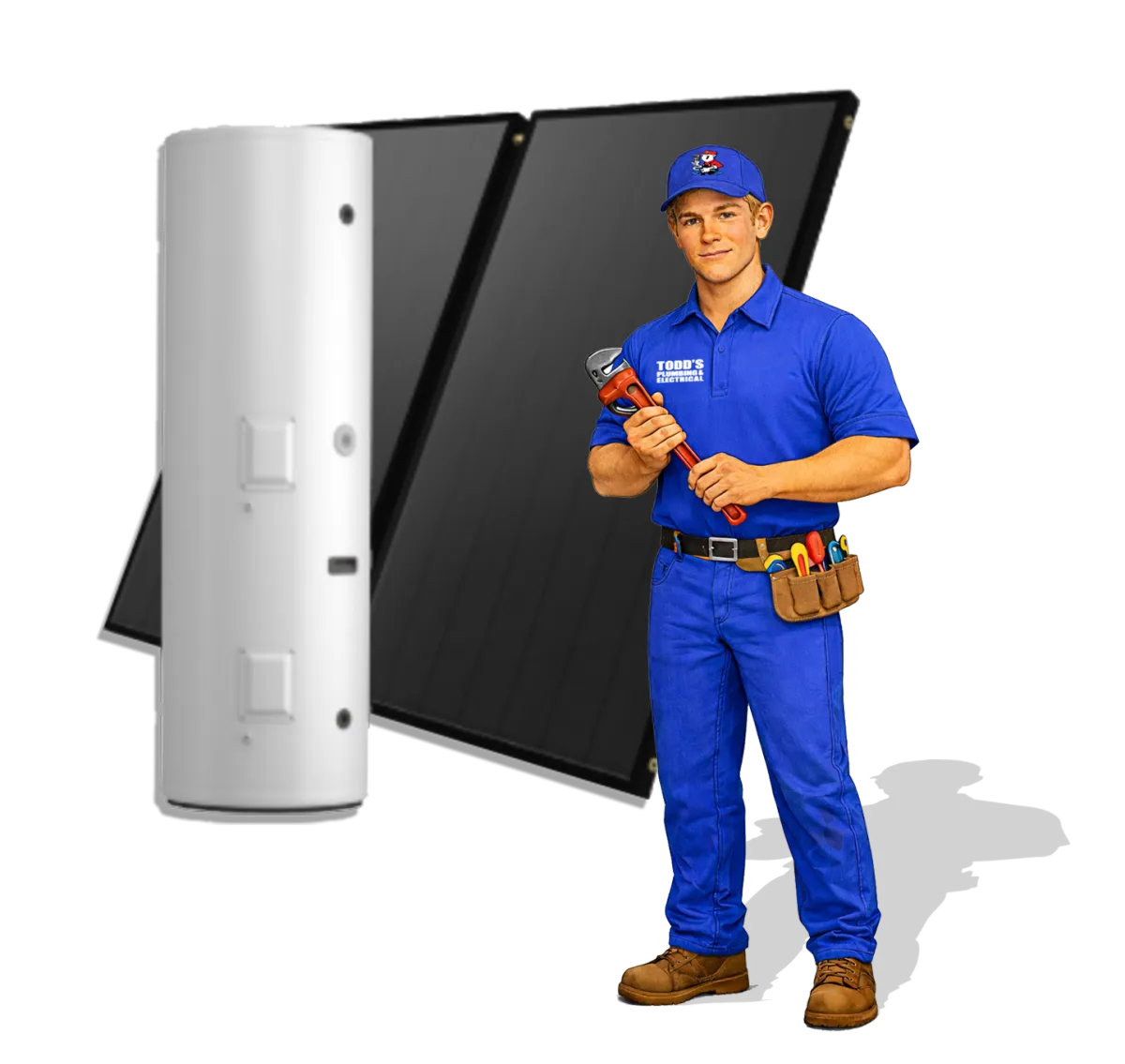
Solar Power
Systems

Get A Free Quote
Submit your details or call 0482 080 423
Head Office
1/28 central Park Avenue, Ashmore, Qld, 4214
0482 080 423
1300 609 606
QBCC: 1126780
Electrical License Number: 71053
We accept cash, direct deposits, and all major CC's