Workmanship Guaranteed
Licensed & Insured
Upfront Fair Pricing
Finance Available









Expert Dux Eco Smart Solar Hot Water System Repairs in Brisbane
Fast, reliable repairs for Dux Eco Smart solar hot water systems.
Specializing in Hot Logic Controller Failures, Pump Replacements & Sensor Repairs. Fast, Reliable Service You Can Trust.
Dux Solar Water Repair Specialist
Same-day service at no extra costs
We drive fully stocked vehicles
Upfront, clear pricing
Solar accredited plumbers & electricians
Quality guaranteed
📞 Same-day Dux Eco Smart solar water repairs: 0482 080 423

Expert Dux Eco Smart Solar Hot Water System Repairs in Brisbane
Fast, reliable repairs for Dux Eco Smart solar hot water systems.
Specializing in Hot Logic Controller Failures, Pump Replacements & Sensor Repairs. Fast, Reliable Service You Can Trust.
Dux Solar Water Repair Specialist
Same-day service at no extra costs
We drive fully stocked vehicles
Upfront, clear pricing
Solar accredited plumbers & electricians
Quality guaranteed
📞 Same-day Dux Eco Smart solar water repairs: 0482 080 423
Common Dux Eco Smart Problems We Fix
Is your Dux Eco Smart system acting up? These are the most frequent issues we see and repair daily across Gold Coast and Brisbane.
Hot Logic Controller Failure
Circulation Pump Failure
Temperature Sensor Failures
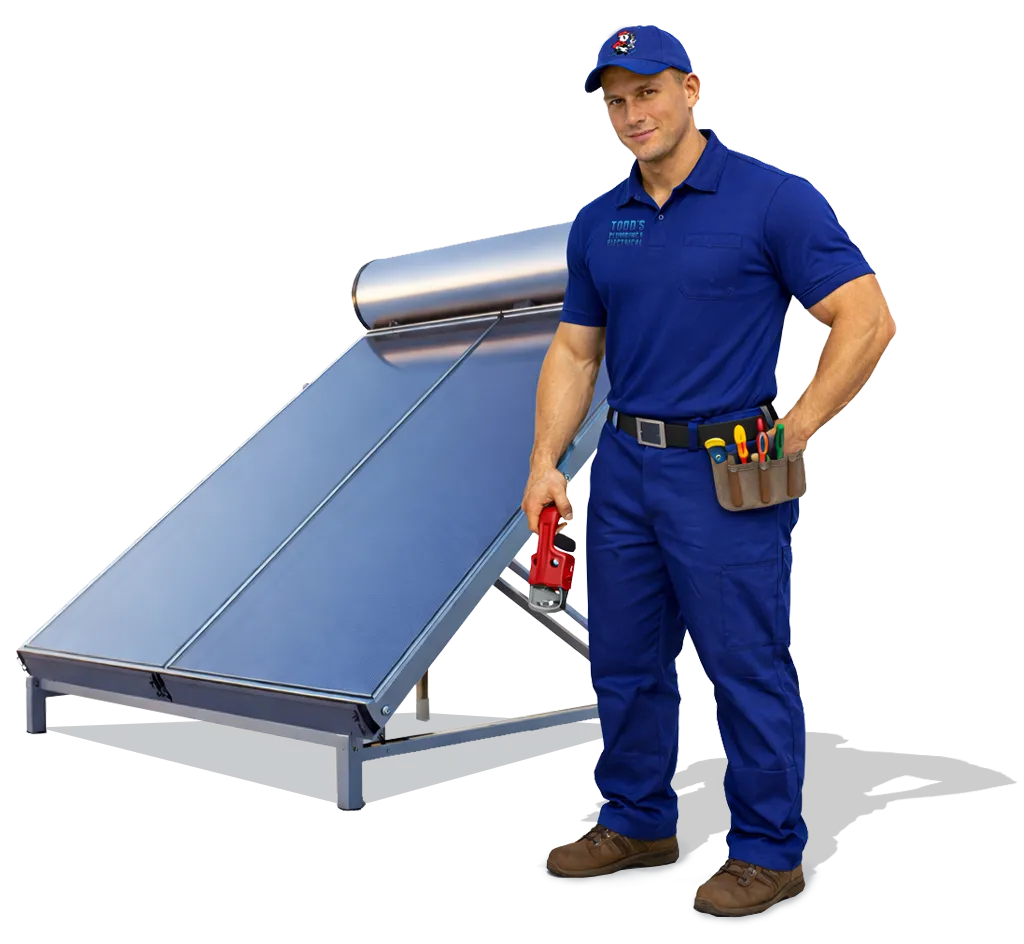
Solar Panel & Collector Issues
Diverter Valve Malfunction
Pressure Relief Valve Leaking
Electric Booster Element Problems
Calcium Buildup & Blockages
Tank Leaking & Corrosion
Frost Protection Issues
Insufficient Hot Water
System Overheating
Common Dux Eco Smart Problems We Fix
Hot Logic Controller Failure
The Hot Logic controller (H3201 model) is notorious for failing, often multiple times during the system's lifespan. This is the brain of your solar system.
Signs You Need This Fixed:
Flashing red or green lights on controller
System only working on electric boost
No hot water despite sunny weather
Controller not responding to any input
Circulation Pump Breakdown
Grundfos circulation pumps typically fail after just 2-3 years. When the pump fails, water can't circulate between your panels and tank.
Signs You Need This Fixed:
No pump noise when sun is out
Cold water despite sunny conditions
Output error code on display
System using excessive electricity
Temperature Sensor Errors
Roof collector sensors and tank sensors can fail or give false readings, preventing proper system operation and temperature control.
Signs You Need This Fixed:
Flashing green light (sensor error)
Pump runs constantly or not at all
Incorrect temperature readings
System overheating or not heating
Diverter Valve Malfunction
The diverter valve directs water flow in gas-boosted systems. When it fails, your system can't switch between solar and gas heating properly.
Signs You Need This Fixed:
Flashing red or green lights on controller
System only working on electric boost
No hot water despite sunny weather
Controller not responding to any input
Pressure Relief Valve Leaking
Constant water discharge from the PTR valve indicates overheating, excessive pressure, or valve failure - all requiring immediate attention.
Signs You Need This Fixed:
No pump noise when sun is out
Cold water despite sunny conditions
Output error code on display
System using excessive electricity
Calcium Buildup & Flow Issues
Hard water causes calcium deposits in pipes, pumps, and panels, reducing flow and efficiency over time.
Signs You Need This Fixed:
Flashing green light (sensor error)
Pump runs constantly or not at all
Incorrect temperature readings
System overheating or not heating
Dux Eco Smart Models We Service
We repair all Dux Eco Smart solar hot water models throughout Gold Coast & Brisbane
Electric Boosted Models
250L 2 Panel (D2M36F202)
315L 2 Panel (D3M36F202)
315L 3 Panel (D3M36F203)
400L 2 Panel (D4M36F202)
400L 3 Panel (D4M36F203)
SunPro 2F136S / 3F136S / 4F136S
Gas Boosted Models
DN15DS (Storage Tank)
SunPro Gas Boosted
Endurance Plus Models
26L/min Continuous Flow Gas
Controller Models
Hot Logic H3201
Hot Logic H3214
Hot Logic H3200
Resol Digital Controllers
Drain Down Controllers
Solar Panel & Collector Issues
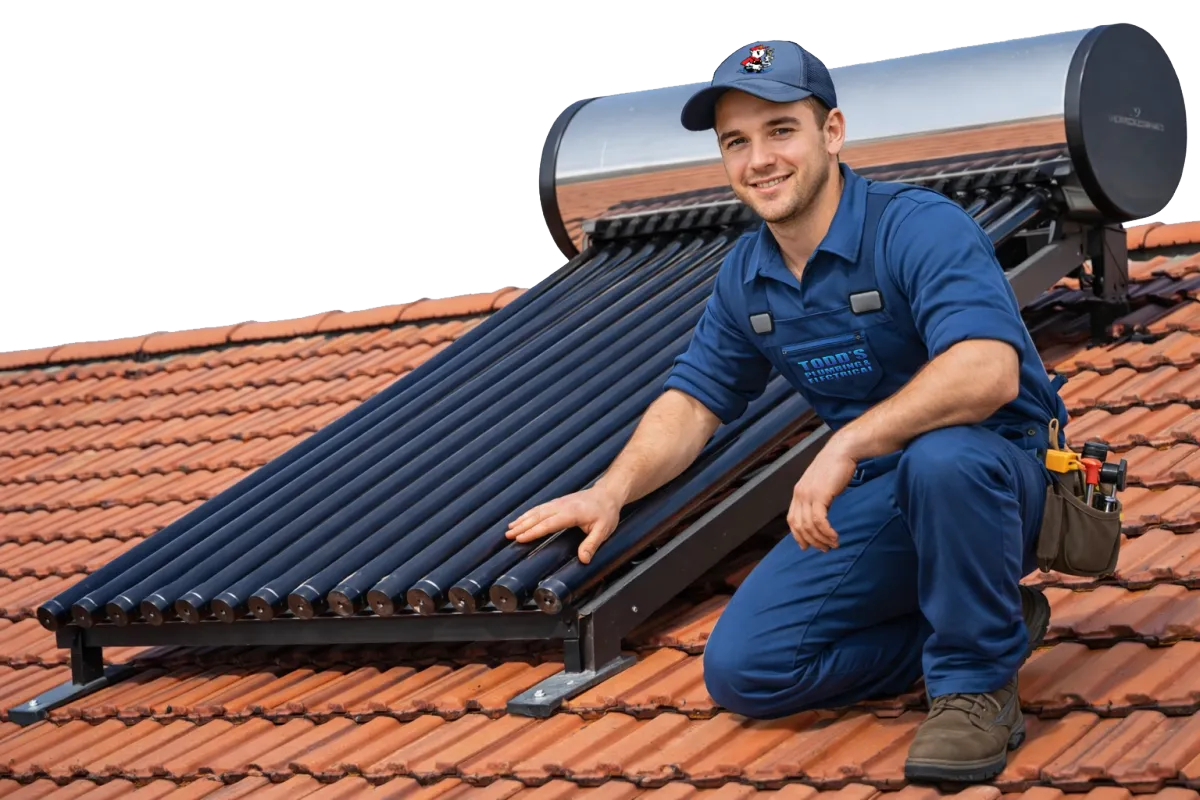
The roof-mounted flat plate solar collectors can develop various problems including leaks, condensation buildup, glass staining, debris accumulation, and frost damage. Panel issues prevent efficient heat transfer and can cause complete system failure.
Signs you need this fixed:
Water leaking from panel connections
Condensation inside collector glass
Visible staining or discoloration on glass
Leaves and debris blocking panels
Panels not getting hot even in full sun
Drain-down valve stuck or leaking
Frost damage to collector tubes
Reduced hot water output over time
Air bubbles in collector system
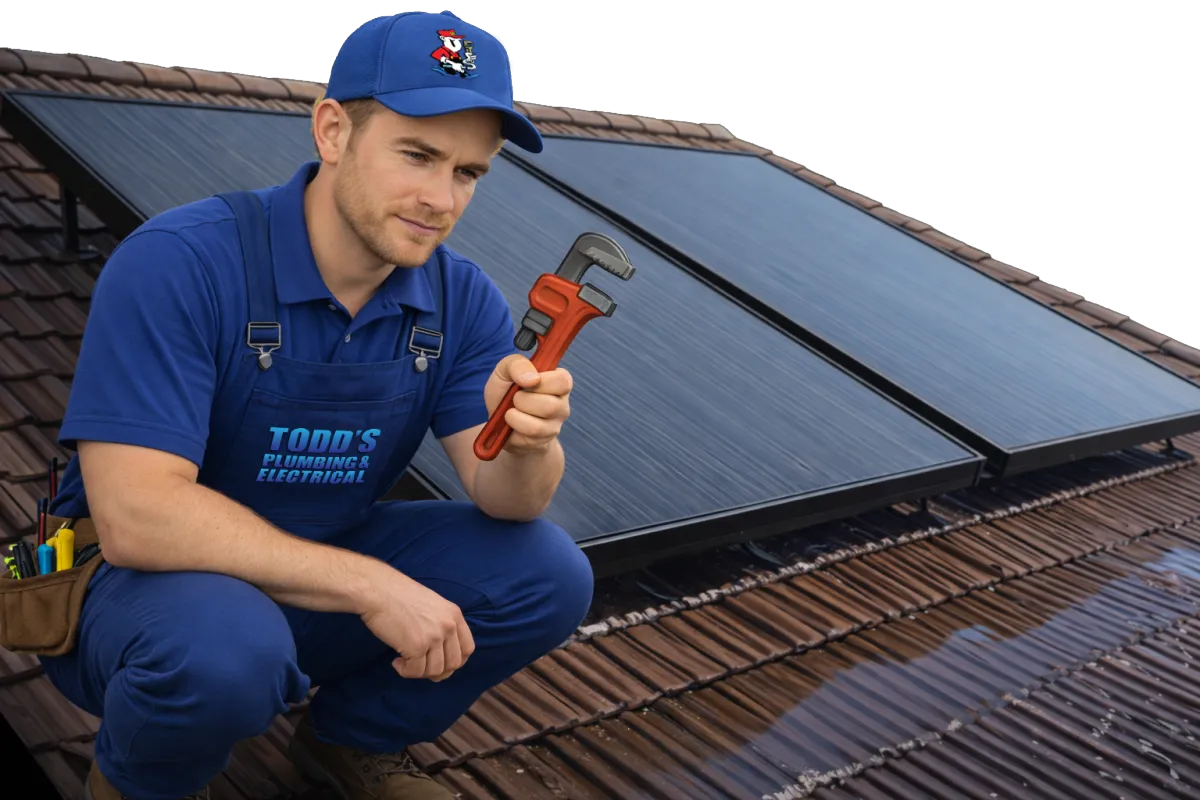
Pressure Relief Valve (PTR) Leaking
The Pressure & Temperature Relief (PTR) valve is a critical safety component. When it constantly discharges water, it indicates serious issues: system overheating, excessive water pressure, valve failure, or faulty thermostat. A leaking PTR valve wastes water and signals potential danger.
Signs you need this fixed:
Constant water pooling around tank
Continuous trickle (more than normal 3%)
Steady flow exceeding 20 litres per day
PTR valve stuck open
Foreign matter blocking valve seat
System overheating regularly (above 85°C)
High water supply pressure (over 500kPa)
Valve discharging on sunny days
Steam coming from relief drain
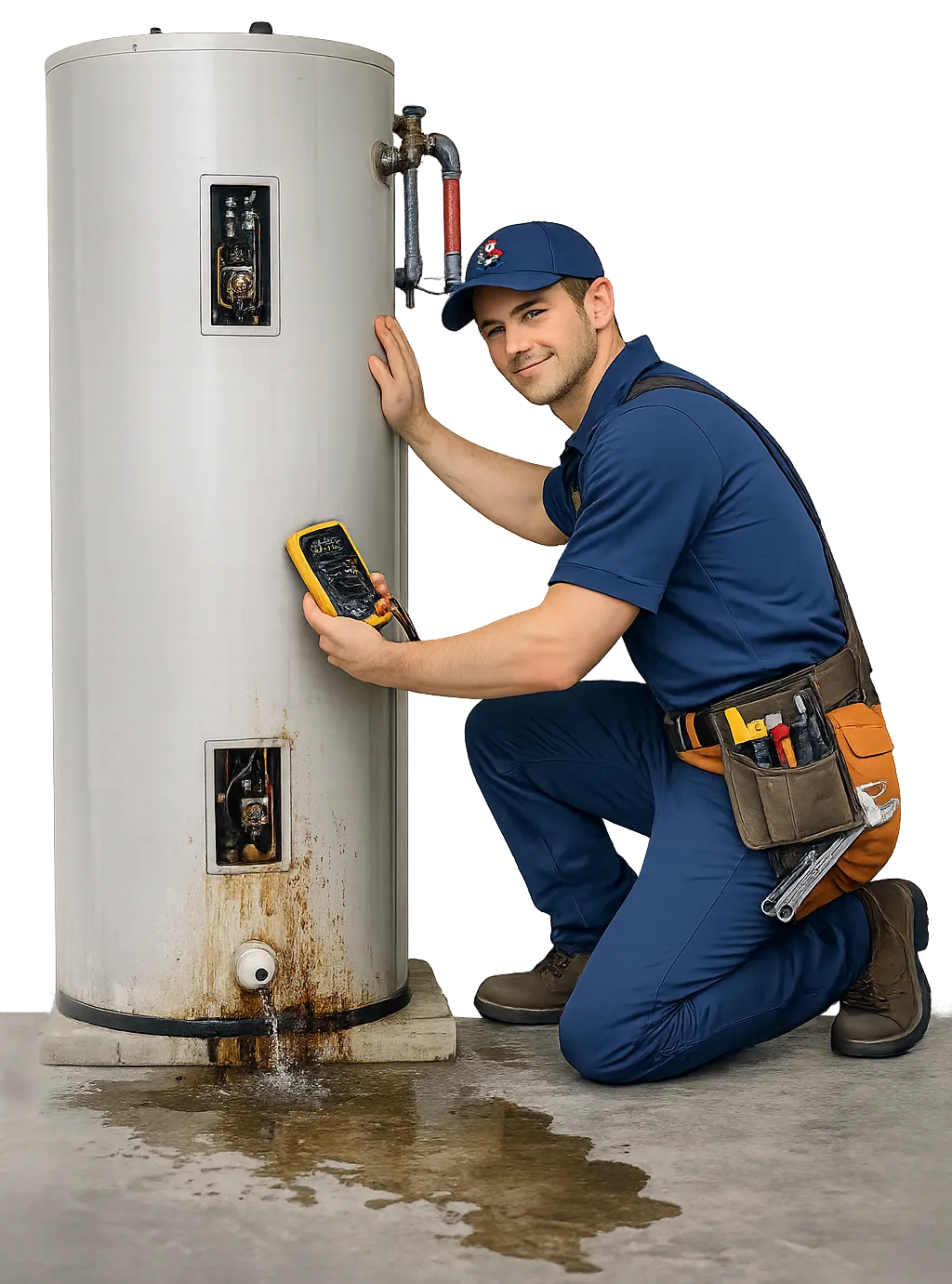
Insufficient Hot Water / Not Heating Properly
Many homeowners complain their Dux Eco Smart never produces truly hot water or runs out quickly. This is often due to the mid-mounted element design (only heating top half), undersized tanks for family size, faulty tempering valves over-mixing cold water, or multiple component failures working together.
Signs you need this fixed:
Water only lukewarm, never properly hot
Running out of hot water mid-shower
Tank temperature below 60°C
Tempering valve incorrectly adjusted or faulty
Only getting 200L of hot water from 400L tank
Poor solar gain despite sunny weather
Multiple household members = no hot water
System not recovering overnight
Off-peak tariff not providing enough heating time
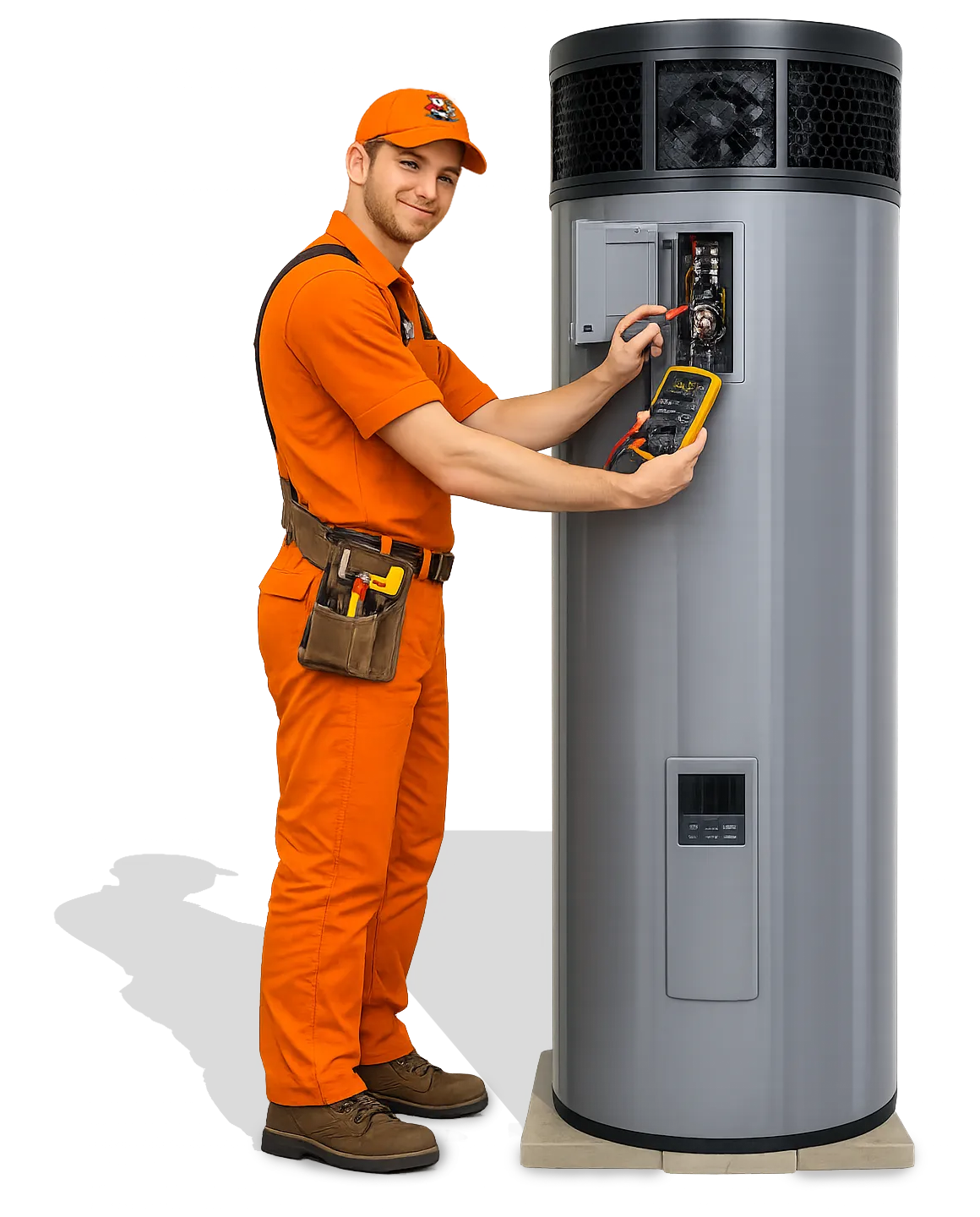
System Overheating & Over-Production
On very sunny days with low hot water usage, Dux Eco Smart systems can overheat, reaching dangerous temperatures up to 85°C. This causes the PTR valve to discharge, wastes energy, can damage components, and creates scalding risk. The multi-temperature tank sensors should prevent this, but sometimes fail.
Signs you need this fixed:
PTR valve discharging on hot sunny days
Tank temperature exceeding 85°C
Steam visible from relief valve drain
Scalding hot water at taps (danger!)
System not dumping excess heat properly
Top tank sensor not functioning
Drain-down not activating when too hot
Excessive water discharge daily
Tempering valve unable to cool water enough
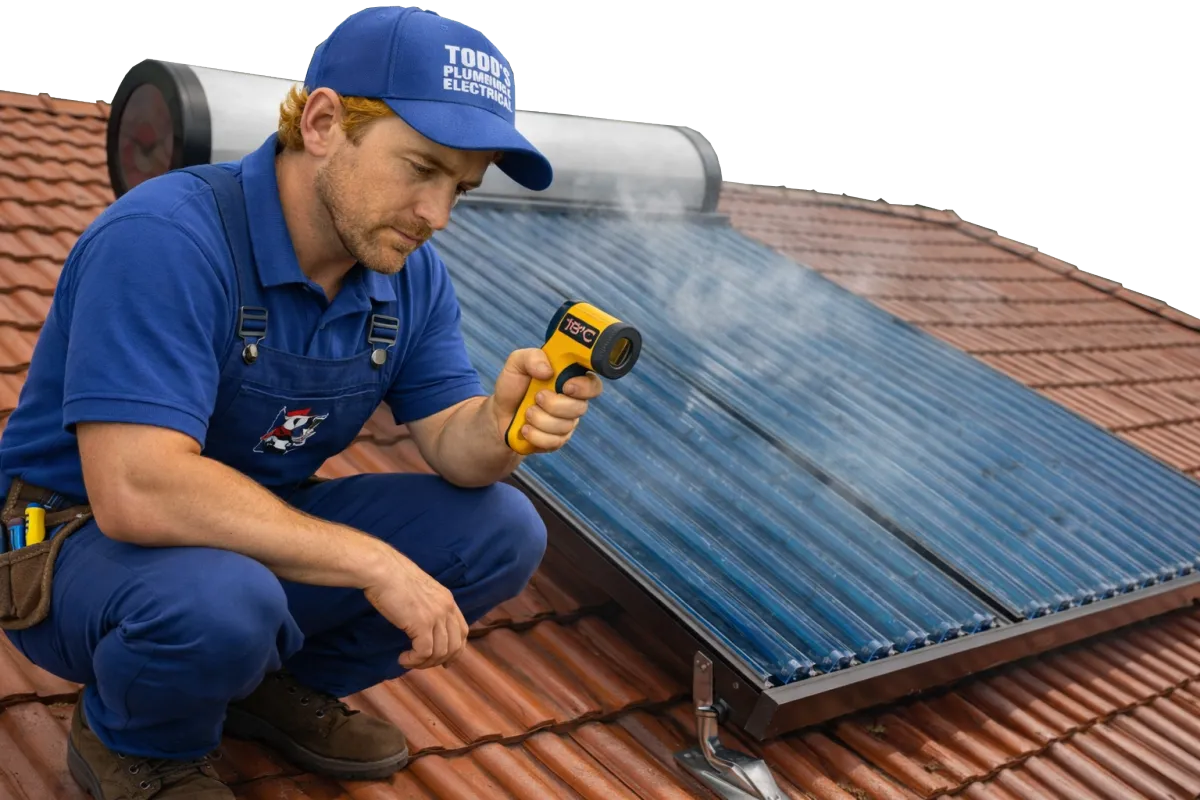
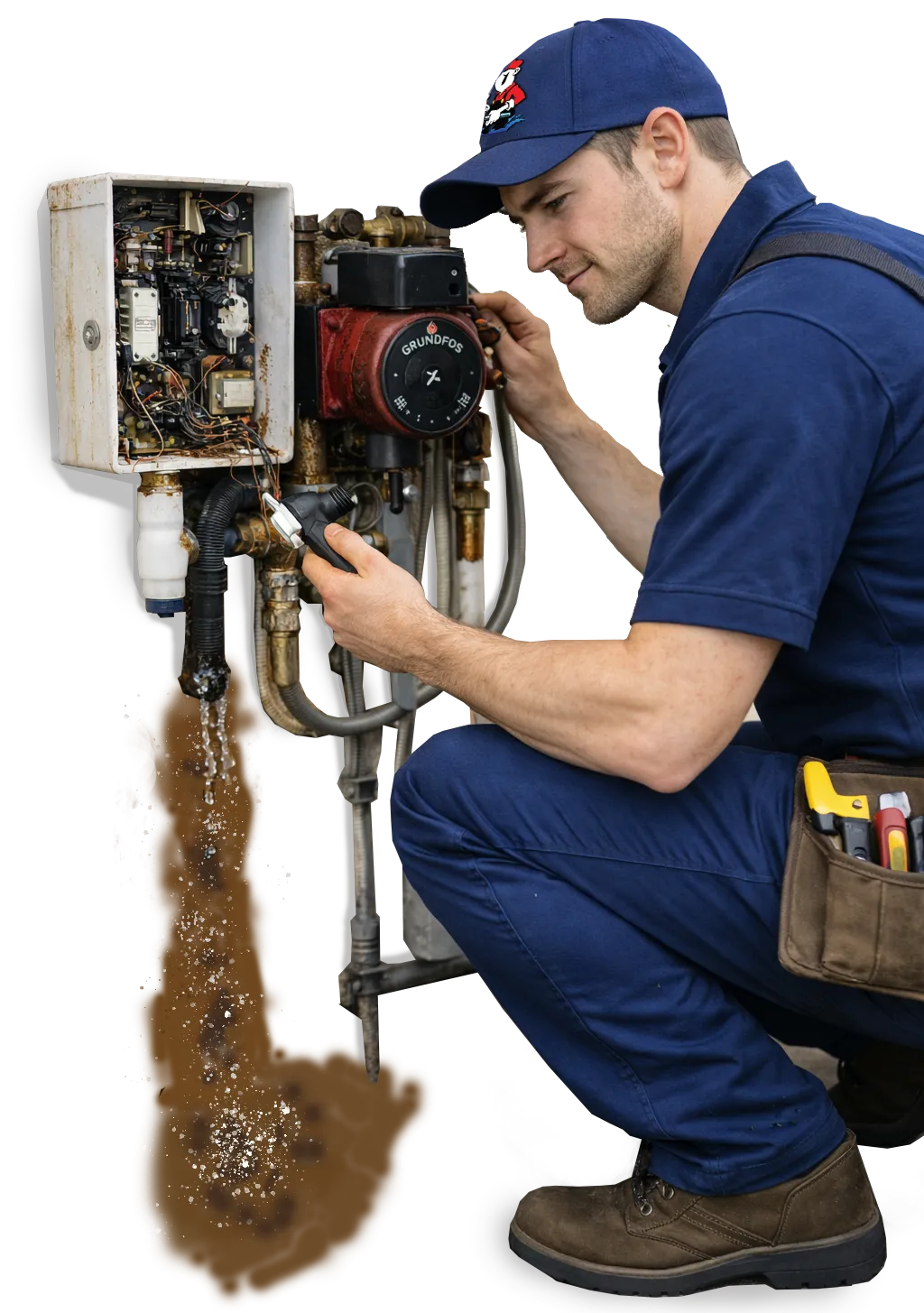
Circulation Pump Failure
The Grundfos circulation pump (typically 22W models) is notorious for early failure in Dux systems, often breaking down after just 2-3 years despite only having a 1-year warranty. When the pump fails, heated water can't circulate from the roof panels to your storage tank, wasting all that free solar energy.
Signs you need this fixed:
No humming or pump noise when sunny
Pump runs but no water circulation
Cold water despite perfect solar conditions
Output error code on Hot Logic controller
Excessive electricity usage (boost always on)
Pump running continuously without stopping
Strange noises from pump station
Visible leaking around pump unit
Electric Booster Element Problems
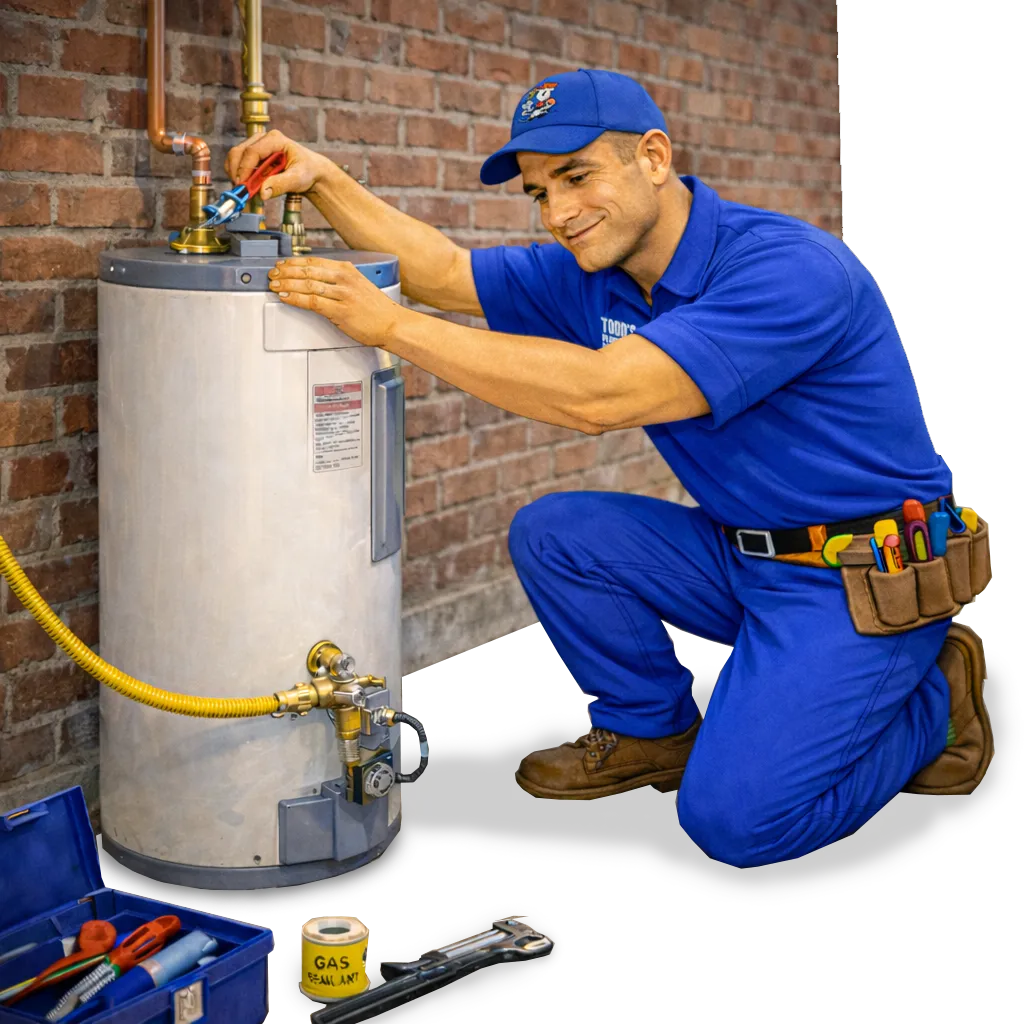
Dux Eco Smart systems have a mid-mounted electric heating element (positioned halfway up the tank) that provides backup heating. When this fails or malfunctions, you lose hot water on cloudy days. The mid-mount design means only the top 200L heats in a 400L tank, which is often inadequate for larger families.
Signs you need this fixed:
No hot water on cloudy/rainy days
Element not heating (blown element)
Tripped circuit breaker or blown fuse
Only lukewarm water even with boost on
Element stuck on heating continuously
Faulty thermostat (can't adjust temperature)
Element only heating half the tank
High electricity bills from constant boost
Running out of hot water quickly
Why Gold Coast Locals Choose Todd’s for Eco Smart Solar Hot Water Repairs

Local & family-owned – over 20 years working with solar, electric, gas and heat-pump systems on the Gold Coast
Eco Smart specialists – familiar all roof-mount and split systems
Fast, same-day hot water service – we prioritise no-hot-water jobs
Up-front quotes and clear explanations – no surprises
Repair or replace advice – we’ll always tell you honestly when a repair is worthwhile and when replacement will save you money and headaches long-term
Service Areas
We repair Dux eco Smart solar hot water systems across the Gold Coast, including:
Southport • Labrador • Arundel • Helensvale • Coomera • Upper Coomera • Runaway Bay • Hope Island • Robina • Varsity Lakes • Burleigh Heads • Burleigh Waters • Nerang • Pacific Pines • Molendinar • Paradise Point and surrounding suburbs.
Why Choose Todd’s Plumbing & Electrical
✓ Family-owned Gold Coast business
✓ 20+ years specialising in solar hot water repairs
✓ Licensed plumbers & electricians (no subcontractors)
✓ Fast same-day service available
✓ 5-star local reviews & long-term customer relationships
✓ Experts in Solahart system diagnostics

When you call us, you speak directly with a local team—not an offshore call centre.
Call the Dux Eco Smart Solar Hot Water Expert
If your Eco Smart solar hot water system isn’t performing, don’t wait for a total failure.
📞 Call Todd’s Plumbing & Electrical on 0482 080 423
We provide prompt, professional Dux solar hot water repairs and honest advice across the Gold Coast.
FAQ – Dux Eco Smart Solar Hot Water
What are the most common problems with Dux Eco Smart solar hot water systems?
The most common issues include Hot Logic controller failures (occurring every 1-3 years for many systems), Grundfos circulation pump breakdowns (typically after 2-3 years with only 1-year warranty), temperature sensor errors causing flashing green lights, diverter valve malfunctions in gas-boosted models, and pressure relief valve constant leaking. These systems also commonly experience calcium buildup in pipes and pump impellers, inadequate hot water due to the mid-mounted heating element only heating half the tank, tank sensor failures that prevent proper operation, overheating on sunny days, and electric element failures. Brisbane's hard water exacerbates many of these problems. Our technicians see these issues daily and stock the parts needed for quick repairs.
How much does it cost to repair a Dux Eco Smart system in Brisbane?
Repair costs vary by component: Hot Logic controller replacement costs $300-$425, Grundfos circulation pump replacement costs $300-$500, temperature sensors cost $150-$250 each (sometimes both roof and tank sensors needed), diverter valves cost $200-$400, pressure relief valves cost $180-$300, electric heating elements cost $250-$450, thermostats cost $180-$280, and descaling/cleaning services cost $200-$500. If you need a pressure limiting valve installed to protect your system, that's an additional $250-$400. Multiple component failures can cost $600-$1,200+ to repair. We always provide upfront pricing before starting work - no hidden fees or surprise charges. Call us for a specific quote based on your system's symptoms.
Why does my Dux Eco Smart circulation pump keep failing?
The Grundfos pumps in Dux Eco Smart systems typically last only 2-3 years despite being critical components. Common failure causes include: calcium buildup from Brisbane's hard water clogging the impeller, pump running dry due to air in the system, electrical issues from controller problems, bearing wear from continuous operation, and manufacturing defects in the pump itself. High water pressure (over 500kPa) also accelerates pump failure. Unfortunately, Dux only warranties the pump for 1 year, so subsequent failures are out-of-pocket. We recommend installing a pressure limiting valve if your water pressure is high, regular descaling maintenance, and ensuring your controller is functioning properly to prevent unnecessary pump cycling. Some customers experience pump failures every 2 years, which is frustrating but repairable.
What does a flashing green light on my Dux Hot Logic controller mean?
A flashing green light indicates a sensor error - either the roof collector sensor or the tank sensor (or both) has failed or is giving incorrect resistance readings. The Hot Logic controller needs accurate temperature data from both sensors to determine when to run the circulation pump. Without this data, the system defaults to electric boost only, wasting all your free solar energy and increasing electricity costs significantly. Common causes include: sensor cable damage from UV exposure and weather, moisture in the sensor port (especially in older stainless steel tanks causing incorrect Ohm readings), sensor reading zero resistance when disconnected, or the sensor thermistor itself failing. We can diagnose which sensor has failed using a multimeter to check resistance values, then replace the faulty sensor and cable if needed. Most sensor replacements can be completed same-day if we have the part in stock, getting your solar system working again quickly.
Do you offer same-day service for Dux Eco Smart repairs in Brisbane?
Yes! Todd's Plumbing offers same-day emergency service for Dux Eco Smart repairs throughout Brisbane, North Brisbane, South Brisbane, Ipswich, Logan, and surrounding areas. We understand how critical hot water is for your family, especially during winter months. We stock the most common Dux Eco Smart replacement parts including Hot Logic controllers (H3201, H3214, H3200 models), Grundfos circulation pumps, roof and tank temperature sensors with 20m cables, diverter valves, pressure relief valves, electric heating elements, and thermostats. This means we can often diagnose and complete repairs on the first visit without waiting for parts. Call us before 2 PM for same-day service Monday through Saturday. Sunday emergency service is also available. We'll get your hot water working again fast so your family doesn't suffer through cold showers.
Should I repair or replace my failing Dux Eco Smart system?
This depends on several factors: system age, problem severity, and repair history. If your Dux Eco Smart is under 5 years old and needs a single component replacement (controller, pump, or sensor), repair is usually cost-effective at $300-$500. However, if you're experiencing recurring failures - such as replacing the Hot Logic controller every 12-18 months, or if your pump has failed 3+ times, or if you have multiple simultaneous component failures - the system may not be worth continued investment. Systems over 7-10 years old with major issues (tank leaking, multiple component failures, corroded panels) should generally be replaced. A new quality heat pump system costs $3,500-$6,000 installed and will be more reliable and efficient. We'll always give you honest advice about what makes the most financial sense for your situation. Some customers throw good money after bad repeatedly repairing Dux systems that have fundamental reliability issues. We can also recommend more reliable alternative systems if replacement makes sense.
Why is my Dux Eco Smart pressure relief valve constantly leaking?
A constantly leaking PTR (Pressure & Temperature Relief) valve indicates serious problems. Normal operation allows 3% of tank capacity to discharge during heating cycles, but continuous leaking means: 1) System overheating above 85°C (usually on very sunny days with low usage - the top tank sensor should prevent this but may have failed), 2) Excessive water supply pressure over 500kPa (common in Brisbane areas with high mains pressure), 3) Faulty thermostat causing element to overheat water, 4) The PTR valve itself has failed and stuck open, or 5) Foreign matter preventing the valve from sealing properly. If discharging more than 20 litres per day, this is excessive and wastes water while indicating potential danger. We'll check your mains water pressure first, test the tank temperature sensors, verify thermostat operation, and inspect the PTR valve itself. Solutions include installing a pressure limiting valve ($250-$400), replacing the PTR valve ($180-$300), replacing faulty temperature sensors ($150-$250 each), or adjusting/replacing the thermostat. Never ignore a constantly leaking PTR valve - it's your system's safety mechanism telling you something is wrong.
How can I prevent problems with my Dux Eco Smart system?
Regular maintenance is essential for Dux Eco Smart longevity. We recommend annual professional servicing ($180-$280) which includes: checking and testing both temperature sensors for correct Ohm readings, testing circulation pump operation and checking for calcium buildup in impeller, inspecting Hot Logic controller for error codes and proper LED indicators, checking roof panel condition and cleaning if needed, testing pressure relief valve operation, inspecting all pipe connections for leaks or corrosion, verifying electric element function and thermostat settings, checking sacrificial anode condition (should be replaced every 5 years at $200-$350), and flushing the tank to remove sediment. Additionally, install a pressure limiting valve if your mains pressure exceeds 500kPa (costs $250-$400 but prevents many failures), descale the system every 2-3 years in Brisbane's hard water areas ($200-$500), monitor the Hot Logic controller display regularly for error codes, and operate the PTR valve lever monthly to prevent it seizing. Catching small issues early prevents expensive major failures. Many customers who skip maintenance end up with $1,000+ repair bills that could have been prevented.
Why does my system only produce lukewarm water, never hot?
Lukewarm water is a common Dux Eco Smart complaint with several possible causes. First, the mid-mounted electric element is a design limitation - it only heats the top 200L in a 400L tank, which is often inadequate for families. If you're using more than 200L between heating cycles, you'll get lukewarm water. Second, the tempering valve (required by Australian standards to prevent scalding) may be incorrectly adjusted or faulty, over-mixing cold water and reducing outlet temperature. Third, if your solar system isn't working (failed pump, sensors, or controller), you're only getting half-tank electric heating. Fourth, your thermostat might be set too low or faulty. Fifth, if you're on off-peak tariff with limited heating hours, the tank may not fully recover between usage periods. Solutions include: adjusting or replacing the tempering valve ($180-$320), repairing the solar circulation system (pump $300-$500, controller $300-$425, sensors $150-$250 each), adjusting thermostat to 70°C (from standard 60°C), switching to off-peak 2 tariff for daytime boost, or considering a larger tank or different system. We'll diagnose your specific issue and recommend the most cost-effective solution.
What causes the Hot Logic controller to fail so often?
The Hot Logic controller (made by Resol in Europe) is the weakest link in Dux Eco Smart systems. Multiple factors cause frequent failures: 1) Electronic components not rated for Australian climate extremes (Brisbane heat and UV exposure), 2) Moisture ingress into the controller housing causing short circuits, 3) Power surges from the electrical grid damaging sensitive electronics, 4) Pump or sensor faults causing the controller to work incorrectly and burn out, 5) Manufacturing defects in certain batches, and 6) The controller working continuously 365 days/year with no rest periods. Many homeowners report replacing the H3201 controller 3-4 times over 10 years, which is unacceptable for a component costing $300-$425 each time. Dux has updated to newer models (H3214, H3200) which may be more reliable, but many systems still use the problematic older controllers. We recommend protecting the controller with a weatherproof cover if exposed, installing surge protection on the electrical supply, and ensuring pump and sensors are functioning correctly to reduce controller stress. Unfortunately, there's no permanent fix - it's a fundamental design/quality issue with these controllers.
Is my Dux Eco Smart tank leaking or is it normal discharge?
Determining leak vs. normal discharge is critical. Normal discharge: The PTR valve should release about 3% of tank capacity during heating (12-15L for a 400L tank), appearing as occasional trickle. Some condensation around pipes is also normal in humid Brisbane weather. Tank LEAKING (serious): Water pooling constantly around tank base, rust-colored water, water weeping from tank seams or welded joints, leak from sensor port (common in older stainless tanks), or corroded areas on tank surface. If you're seeing constant water discharge exceeding 20L/day, this isn't normal. Check the source carefully: Is water coming from the PTR valve drain line (likely valve issue or system overheating), from pipe connections (needs tightening or washer replacement, $120-$200), from around sensors (sensor port failure, may need new sensor location created), or from the tank body itself (serious - likely needs replacement $3,500-$6,000). Don't ignore tank leaks - they worsen rapidly and can cause water damage to your property. Call us immediately for diagnosis. Minor connection leaks are cheap fixes ($120-$250), but tank body leaks usually mean replacement time, especially if the system is over 7 years old.
Is my Dux Eco Smart tank leaking or is it normal discharge?
Determining leak vs. normal discharge is critical. Normal discharge: The PTR valve should release about 3% of tank capacity during heating (12-15L for a 400L tank), appearing as occasional trickle. Some condensation around pipes is also normal in humid Brisbane weather. Tank LEAKING (serious): Water pooling constantly around tank base, rust-colored water, water weeping from tank seams or welded joints, leak from sensor port (common in older stainless tanks), or corroded areas on tank surface. If you're seeing constant water discharge exceeding 20L/day, this isn't normal. Check the source carefully: Is water coming from the PTR valve drain line (likely valve issue or system overheating), from pipe connections (needs tightening or washer replacement, $120-$200), from around sensors (sensor port failure, may need new sensor location created), or from the tank body itself (serious - likely needs replacement $3,500-$6,000). Don't ignore tank leaks - they worsen rapidly and can cause water damage to your property. Call us immediately for diagnosis. Minor connection leaks are cheap fixes ($120-$250), but tank body leaks usually mean replacement time, especially if the system is over 7 years old.
Why is my system using so much electricity despite having solar panels on the roof?
High electricity usage means your solar system isn't working, forcing the electric boost element to do all the heating. Common causes: Failed circulation pump (no water circulating from hot roof panels to tank), faulty Hot Logic controller (pump not activating despite hot panels), failed temperature sensors (controller doesn't know when to run pump), blocked pump impeller from calcium buildup (pump running but not moving water), air in the system preventing circulation, faulty diverter valve in gas systems, or panels not collecting heat due to damage/dirt. Normal solar operation should show: Hot Logic displaying both green (power) and red (pump active) lights during sunny periods, audible pump humming noise, roof panels hot to touch (careful!), and minimal electricity usage on off-peak meter (only for legionella sanitization cycle to 60°C). If your off-peak meter shows 3-4 kWh daily or more, the solar isn't contributing. We'll diagnose why your solar system isn't working: test pump operation ($300-$500 if failed), check controller function ($300-$425 if failed), test both sensors ($150-$250 each if failed), inspect panel connections, and check for circulation blockages. Fixing the solar system will dramatically reduce your electricity bills - often paying for the repair within 6-12 months through energy savings.
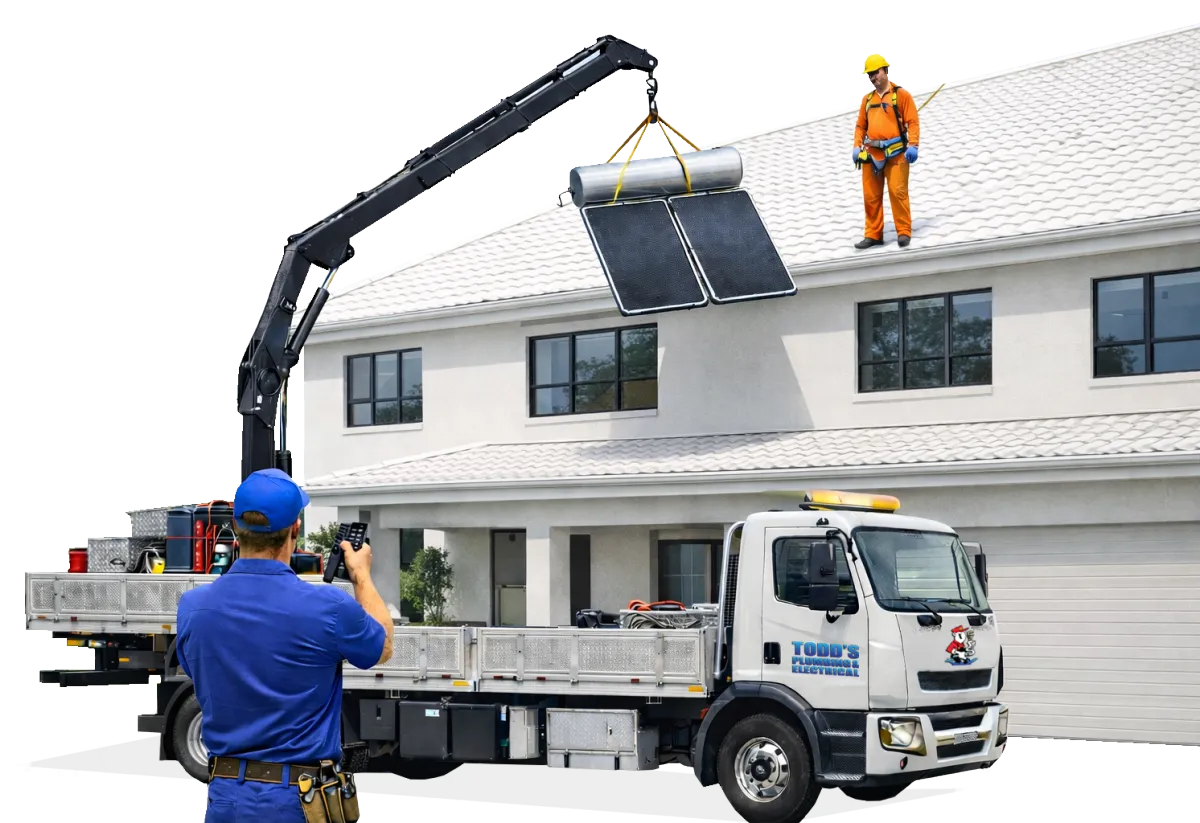
If it can't be fixed we can supply a new system from as little as $24 a week
Over 22 Years of 5-star Rated Service
Solar Hot Water Brands We Service & Repair
Aquamax
Apricus
Beasley
Bosch
Chromagen
Conergy
Dux
Ecosmart
Envirosun
Edwards
Everhot
Hills
Leda
Quantum
Midea
Neopower
Reece
Rheem
Rinnai
Sanden
Saxon
Stiebel Electron
Solahart
Solargain
Solar Oz Solar
Power Sun Ray
Sun Solar
Thermasun
Vulcan
Finance Available
Solar Hot Water Repairs Across The Gold Coast
Hot Water System Repairs & Replacement Experts
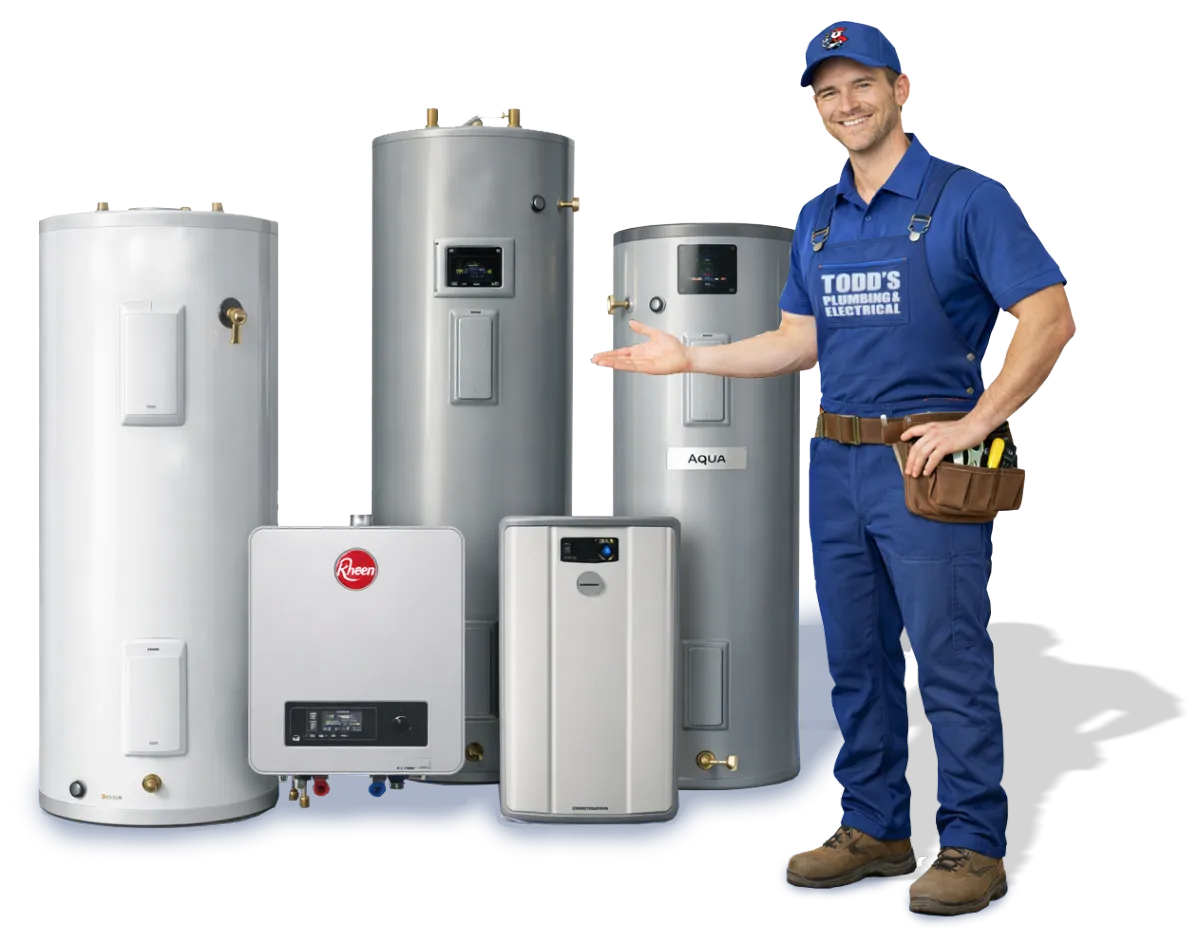
Electric Hot Water
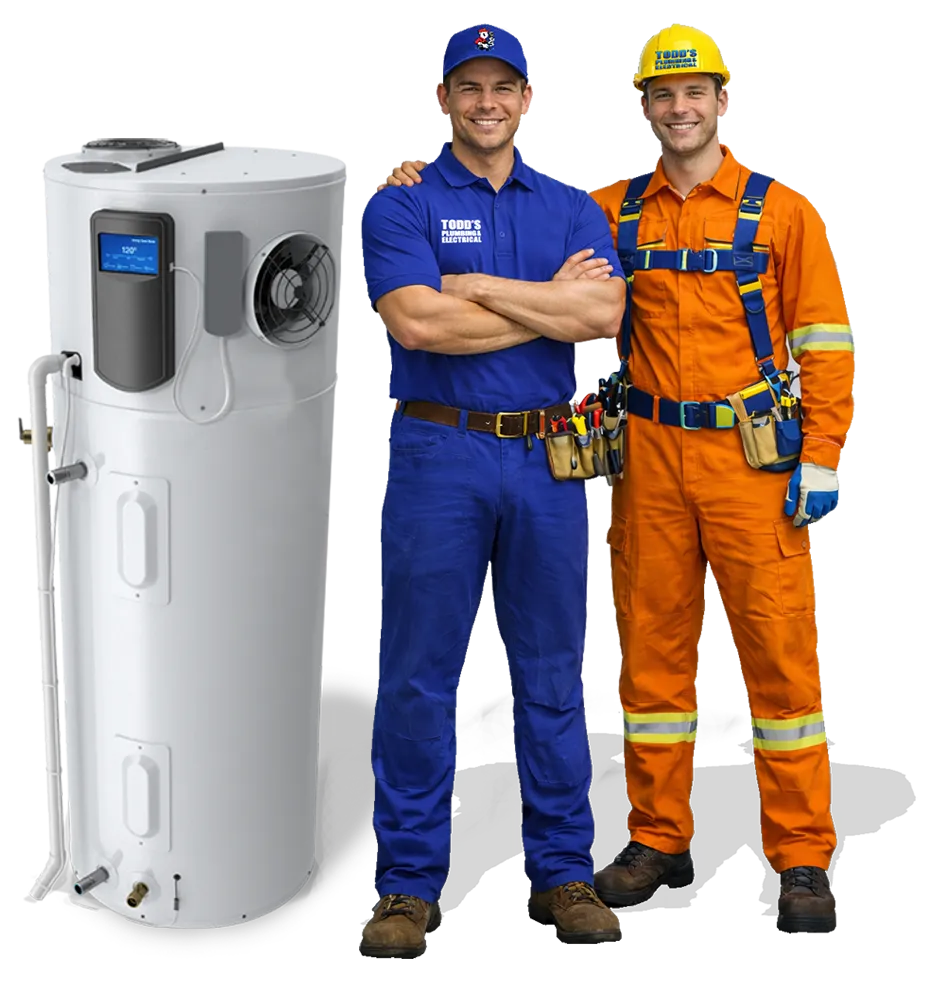
Heat Pumps
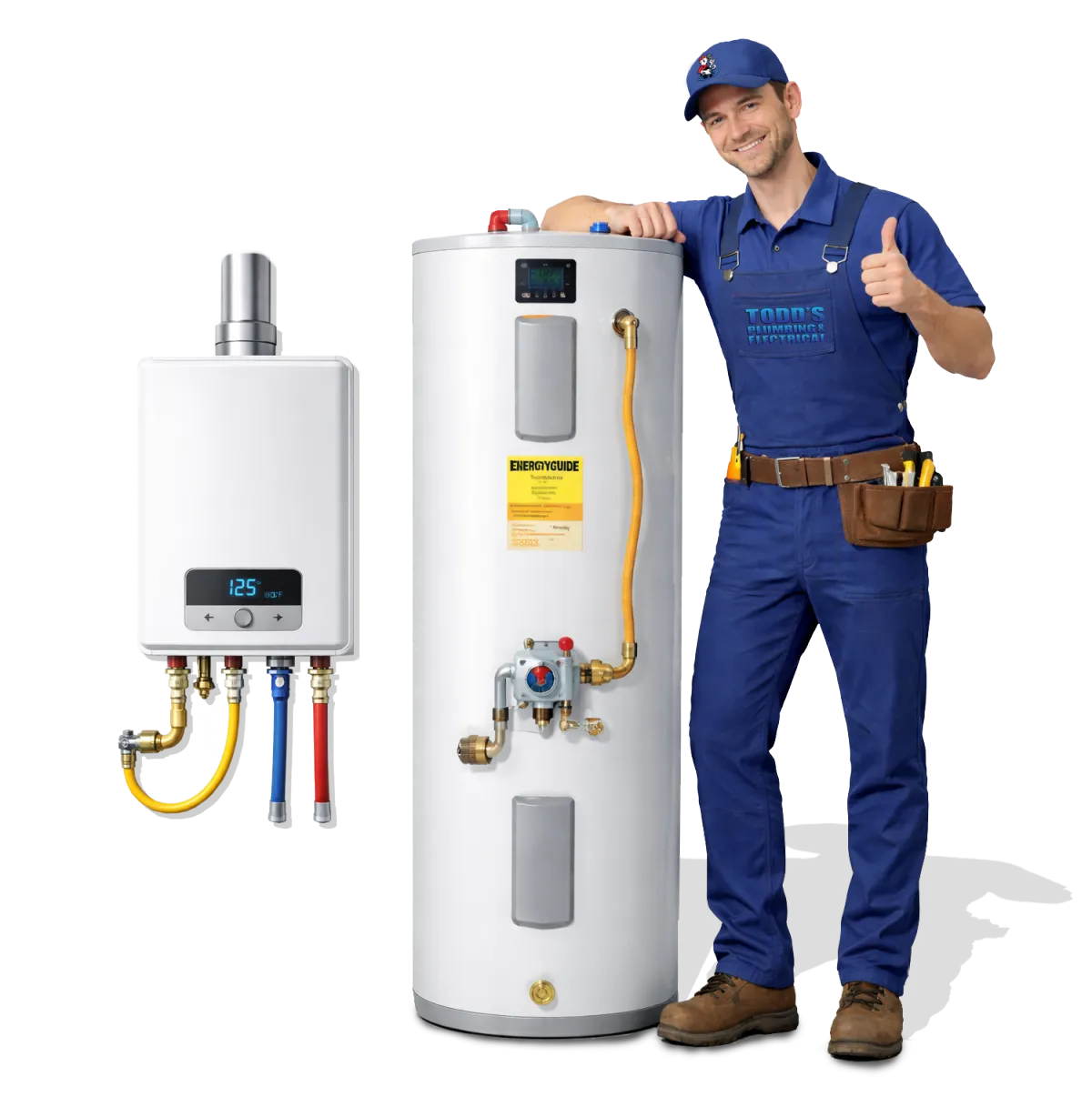
Gast Hot Water
Roof Mounted
Solar Hot Water

Split System
Solar Hot Water

Solar Power
Systems

Get A Free Quote
Submit your details or call 0482 080 423
Head Office
1/28 central Park Avenue, Ashmore, Qld, 4214
0482 080 423
1300 609 606
QBCC: 1126780
Electrical License Number: 71053
We accept cash, direct deposits, and all major CC's